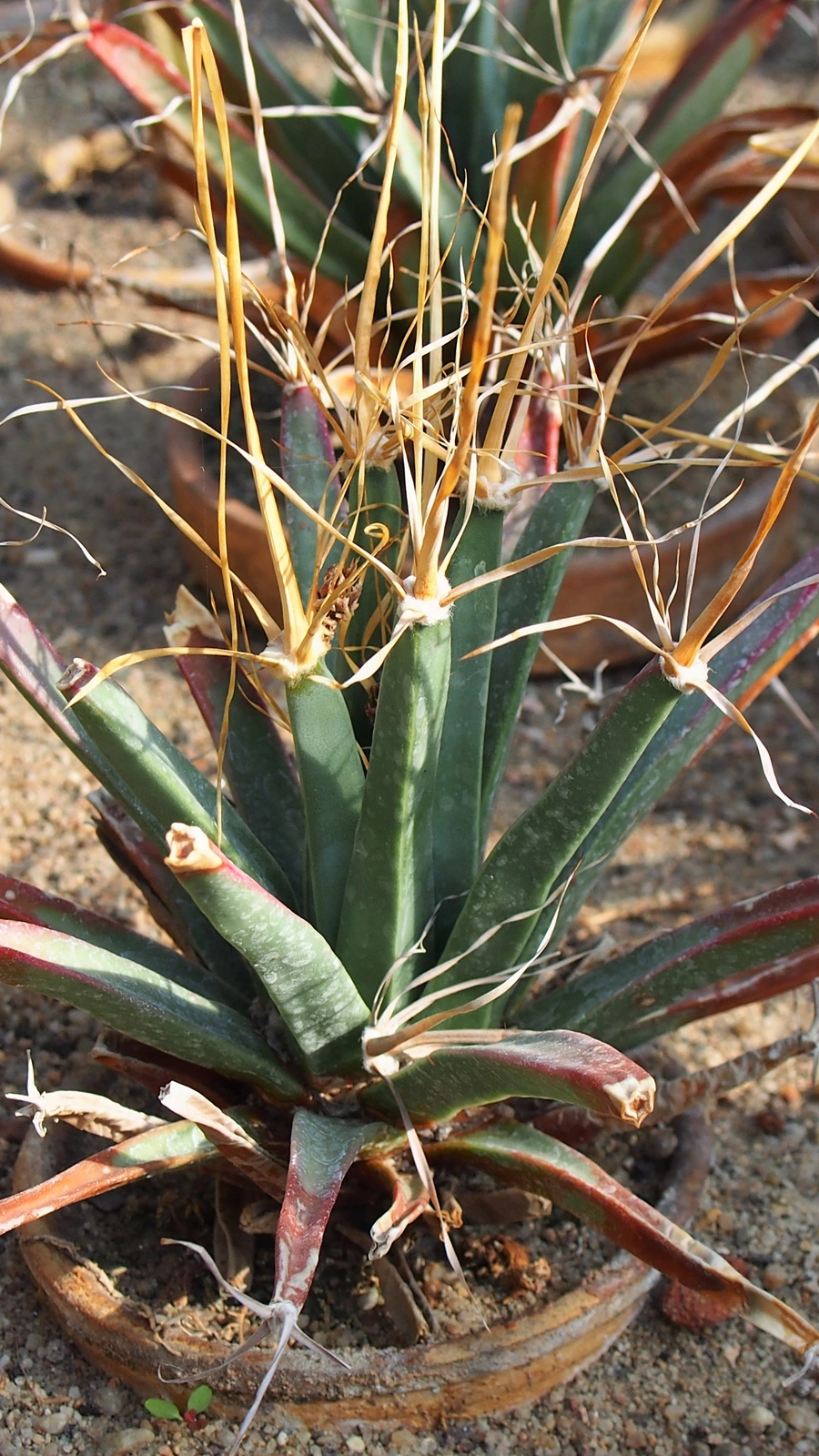
Leuchtenbergia principis

Agave Cactus

Leuchtenbergia principis is a unique succulent, representing the sole species of its genus within the cactus family (Cactaceae). Native to arid regions of Mexico, this plant is also known as the 'Agave Cactus' due to its distinctive appearance. Its stem is covered with long, fleshy, triangular prismatic tubercles, each terminating in flat, papery spines that are typically yellowish or brownish, giving the plant an agave-like look 1.

Morphological Characteristics

Leuchtenbergia principis typically grows as a solitary stem but can produce offsets as it matures. The tubercles can reach lengths of 10-15 cm, and each tubercle bears an areole at its tip. During the summer months, large, yellow, funnel-shaped flowers usually emerge from the tips of these tubercles. These flowers generally open during the day and last for several days. A notable feature of the plant is its large, thick taproot, which helps it store water during dry periods and access deeper water sources.

Ecology and Conservation

In its natural habitat, it is typically found in well-draining, limestone-based soils within shrubland and desert environments. Although it is a slow-growing species, it can be quite long-lived. According to the IUCN Red List, Leuchtenbergia principis is classified as "Least Concern" (LC), though it may face localized threats from habitat loss and illegal collection in certain areas 2. This distinctive cactus is a prized species for both collectors and botanical enthusiasts.

References:

References

  1. Anderson, Edward F. "The Cactus Family." Timber Press, 2001.
  2. IUCN Red List of Threatened Species. Leuchtenbergia principis. Accessed at: https://www.iucnredlist.org/species/152062/590623
Light

Full Sun

Requires full sun or very bright, filtered light. A south-facing window is ideal.
Watering

14-30 Days

Allow the soil to dry out completely between waterings. During its dormant period in winter, watering needs are minimal.

Soil

Very well-draining cactus and succulent mix, high in mineral content

Use a specialized, mineral-rich, very fast-draining mix formulated for cacti and succulents.

Safety

Pet Friendly

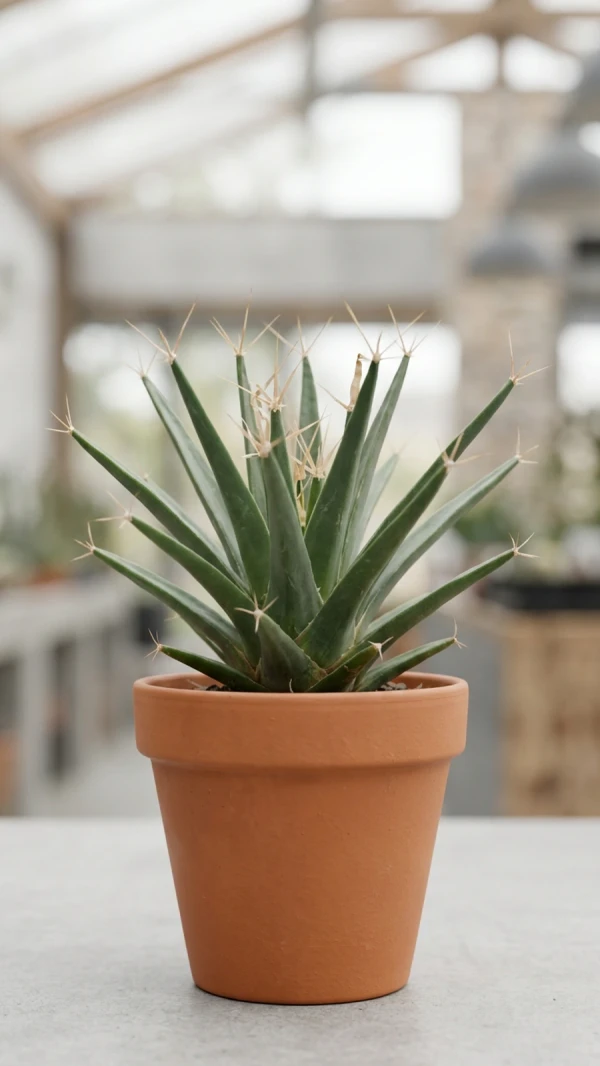
The tips of the plant's tubercles have sharp spines; exercise caution when handling or caring for it.

Difficulty

Moderate

This is a moderately difficult plant to care for. It will thrive when proper watering and light conditions are provided.

Native Habitat

Mexico (Aguascalientes, Coahuila, Hidalgo, Zacatecas, Querétaro, Guanajuato, San Luis Potosí, Michoacán, Jalisco, Colima, Guerrero)

This striking cactus species is endemic to the arid shrubland and desert ecosystems of central and southern Mexico. It typically grows naturally on limestone rocky slopes and dry, stony terrains, coexisting with other succulents and xerophytic plants. It has adapted to thrive in highly draining soils that receive rainfall but dry out quickly.

Frequently Asked Questions

How often does Leuchtenbergia principis need repotting?
Due to its taproot, it doesn't require very frequent repotting. Generally, every 2-3 years, when the plant outgrows its current pot or the taproot no longer fits, it can be moved to a deeper container. Be careful not to damage the roots during repotting.
How do I know if my Leuchtenbergia principis needs water?
Ensure the soil is completely dry. If the tubercles start to shrivel slightly, this can be a sign of thirst, but it's best to check the soil's dryness with your finger to avoid overwatering. Water in summer after the soil is completely dry; provide very little to no water in winter.
What kind of light conditions should I provide for it to flower?
Leuchtenbergia principis requires ample direct sunlight to flower. If possible, position it in a spot that receives at least 6-8 hours of direct sun daily. Insufficient light can hinder blooming.
What soil mix is best for Leuchtenbergia principis?
You should use a very well-draining, high-mineral content soil mix specifically formulated for cacti and succulents. A mix enriched with materials like perlite, pumice, or gravel is ideal.
When does it flower and how long do the blooms last?
It typically flowers during the summer months, especially when appropriate temperature and light conditions are met. Its yellow flowers usually open for one or a few days. The blooms emerge from the tips of the tubercles as the plant matures.
How fast does Leuchtenbergia principis grow?
This cactus species is a rather slow-growing plant. It can take many years to reach maturity and noticeable sizes, making it a special choice for patient collectors.
How can I protect it from pests?
Leuchtenbergia principis is generally resistant to pests, but issues like spider mites or mealybugs can occur. Inspect regularly and, if necessary, clean with a cotton swab dipped in neem oil or an appropriate insecticide.
How should I care for it in winter?
During winter, when the plant enters dormancy, you should stop or severely limit watering. It's important to provide a cool and dry environment, ideally not dropping below 5°C. This can encourage flowering in spring.
How is Leuchtenbergia principis propagated?
It is typically propagated by seed, though this is a slow and patience-demanding process. More rarely, offsets (pups) that form as the plant matures can be carefully separated and rooted.
Is it toxic to pets?
It is not considered chemically toxic. However, the plant's sharp spines can pose a physical hazard to pets and may cause digestive issues if ingested. Therefore, it is recommended to keep it out of reach of pets.