
Light
Bright Indirect Light
Thrives in bright, indirect light. Avoid direct, harsh afternoon sun to prevent leaf scorching.
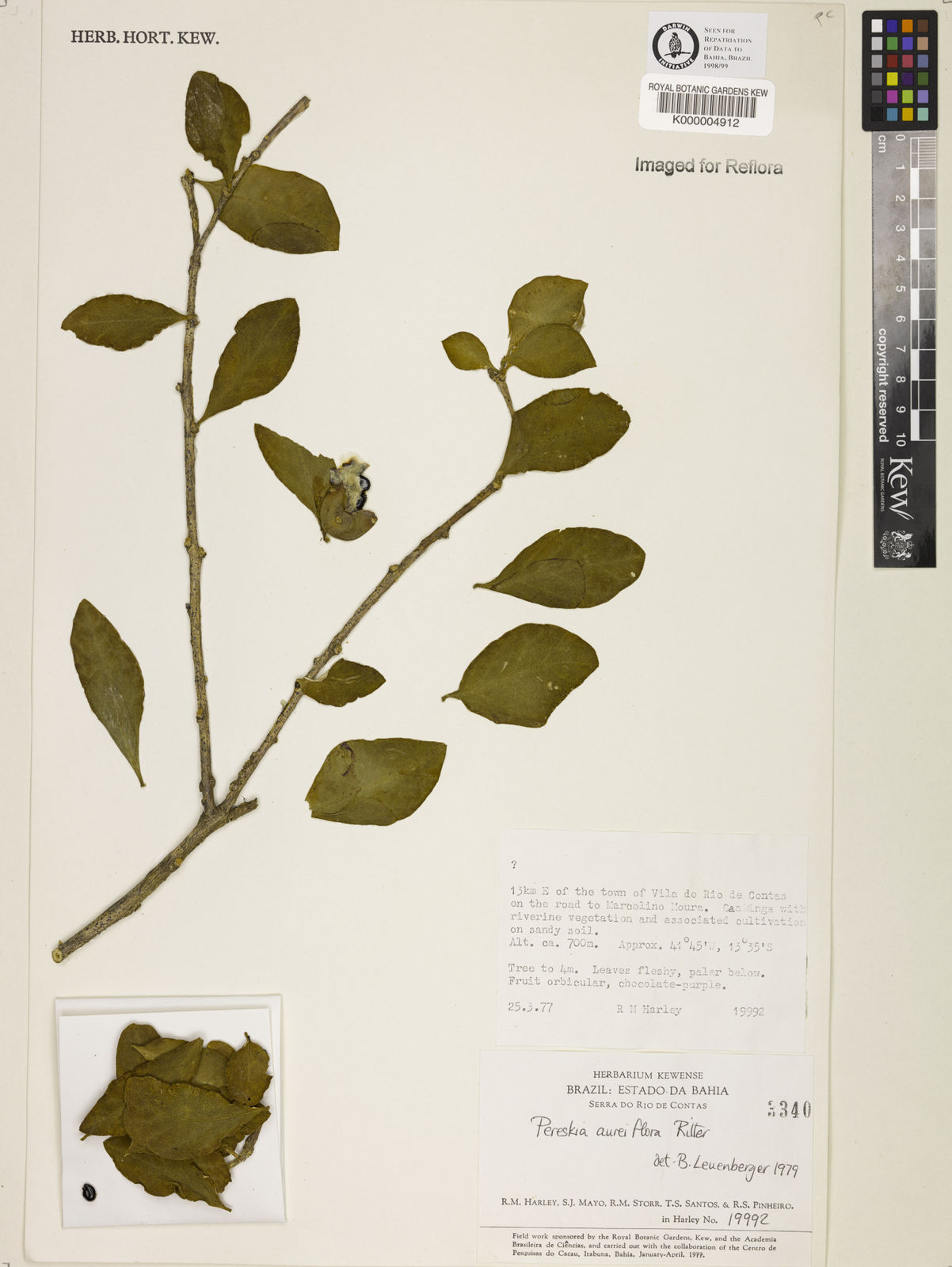 Reference image
Golden Flowered Rose Cactus
Leuenbergeria aureiflora is a unique, leafy cactus species belonging to the family Cactaceae. Unlike highly specialized desert cacti, this primitive genus retains large, photosynthetic leaves and a shrubby to small tree-like growth habit, making it an evolutionary link within the cactus family 1.
The species epithet aureiflora translates to 'golden-flowered,' highlighting its brilliant yellow blossoms. Previously classified under the genus Pereskia, modern molecular studies relocated this species to the newly erected genus Leuenbergeria 2.
Endemic to Brazil, this species is mainly found in the states of Bahia and Minas Gerais 3. It thrives within the seasonally dry tropical forest biomes, caatinga vegetation, and rocky outcrops that experience distinct wet and dry seasons.
This woody shrub can reach up to 6 meters in height. It features persistent, lanceolate green leaves and slender spines protruding from woody areoles along the stems. Its most striking feature is the bright golden-yellow flowers that emerge at the branch tips, followed by small, fleshy green-to-yellowish fruits.
In cultivation, Leuenbergeria aureiflora requires more moisture than desert cacti. During the active growing season, it responds well to regular watering and organic-rich, free-draining soil. It thrives in warm temperatures with ample bright, indirect sunlight.
The most prevalent error is treating it like a standard succulent by underwatering, which leads to leaf drop, or using poorly draining heavy soil, causing root rot during cool winters.
Thrives in bright, indirect light. Avoid direct, harsh afternoon sun to prevent leaf scorching.
Water weekly in summer, allowing excess to drain. Cut back to every 20 days in winter.
Prefers a fertile, well-draining loam mixed with perlite or coarse sand to prevent compaction.
Possesses sharp spines on its woody stems; handle with care and keep away from pets.
Moderate. Requires balanced watering compared to standard cacti, as it does not tolerate severe drought well.
Native to the eastern regions of Brazil, specifically occurring in seasonally dry tropical forests and deciduous caatinga shrublands.
