
Light
Bright Indirect Light
Prefers bright, indirect or filtered sunlight; protect from harsh direct midday sun.
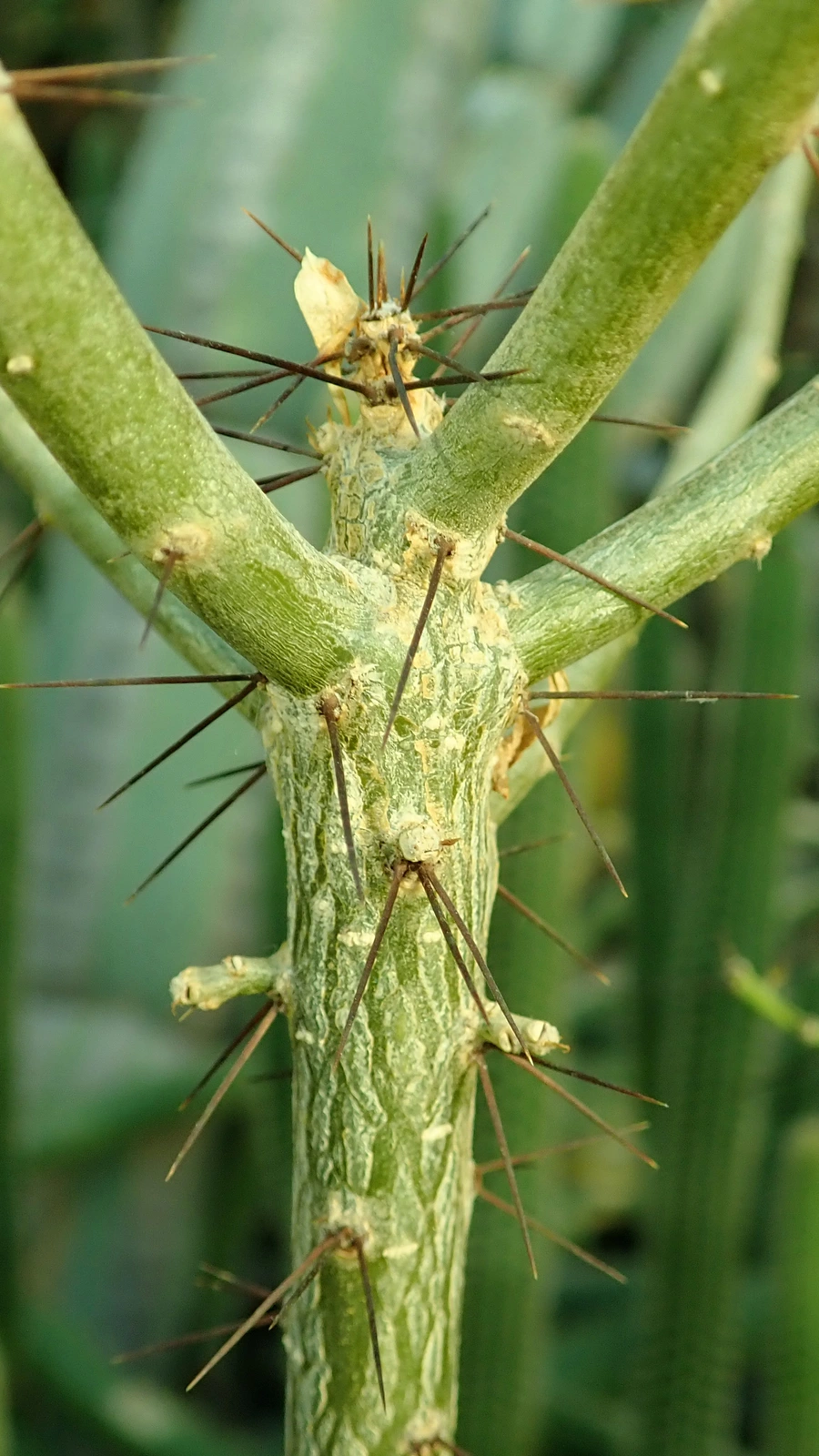
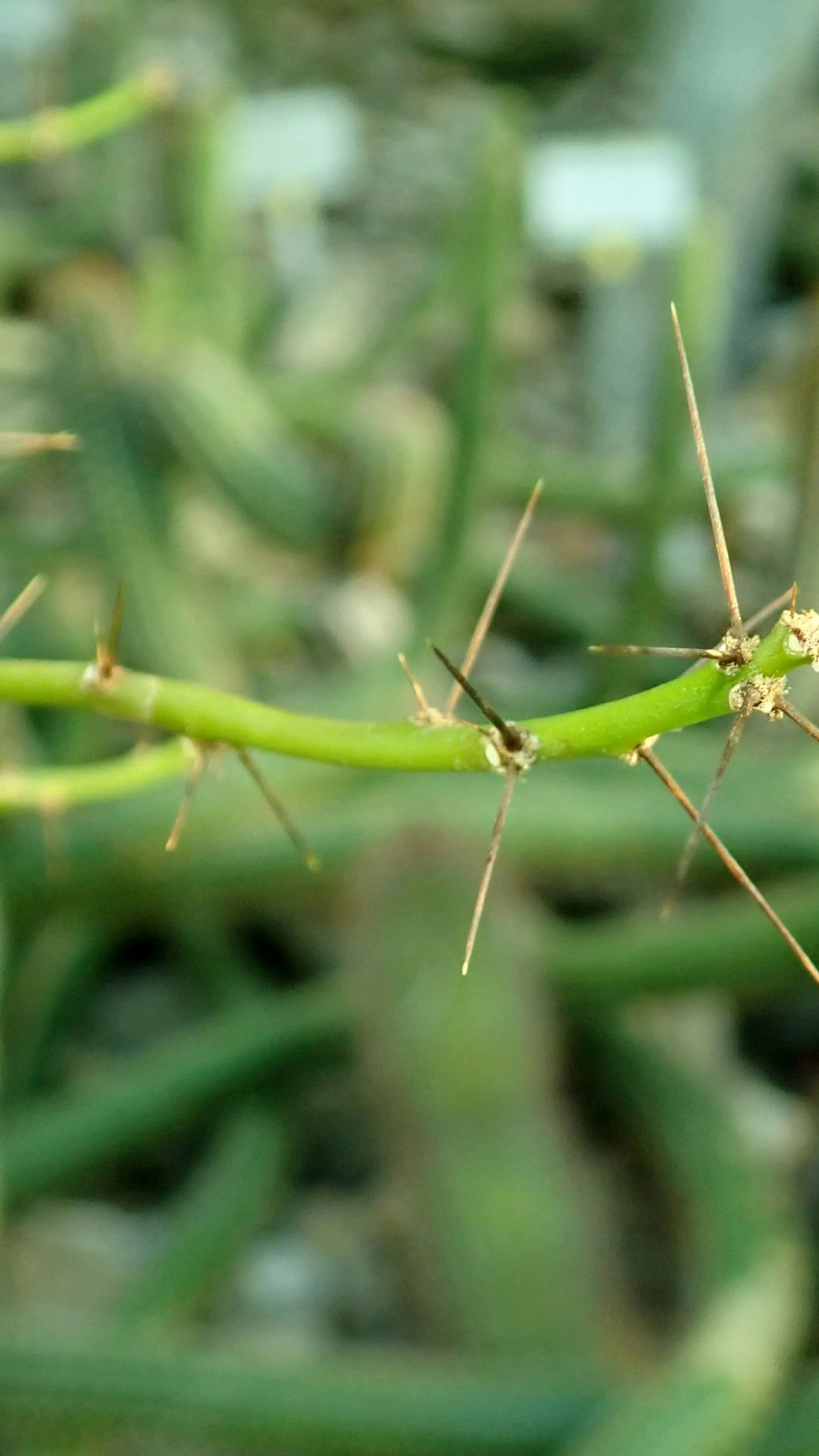
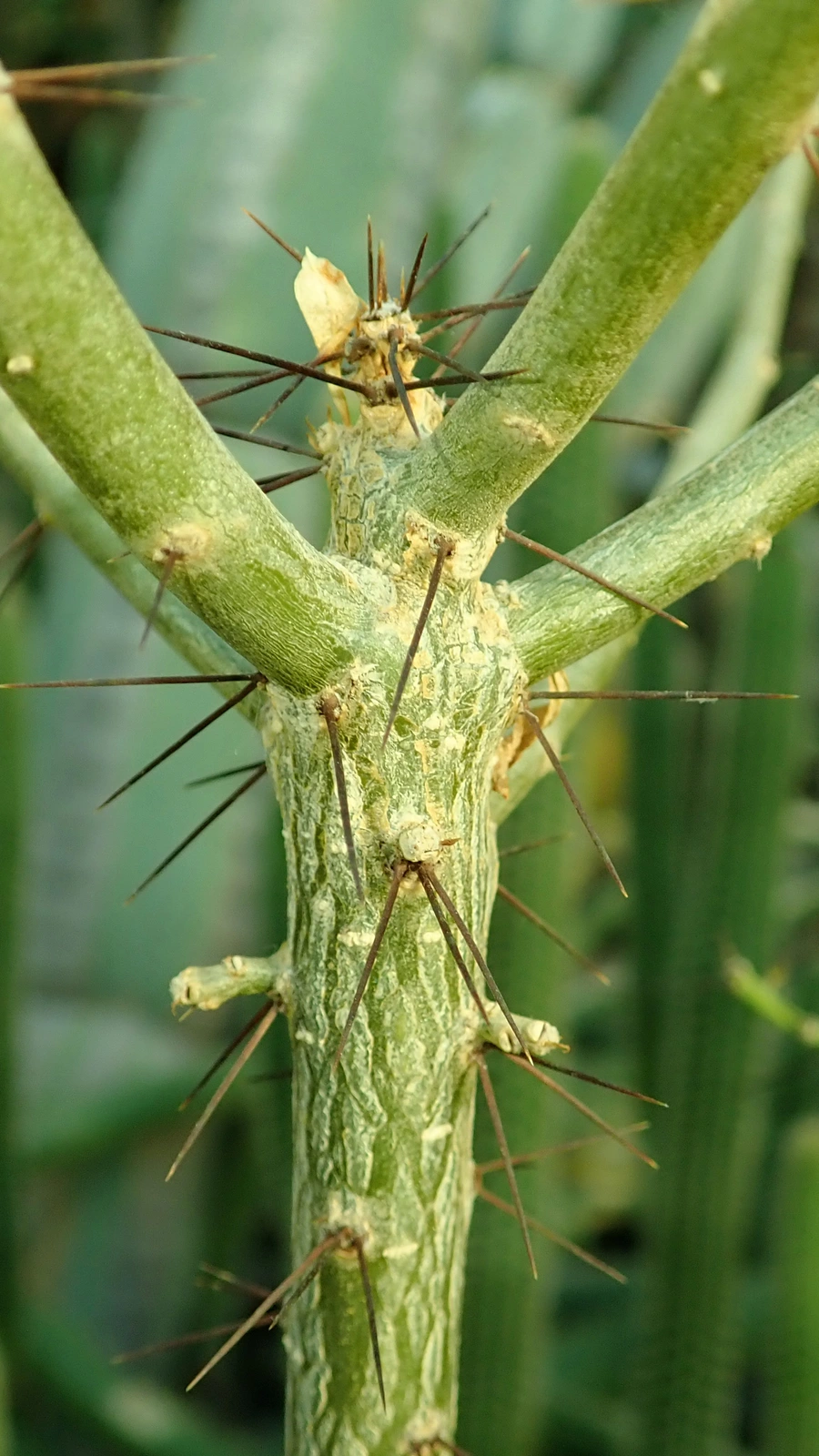 Reference image
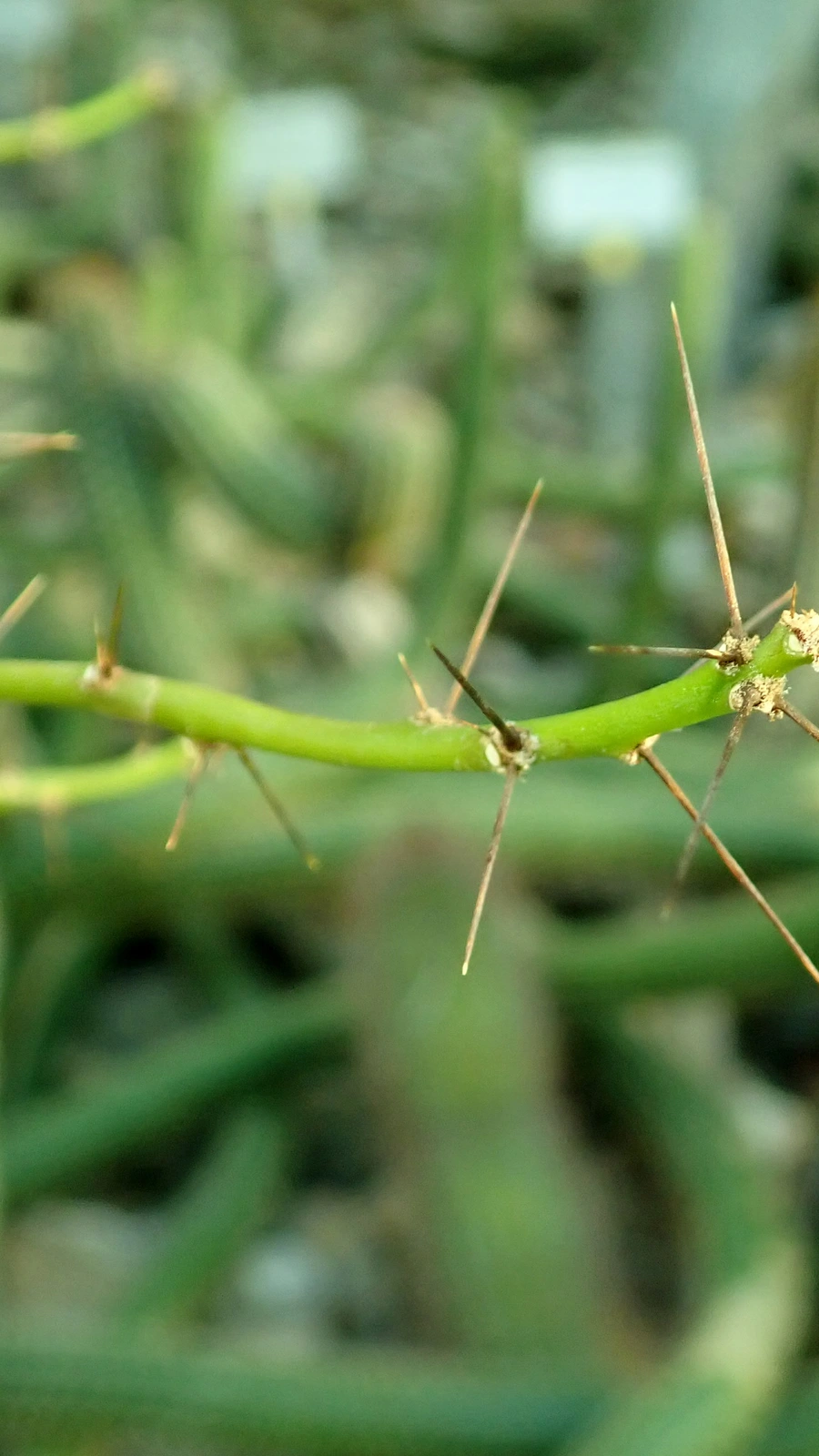 Reference image
Marcano's Leafy Cactus
Leuenbergeria marcanoi (formerly classified as Pereskia marcanoi) is an exceptionally rare, leafy cactus species belonging to the Cactaceae family. Unlike typical desert cacti, it develops true leaves and grows as a shrub or small tree.
The species was named in honor of the Dominican botanist Francisco de Jesús Marcano Fondeur. While historically classified within the genus Pereskia, recent molecular phylogenetic studies moved it to the genus Leuenbergeria, representing an ancient lineage of leafy cacti 1.
Leuenbergeria marcanoi is strictly endemic to the southern regions of the Dominican Republic in the Caribbean. It populates seasonally dry tropical forests and rocky slopes, typically surviving under the canopy of larger vegetation 2. Due to extreme habitat loss, it is listed as Critically Endangered (CR) by the IUCN.
This plant features glossy green, lanceolate succulent leaves and clusters of spines along its woody stems. As it matures, it develops a tree-like silhouette. In spring and summer, it produces striking, rose-like pink to purplish flowers at the branch tips.
In indoor cultivation, it requires more consistent moisture and higher humidity than standard cacti. It thrives in bright, filtered sunlight rather than direct mid-day sun. Winter temperatures should ideally remain above 10°C.
The most frequent mistake is treating it like a desert cactus and allowing the soil to dry out completely for extended periods. This drought stress causes immediate leaf drop. Conversely, waterlogged soil will cause root rot.
Prefers bright, indirect or filtered sunlight; protect from harsh direct midday sun.
Water when the top layer of soil dries. Do not allow the root ball to stay completely dry for long.
Requires organic-rich, well-draining soil mixes with a high sand and loam content.
Possesses sharp spines along its stems. Keep away from pets and small children.
Moderate care difficulty due to its specific moisture, humidity, and temperature requirements.
Endemic to the southern portion of the Dominican Republic in the Caribbean, where it grows natively in seasonally dry tropical forests and rocky, semi-shaded slopes.
