
Light
Bright Indirect Light
Requires bright, indirect sunlight or partial sun; morning sun is highly beneficial.
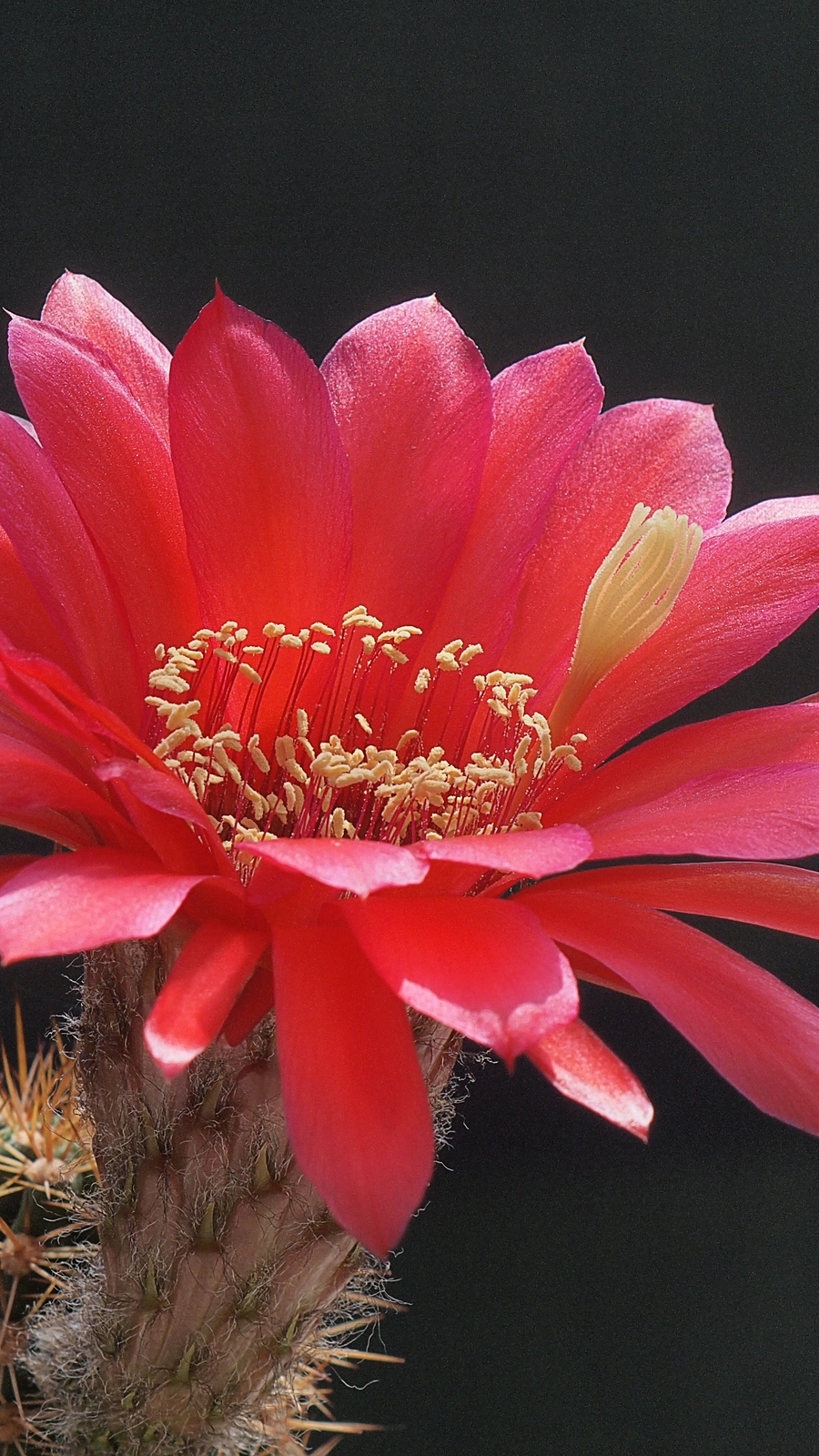 Reference image
Rowley's Lobivia
Lobivia rowleyi (widely classified as Echinopsis rowleyi in modern taxonomy) is a highly sought-after South American cactus species, cherished by collectors for its extraordinarily large, vibrant, funnel-shaped blossoms. It exhibits a compact, globose to short-cylindrical growth habit.
Belonging to the family Cactaceae, this species was named in honor of the distinguished British botanist Gordon Douglas Rowley, who contributed immensely to succulent plant taxonomy 1. Due to ongoing debates over the lumping and splitting of the genus Echinopsis, it is often found under both its traditional Lobivia name and modern Echinopsis synonyms 2.
Native to the high-altitude regions of Argentina 1. In its natural habitat, it thrives on rocky, gravelly slopes with superb natural drainage, often in volcanic soils. It has adapted to high UV radiation and extreme day-to-night temperature fluctuations typical of alpine regions.
The stem is initially globose, gradually becoming shortly columnar as it matures. It features distinct vertical ribs armed with neat clusters of spines. During late spring and summer, it produces spectacular, disproportionately large, funnel-shaped flowers, usually in brilliant shades of red, orange, or deep pink 2.
In cultivation, Lobivia rowleyi requires excellent ventilation, plenty of bright indirect sunlight, and extremely porous soil. Watering should follow a strict 'soak and dry' method. A cold, dry winter dormancy is essential to trigger the development of its magnificent floral buds in the upcoming warm season 2.
The most prevalent errors include using heavy, water-retaining potting soils and continuing to water during the winter months. This inevitably leads to root rot. Keeping the plant in a warm, dark room during winter will also prevent it from blooming.
Requires bright, indirect sunlight or partial sun; morning sun is highly beneficial.
Water only when the soil is 100% dry; keep completely dry during the winter.
A gritty, well-draining mineral mix containing pumice, sand, and perlite.
Spines can puncture the skin; handle with care and keep away from pets and children.
Easy; very resilient if winter drought and high drainage are maintained.
Indigenous to the rocky, volcanic slopes of high-altitude regions in Argentina, where it thrives under high-UV solar exposure and sharp temperature drops.
