
Light
Full Sun
Requires at least 6-8 hours of direct, unfiltered sunlight daily.
 Reference image
 Reference image
Bahia Bearded Cactus
Lophocereus bahiensis is a striking columnar cactus species belonging to the family Cactaceae. Known for its imposing vertical growth and the development of a bristly pseudocephalium in mature specimens, it is highly valued among collectors of xerophytic plants 1.
Previously categorized under other columnar genera such as Pachycereus, recent taxonomic revisions and genetic analyses have stabilized its position within the genus Lophocereus 2. The specific epithet bahiensis refers directly to its primary native range in the Bahia state of Brazil.
This species is native to northeastern Brazil, primarily inhabiting the semi-arid 'Caatinga' biome 1. The habitat is characterized by sparse, thorny shrubland, high temperatures, rocky terrain, and highly seasonal, unpredictable rainfall. The plant has evolved exceptional drought tolerance to survive these harsh conditions 3.
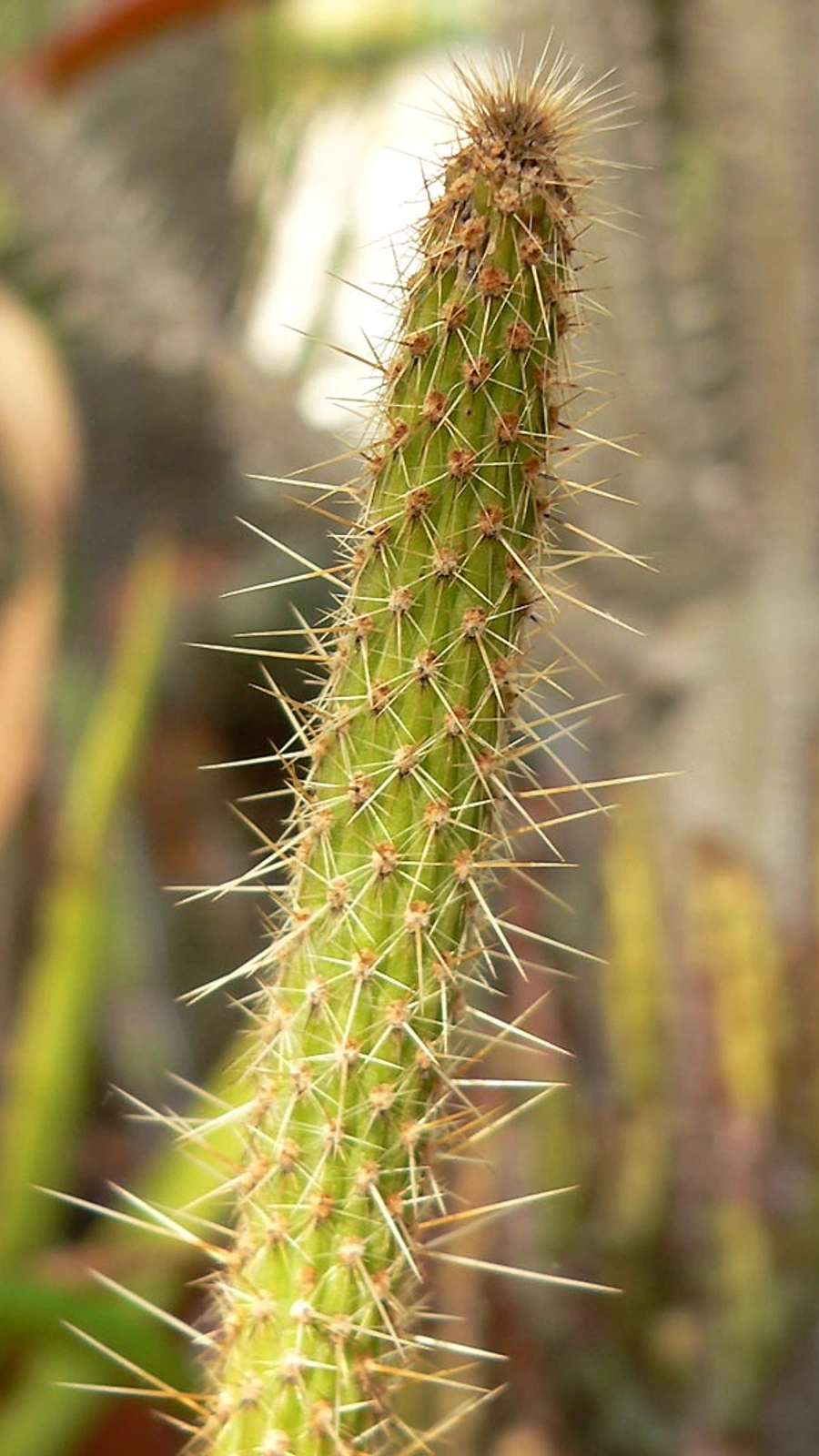
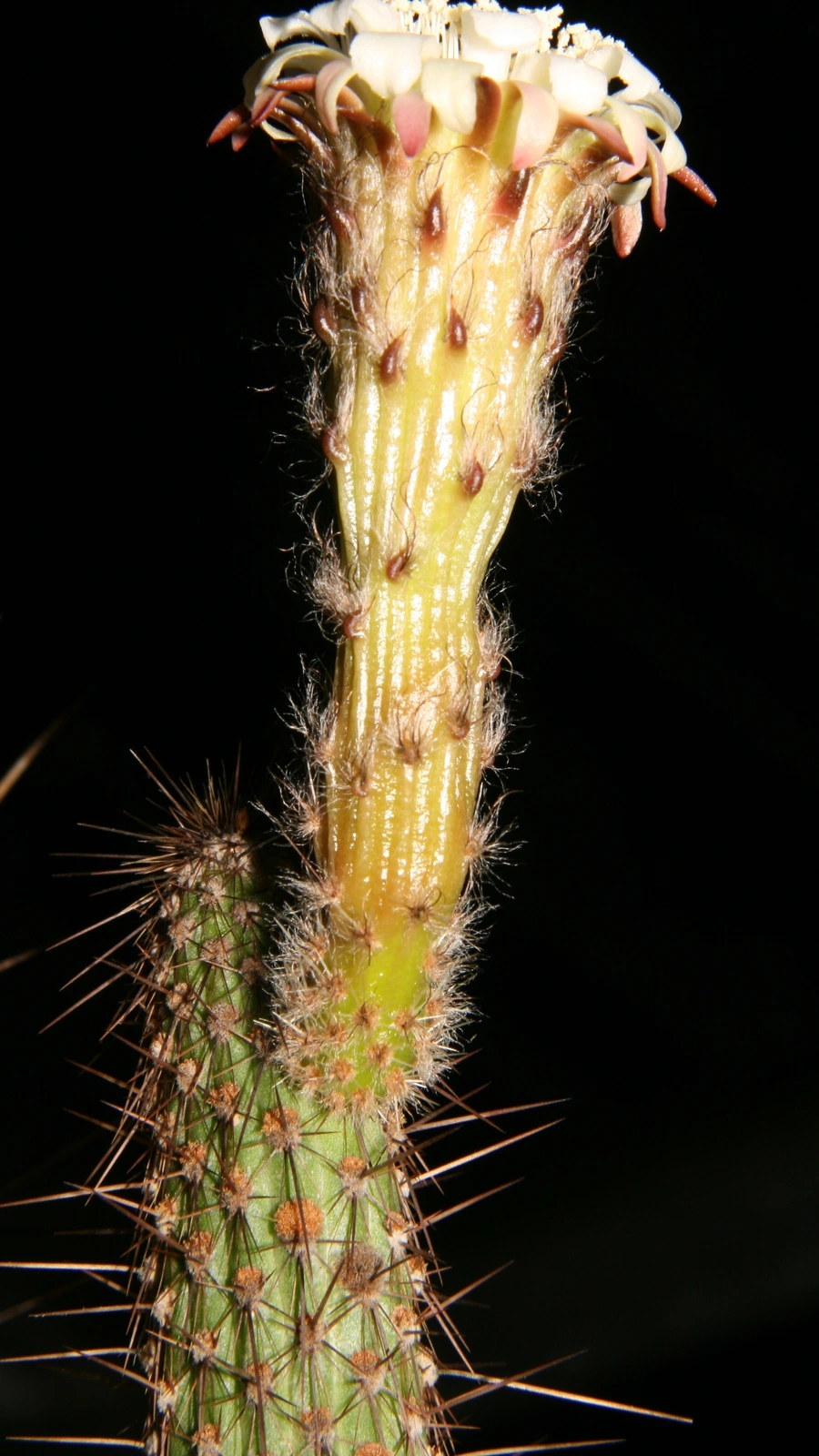
Lophocereus bahiensis exhibits erect, grayish-green stems that often branch from the base. The stems feature prominent ribs lined with fuzzy areoles and sharp spines. Upon reaching maturity, the reproductive upper portions of the stems produce a pseudocephalium composed of dense, long, hair-like bristles 2. Nocturnal, pale pink to whitish flowers emerge from this structure.
In cultivation, it requires maximum light exposure, ideally under direct sunlight. The substrate must be highly porous, consisting of pumice, coarse sand, and minimal organic matter to prevent root pathogens. Watering should follow a soak-and-dry cycle during the active growing season, and must be kept to a bare minimum in winter 3.
Overwatering is the primary cause of failure with this species, quickly leading to root rot. Keeping the plant in poorly ventilated or low-light indoor environments will cause etiolation, weakening the skeletal structure of the stem.
Requires at least 6-8 hours of direct, unfiltered sunlight daily.
Allow substrate to dry completely between waterings; dry in winter.
Extremely porous mineral substrate rich in pumice and coarse grit.
Armed with sharp spines; keep out of reach of children and pets.
Easy to moderate if strict watering discipline is maintained.
Native to the semi-arid Caatinga ecoregion of northeastern Brazil, thriving on dry, rocky slopes and scrublands.
