
Light
Full Sun
Requires full sun, ideally 6+ hours of direct sunlight daily on south-facing windows or outdoors.
 Reference image
 Reference image
Gates' Whisker Cactus
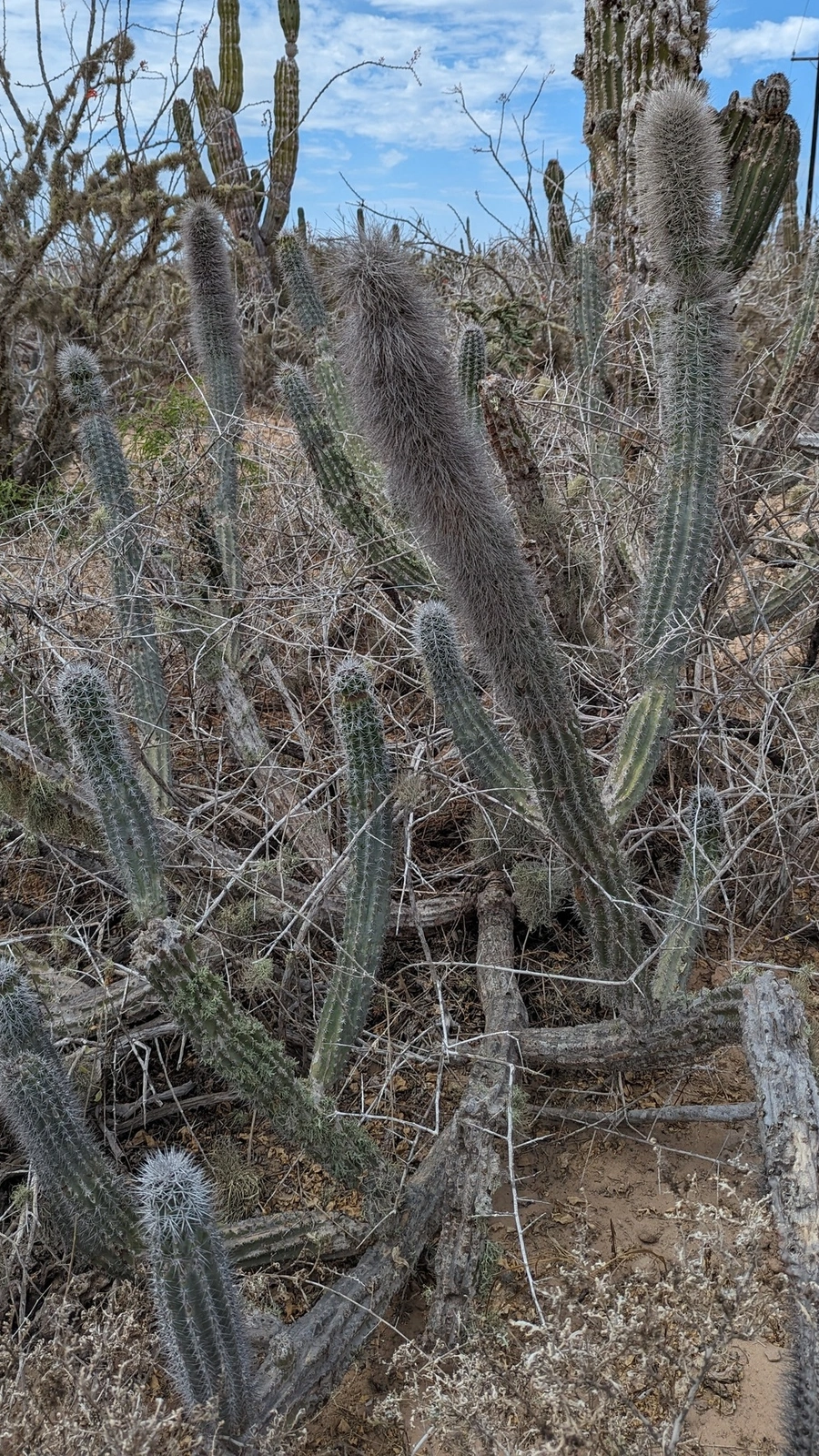
Lophocereus gatesii is a rare, columnar succulent subshrub belonging to the Cactaceae family. It is highly valued among collectors for its distinctive, bristly pseudocephalium that forms on mature stems.
Named after the renowned cactus explorer Howard Elliott Gates, this species was formally described within the genus Lophocereus 1. Some taxonomists refer to it under the synonym Pachycereus gatesii.
This species is micro-endemic to a narrow coastal strip of Baja California Sur, Mexico 2. It thrives in arid desert shrublands, growing in sandy or gravelly soils under extreme sun exposure and coastal fog influence.
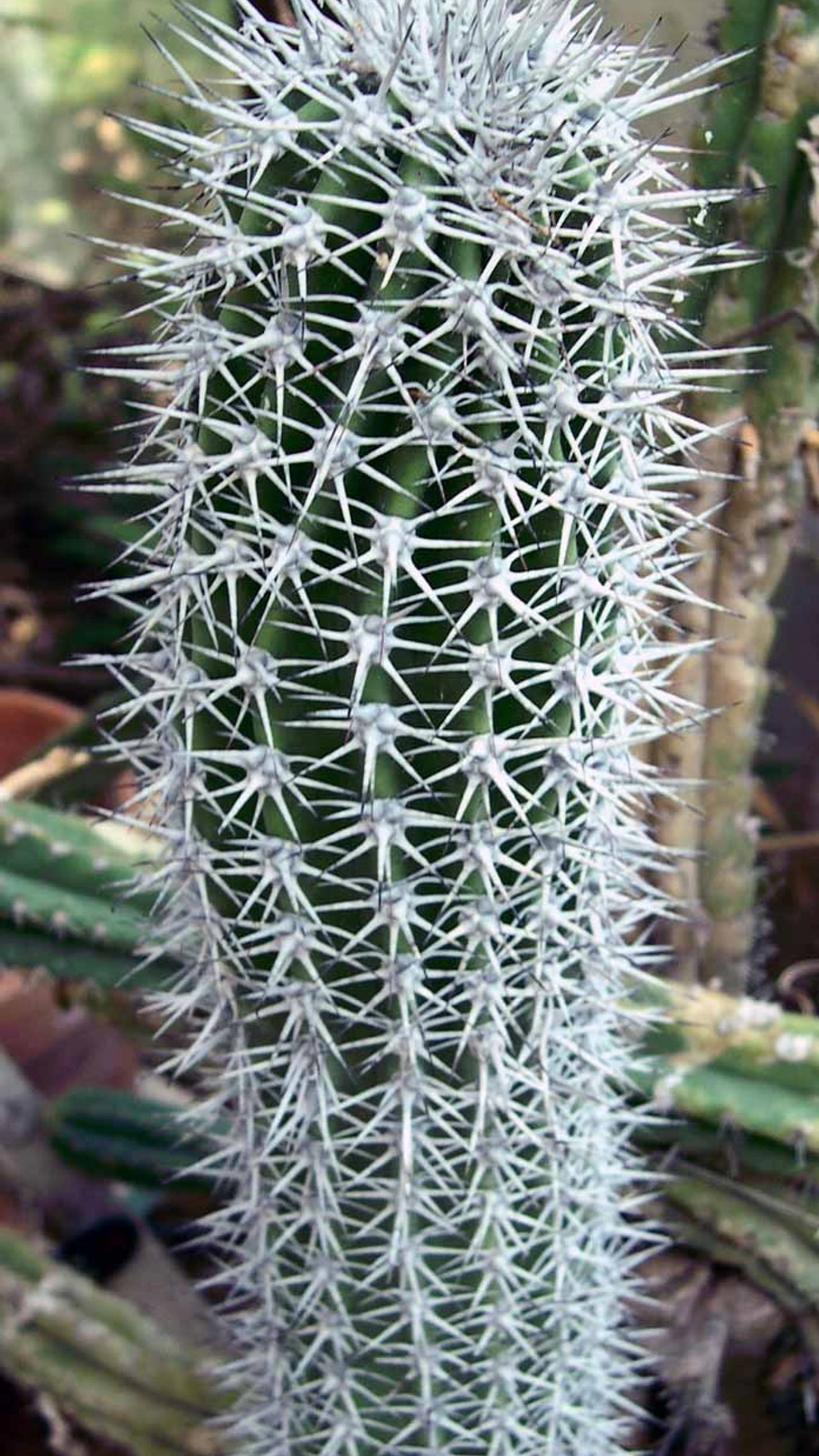
It forms a dense, multi-stemmed shrub reaching up to 2 meters in height. Stems are dull green to grayish-green with 10 to 15 ribs. Near the apex of mature stems, the aeroles produce dense, woolly, bristly spine clusters from which nocturnal pinkish flowers emerge.
Lophocereus gatesii requires full sun and exceptionally free-draining mineral soil. Water thoroughly during the hot summer months only after the soil has dried out completely. It has poor frost tolerance and must be kept dry in winter.
Overwatering in low-temperature periods and placing the plant in heavy, organic-rich soil mixes are the primary causes of root rot and stem necrosis 1.
Requires full sun, ideally 6+ hours of direct sunlight daily on south-facing windows or outdoors.
Strictly follow a soak-and-dry method. Suspend watering during the cold winter months.
Use an inorganic, highly porous mix containing pumice, perlite, and coarse sand.
Non-toxic to pets, but the sharp bristles can cause skin irritation or physical injury upon contact.
Moderate difficulty due to strict requirements for light, drainage, and winter dryness.
Endemic to the coastal desert areas of Baja California Sur, Mexico, where it grows in sandy soil and rocky flatlands under hot, arid conditions tempered by maritime breezes.
