
Light
Filtered Sun
Filtered bright light or partial shade. Protect from scorching direct afternoon sun.
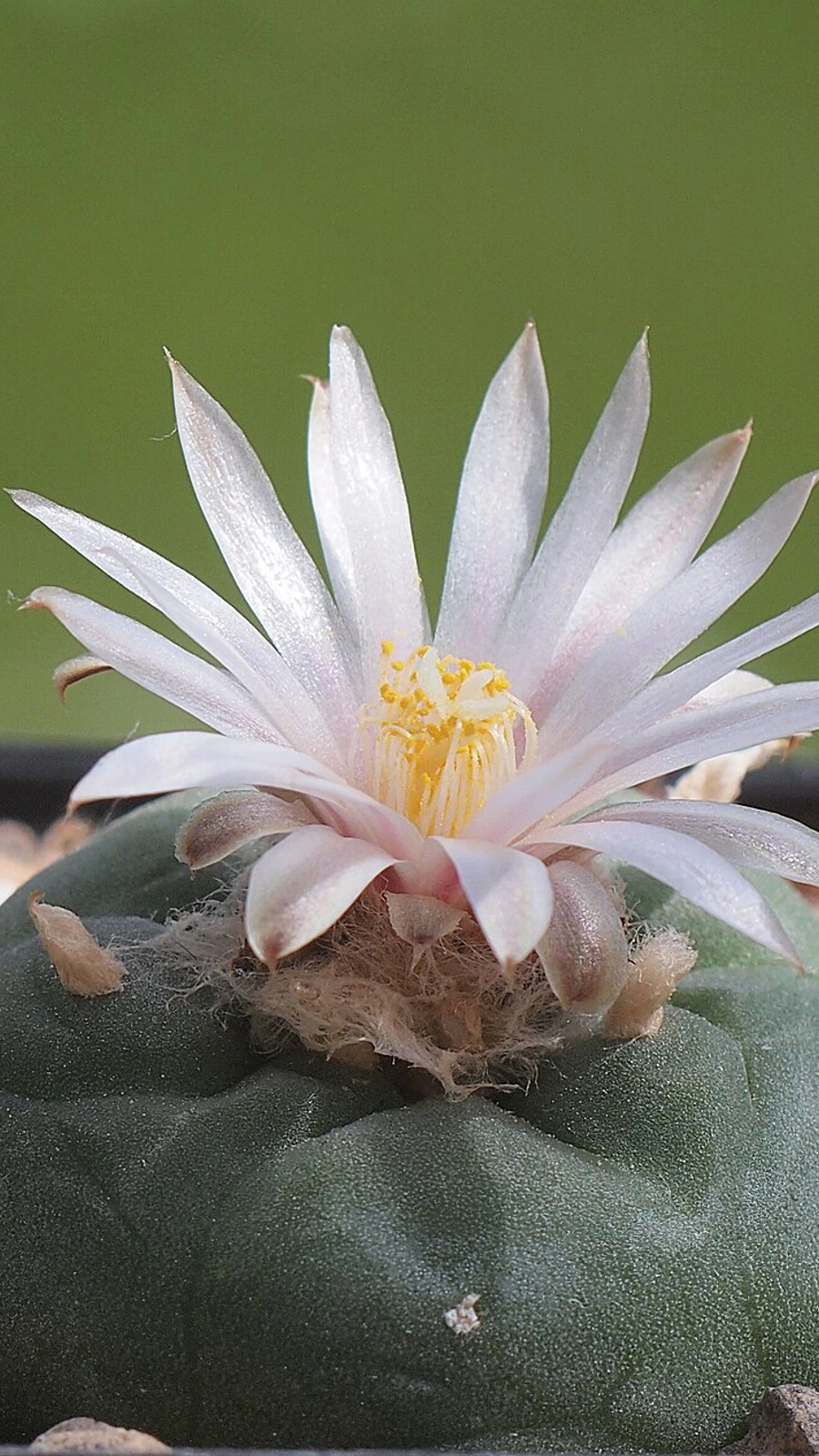
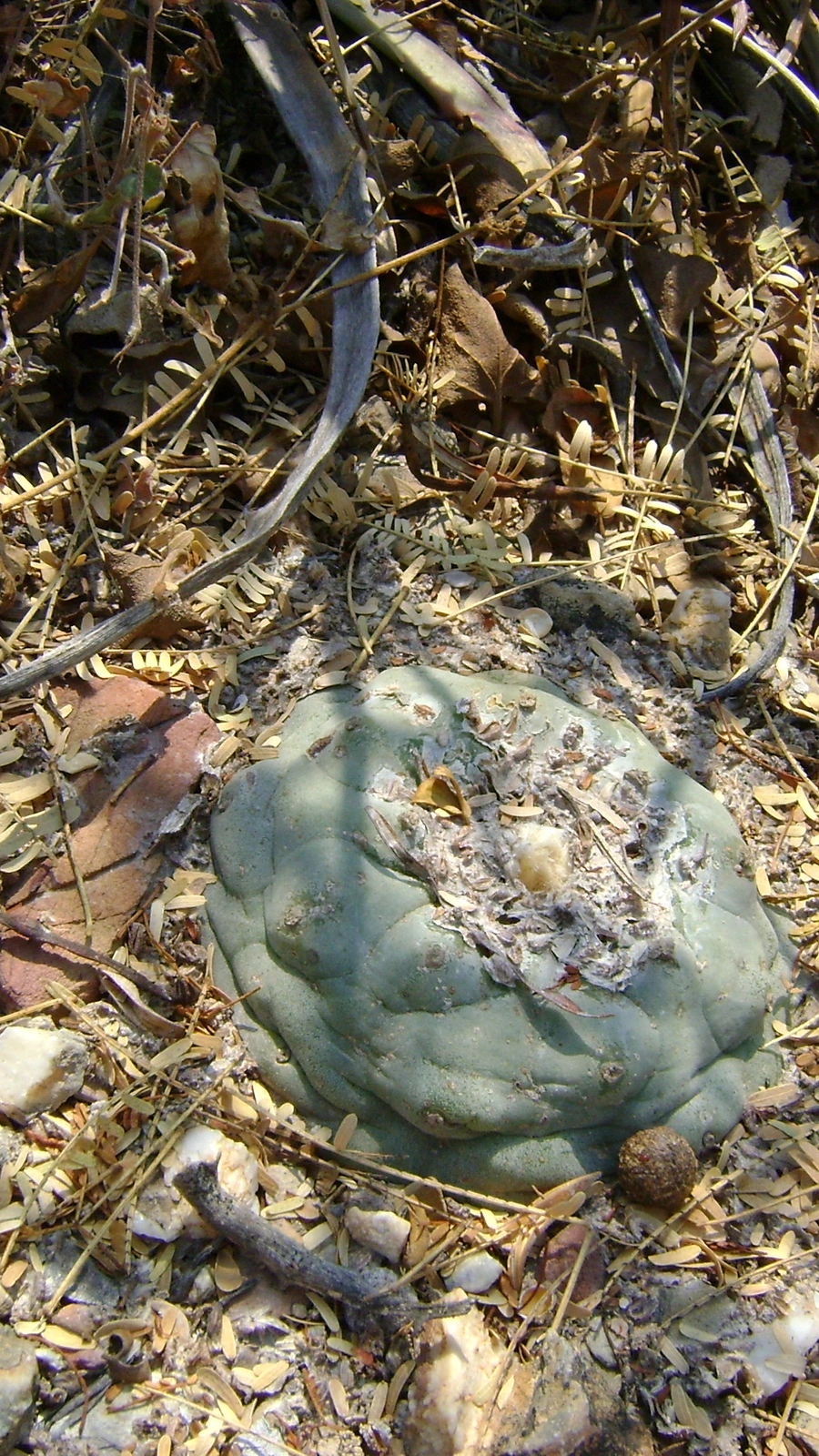
False Peyote
Lophophora diffusa, commonly known as the False Peyote, is a spineless, slow-growing geophytic cactus belonging to the family Cactaceae.
First described in the 19th century, Lophophora diffusa is distinguished from its close relative L. williamsii by its yellowish-green epidermis, the lack of well-defined ribs, and its chemical composition, containing predominantly pellotine rather than mescaline 1.
This species is micro-endemic to a small area in the state of Querétaro and Hidalgo, Mexico 2. It thrives in semi-arid desert shrublands, growing on limestone-rich soils, often sheltered under nurse plants.
The stem is soft, globose, and yellowish-green, lacking distinct ribs but possessing diffuse, wavy podaria. The apex is covered in dense tufts of white trichomes (wool), from which small white to light pink flowers emerge during spring and summer.
Cultivation requires an strictly mineral-based substrate with excellent drainage. Watering should be sparse during the active growing season and completely suspended during winter dormancy to prevent root rot.
Using standard organic potting soil and overwatering are the primary causes of failure, leading to rapid rot. Excessive direct sunlight can also scorch its sensitive, soft-textured epidermis.
Filtered bright light or partial shade. Protect from scorching direct afternoon sun.
Water very sparingly in summer only when soil is bone dry. Keep completely dry in winter.
Strictly mineral mix containing pumice, limestone gravel, and very little organic matter.
Contains toxic alkaloids (such as pellotine). Keep away from pets and children.
Highly sensitive to moisture and prone to rot, making it best suited for experienced growers.
Endemic to a highly restricted region of the Queretaro desert in Mexico, where it grows on steep limestone slopes shaded by xerophytic vegetation.
