
Scientific taxonomy article
Auto-generated taxonomy record for Lophophora.
Lophophora
Auto generated taxonomy record for Lophophora.
Auto-generated taxonomy record for Lophophora.

Lophophora alberto-vojtechii
Lophophora alberto vojtechii is the smallest known species in the family Cactaceae, characterized by its geophytic growth habit. It grows as a solitary, spineless, slow growing succulent subshrub .
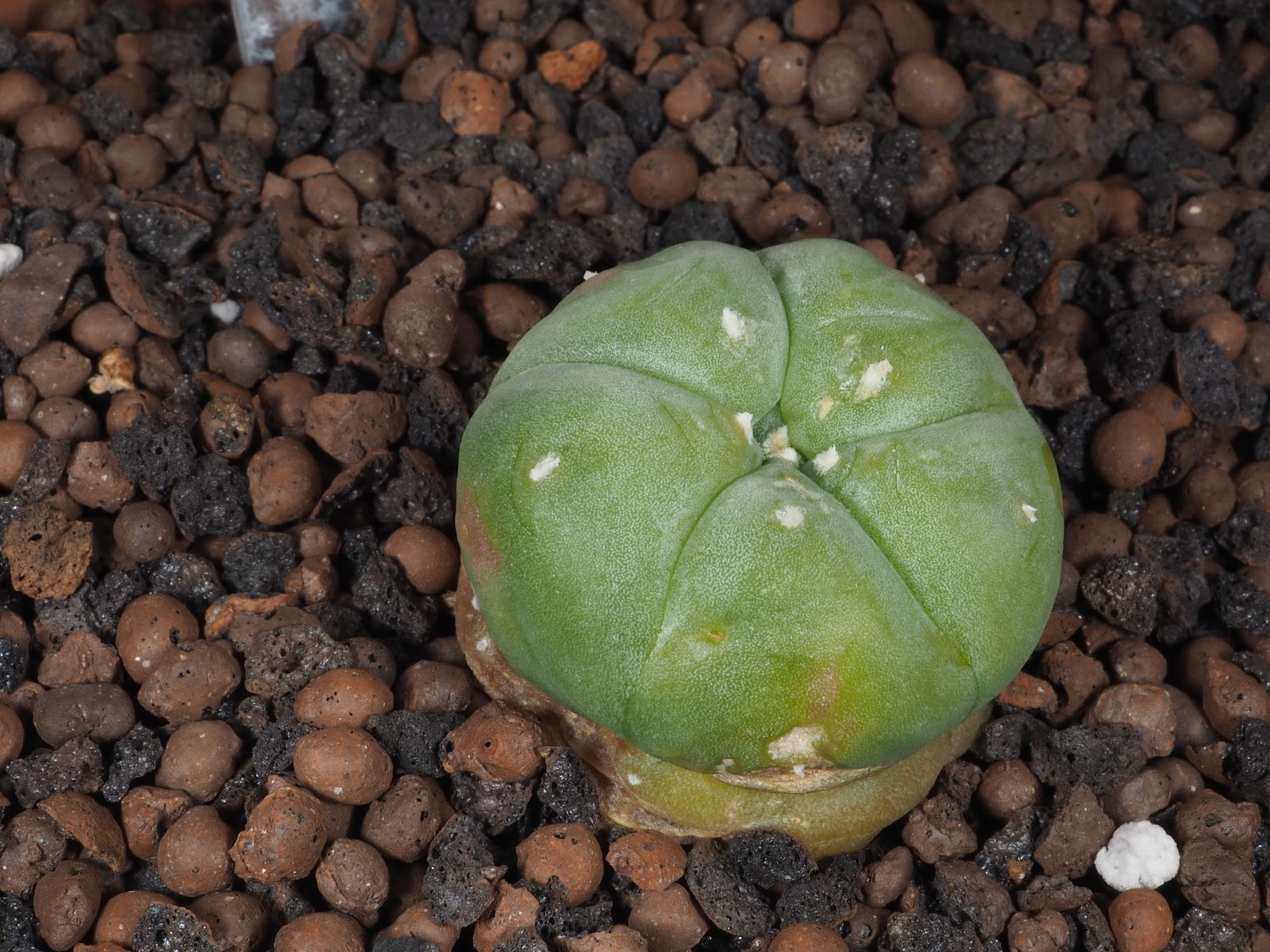
Lophophora diffusa
Overview\nLophophora diffusa, commonly known as the False Peyote, is a spineless, slow growing geophytic cactus belonging to the family Cactaceae.\n\n Taxonomy and Naming\nFirst described in the 19th century, Lophophora diffusa is distinguished from its close relative L. williamsii by its yellowish green epidermis, the lack of well defined ribs, and its chemical composition, containing predominantly pellotine rather than mescaline .\n\n Distribution and Habitat\nThis species is micro endemic to a small area in the state of Querétaro and Hidalgo, Mexico . It thrives in semi arid desert shrublands, growing on limestone rich soils, often sheltered under nurse plants.\n\n Appearance\nThe stem is soft, globose, and yellowish green, lacking distinct ribs but possessing diffuse, wavy podaria. The apex is covered in dense tufts of white trichomes (wool), from which small white to light pink flowers emerge during spring and summer.\n\n Cultivation\nCultivation requires an strictly mineral based substrate with excellent drainage. Watering should be sparse during the active growing season and completely suspended during winter dormancy to prevent root rot.\n\n Common Cultivation Mistakes\nUsing standard organic potting soil and overwatering are the primary causes of failure, leading to rapid rot. Excessive direct sunlight can also scorch its sensitive, soft textured epidermis.\n References\n Plants of the World Online (POWO), Royal Botanic Gardens, Kew.\n IUCN Red List of Threatened Species, Lophophora diffusa.
Lophophora diffusa
Overview\nLophophora diffusa, commonly known as the False Peyote, is a spineless, slow growing geophytic cactus belonging to the family Cactaceae.\n\n Taxonomy and Naming\nFirst described in the 19th century, Lophophora diffusa is distinguished from its close relative L. williamsii by its yellowish green epidermis, the lack of well defined ribs, and its chemical composition, containing predominantly pellotine rather than mescaline .\n\n Distribution and Habitat\nThis species is micro endemic to a small area in the state of Querétaro and Hidalgo, Mexico . It thrives in semi arid desert shrublands, growing on limestone rich soils, often sheltered under nurse plants.\n\n Appearance\nThe stem is soft, globose, and yellowish green, lacking distinct ribs but possessing diffuse, wavy podaria. The apex is covered in dense tufts of white trichomes (wool), from which small white to light pink flowers emerge during spring and summer.\n\n Cultivation\nCultivation requires an strictly mineral based substrate with excellent drainage. Watering should be sparse during the active growing season and completely suspended during winter dormancy to prevent root rot.\n\n Common Cultivation Mistakes\nUsing standard organic potting soil and overwatering are the primary causes of failure, leading to rapid rot. Excessive direct sunlight can also scorch its sensitive, soft textured epidermis.\n References\n Plants of the World Online (POWO), Royal Botanic Gardens, Kew.\n IUCN Red List of Threatened Species, Lophophora diffusa.

Lophophora fricii
Lophophora fricii is a spineless, geophytic, slow growing succulent subshrub belonging to the family Cactaceae. Highly prized among succulent collectors for its distinctive pale grey green to yellow green globose body and vibrant pink flowers, it requires careful cultivation due to its sensitive root system and chemical profile.
Lophophora fricii
Lophophora fricii is a spineless, geophytic, slow growing succulent subshrub belonging to the family Cactaceae. Highly prized among succulent collectors for its distinctive pale grey green to yellow green globose body and vibrant pink flowers, it requires careful cultivation due to its sensitive root system and chemical profile.

Lophophora williamsii
Lophophora Williamsii: The Mysterious Button of the Desert Lophophora williamsii, commonly known as Peyote , is a small, spineless, slow growing cactus species belonging to the Cactaceae family. It is native to arid and semi arid regions stretching from southern Texas into northern Mexico. The plant typically appears as a flattened, spherical "button" that barely rises above the ground, exhibiting a gray green to blue green hue. Its crown features distinct ribs covered with tufts of woolly hairs (areoles). It produces small, usually pink or white flowers that bloom during the day and fade within a few days. Peyote is notable for its extremely slow growth rate and unique morphology; it can take decades for a plant to reach maturity from seed . Botanical and Chemical Properties The most prominent feature of Lophophora williamsii is its rich content of various alkaloids, chief among them mescaline , known for its hallucinogenic effects. These chemical compounds serve both as a defense mechanism against herbivores and have led to its extensive use in religious and shamanic rituals by indigenous North American tribes for centuries. Due to its psychoactive properties, the cactus is subject to strict legal regulations internationally. In many countries, its cultivation, possession, and trade are illegal or heavily restricted . Conservation Status and Threats Peyote is listed as "Vulnerable" on the IUCN Red List. Populations of the plant are significantly declining due to both illegal harvesting (overcollection) and habitat loss and degradation. Its natural habitats, particularly in Texas, are under pressure from human activities such as agriculture and cattle grazing. This situation necessitates urgent conservation measures to ensure the species' survival. Sustainable harvesting practices and habitat protection efforts are crucial for the future of this iconic cactus. Sources: "Lophophora williamsii". Plants of the World Online , Royal Botanic Gardens, Kew. Retrieved from: https://powo.science.kew.org/taxon/urn:lsid:ipni.org:names:130985 1 Schultes, Richard Evans, and Albert Hofmann. Plants of the Gods: Their Sacred, Healing, and Hallucinogenic Powers . Healing Arts Press, 1992.
