
Light
Bright Indirect Light
Requires bright, filtered sunlight. Protect from intense, direct afternoon sun to prevent epidermis scorching.
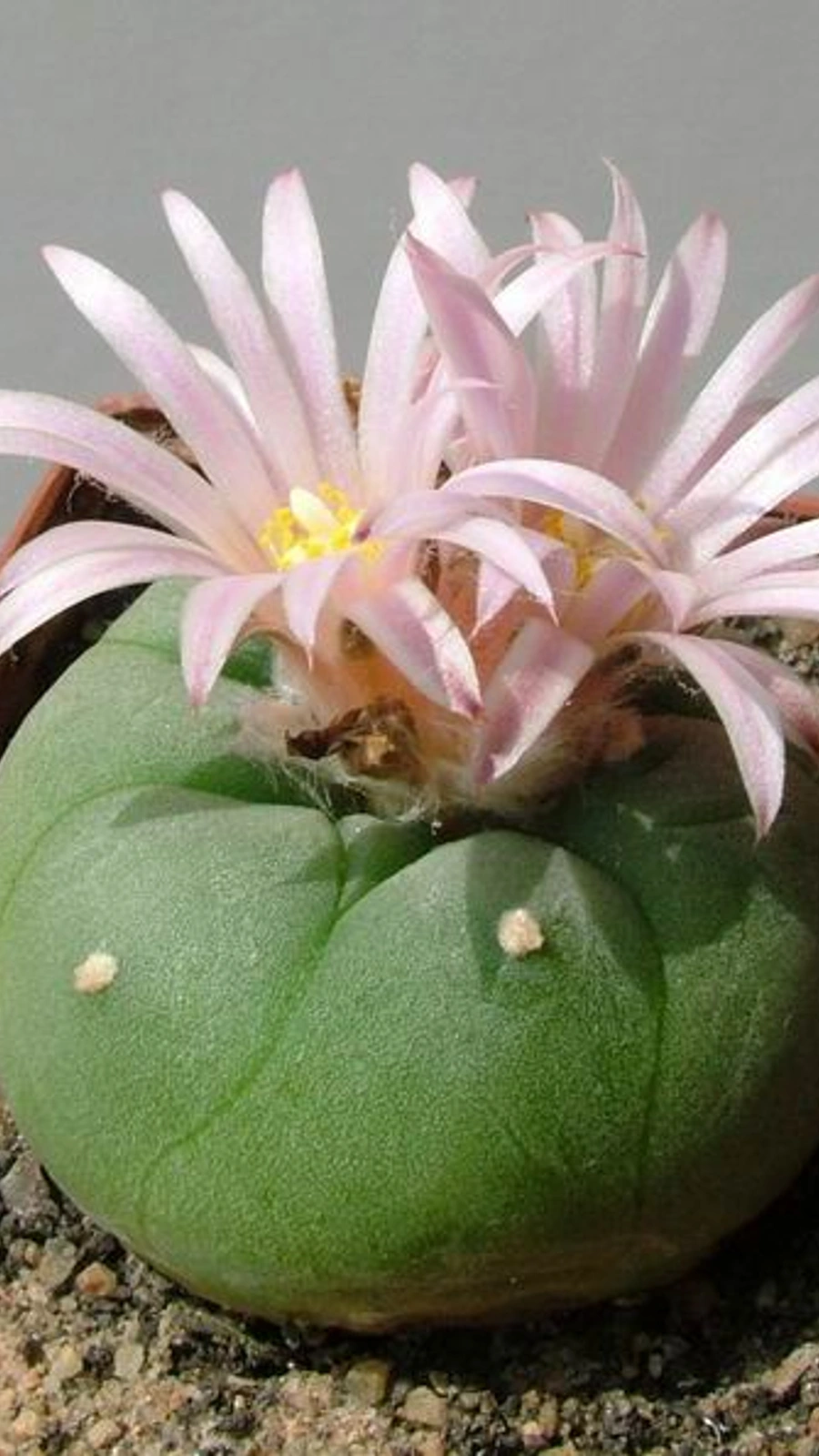
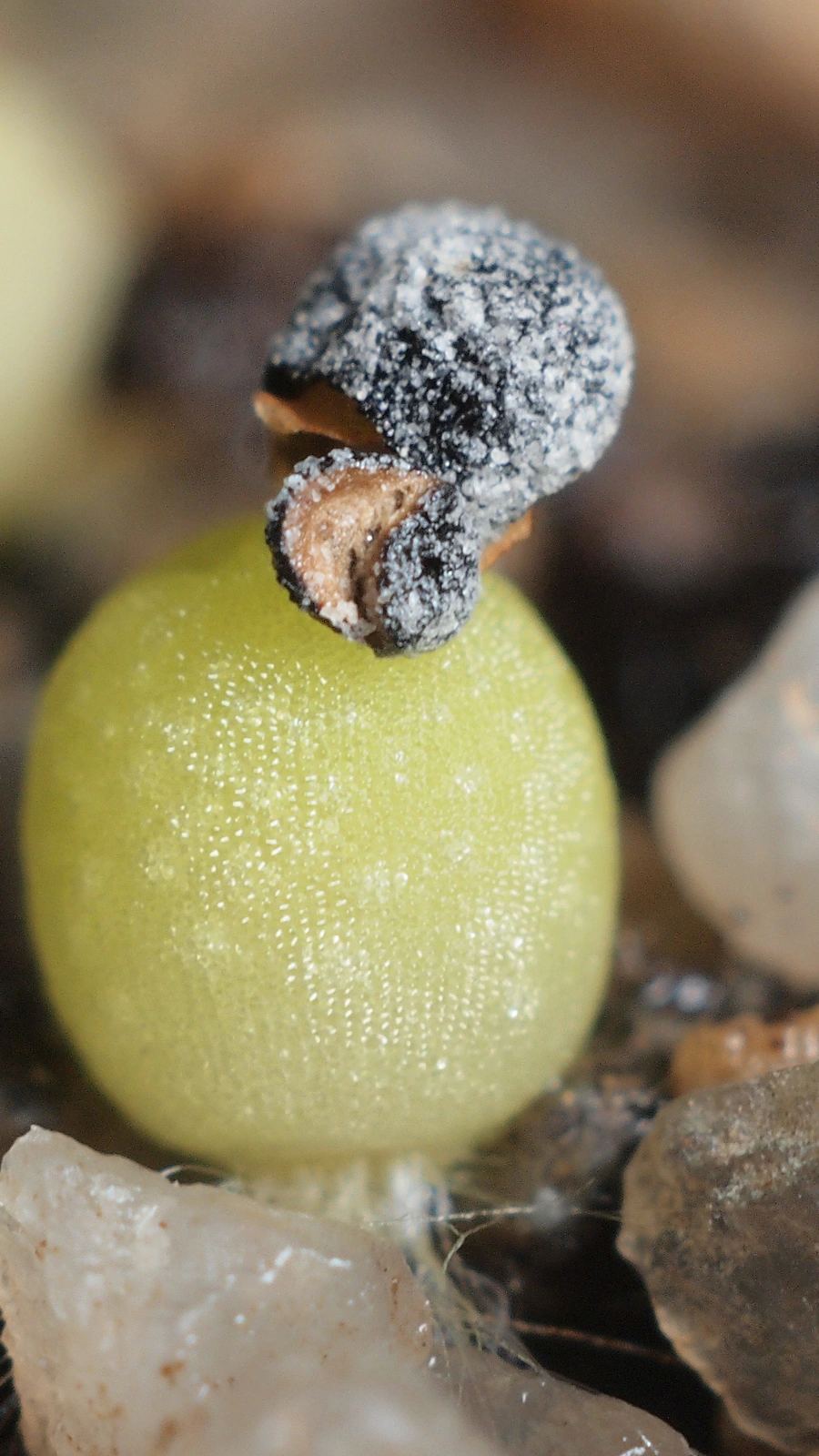
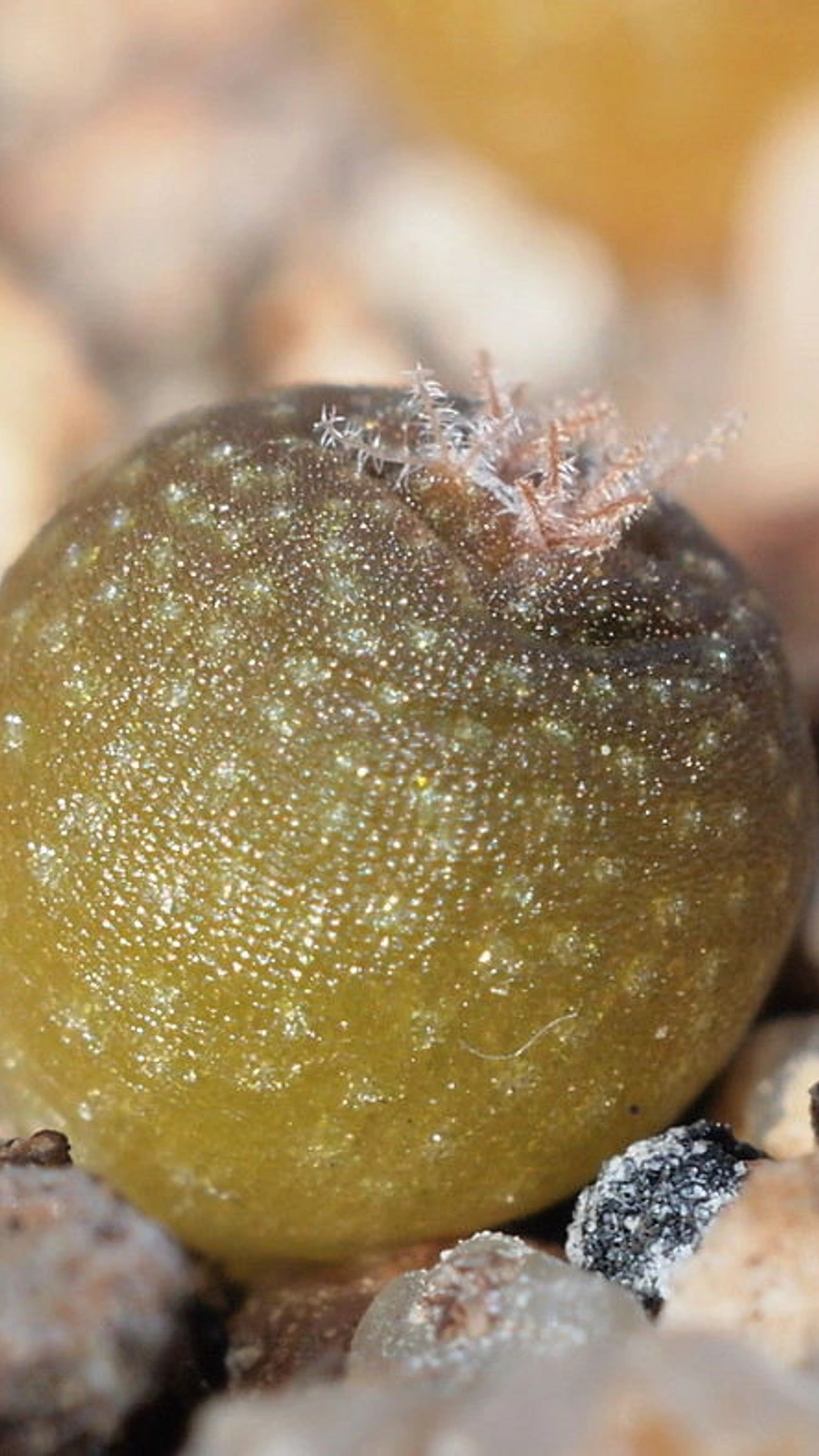 Reference image
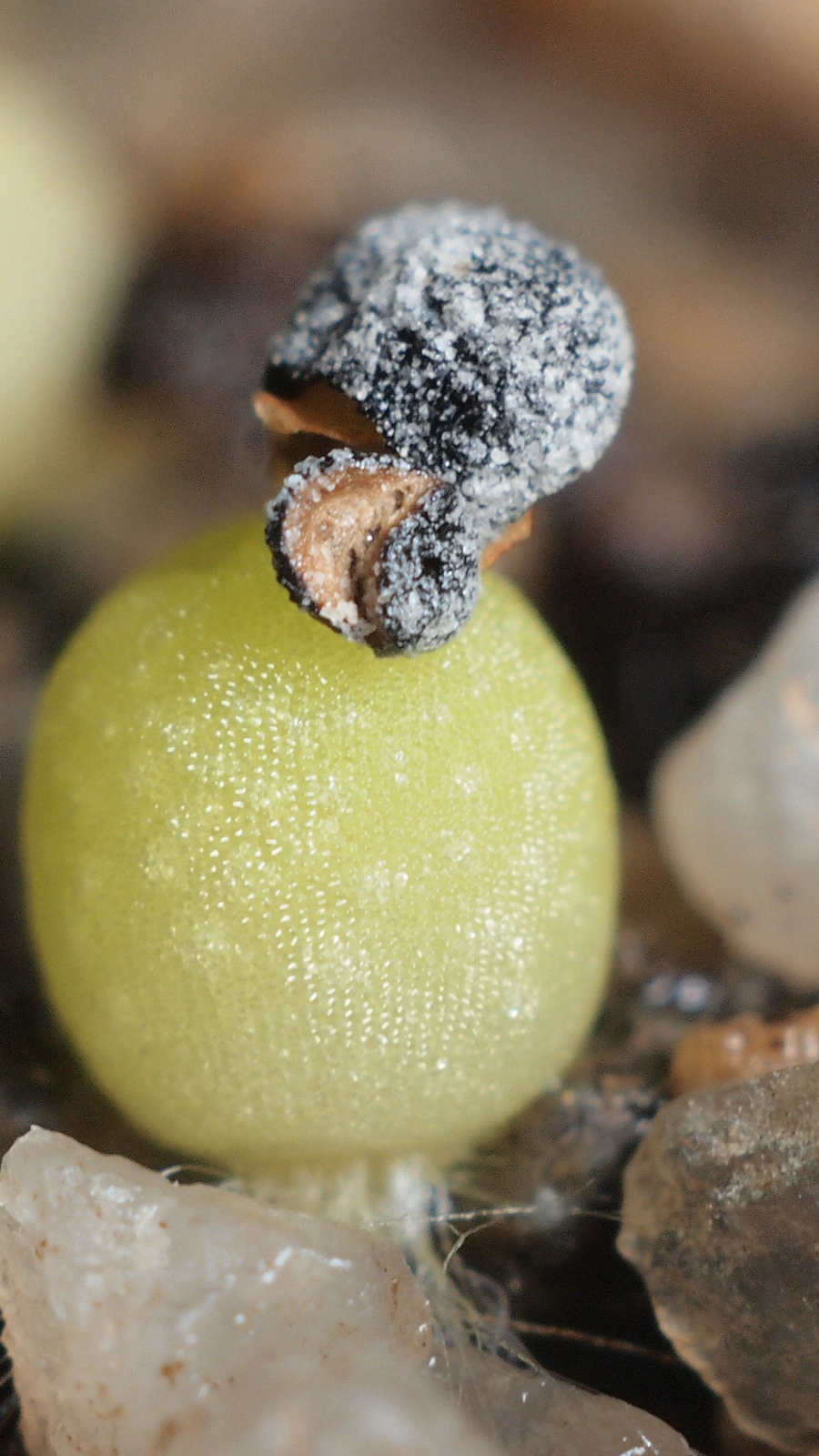 Reference image
Fric's Peyote
Lophophora fricii is a spineless, geophytic, slow-growing succulent subshrub belonging to the family Cactaceae. Highly prized among succulent collectors for its distinctive pale grey-green to yellow-green globose body and vibrant pink flowers, it requires careful cultivation due to its sensitive root system and chemical profile.
Belonging to the genus Lophophora, this species was named in honor of the famous Czech botanist and cactus collector Alberto Vojtěch Frič. While some taxonomists historically grouped it under Lophophora diffusa, current botanical consensus often treats it as a distinct species or a well-defined subspecies due to its unique chemical markers and flower morphology 1.
This species is native to northern Mexico, predominantly found in the state of Coahuila 2. It grows in arid desert conditions, typically nestled in rocky limestone slopes, clayey flats, and alluvial soils, where it protects itself from excessive heat by shrinking almost completely into the ground.
The plant has a globose, somewhat flattened stem that lacks spines entirely. Its ribs are numerous and usually wavy or spiraling, featuring woolly white areoles along the ridges. The flowers appear from the center of the crown during late spring and summer, presenting a beautiful shade of pink, magenta, or deep carmine 1.
In cultivation, Lophophora fricii requires an exclusively mineral-based substrate to prevent fungal infections. Watering should be deep but infrequent during summer, with a strict dry rest period throughout winter. Bright, filtered sunlight is necessary to maintain its natural, compact habit 2.
The most prevalent error is using standard organic potting soils and watering during winter dormancy. This combination rapidly triggers root rot, destroying the delicate taproot system.
Requires bright, filtered sunlight. Protect from intense, direct afternoon sun to prevent epidermis scorching.
Water strictly on a soak-and-dry cycle in spring/summer. Keep completely bone-dry throughout the winter.
Use an organic-free substrate composed of pumice, lava rock, zeolite, and coarse sand for ultimate drainage.
Contains toxic alkaloids such as pellotine. Highly toxic if ingested by pets or humans.
Moderate to hard due to the strict watering requirements and high vulnerability of the taproot to overwatering.
Naturally distributed in the dry limestone basins and stony slopes around the Viesca region in Coahuila, Mexico, adapted to severe drought.
