
Light
Bright Indirect Light
Bright, indirect sunlight or filtered morning sun. Avoid harsh direct midday sun.
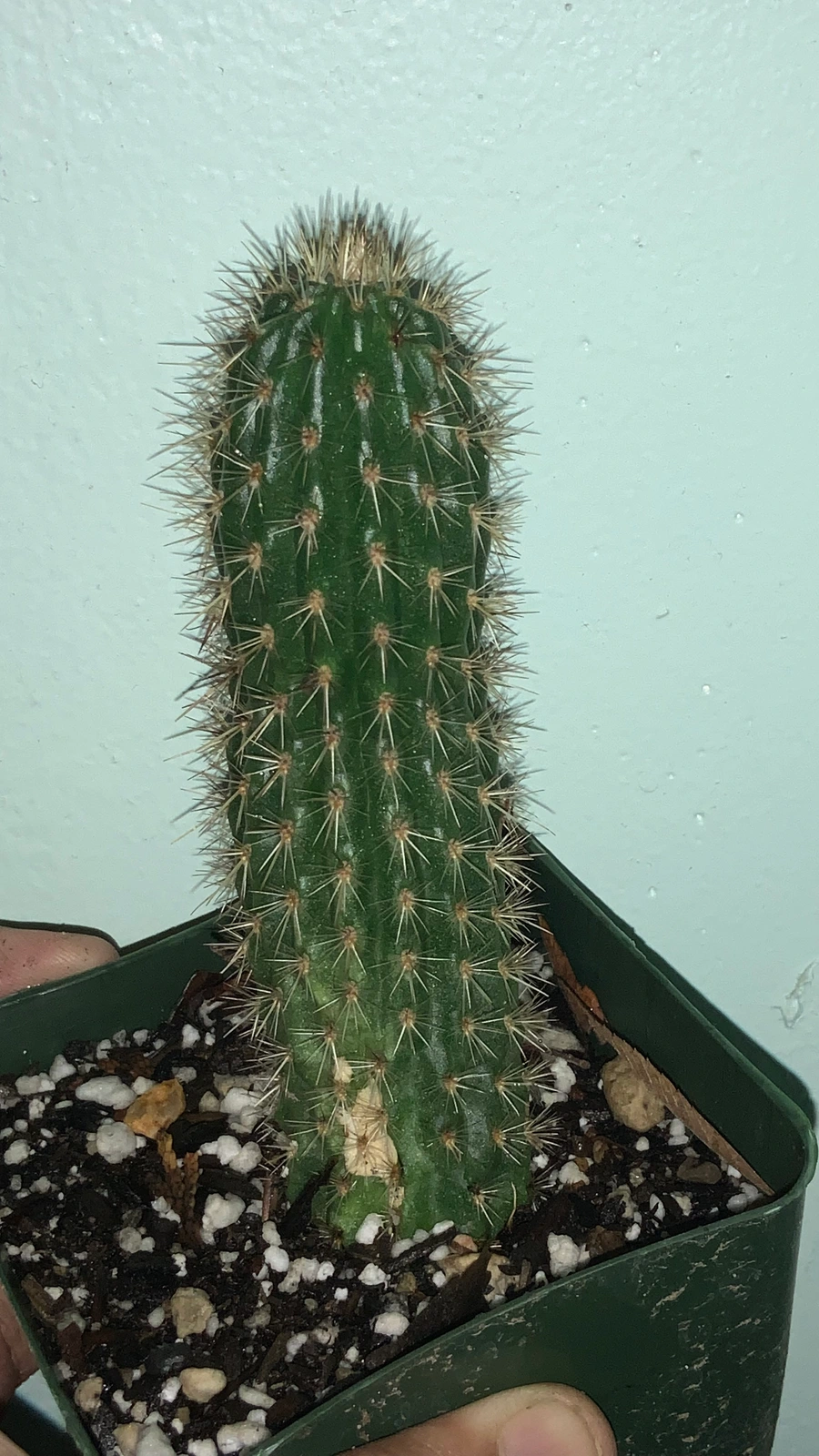 Reference image
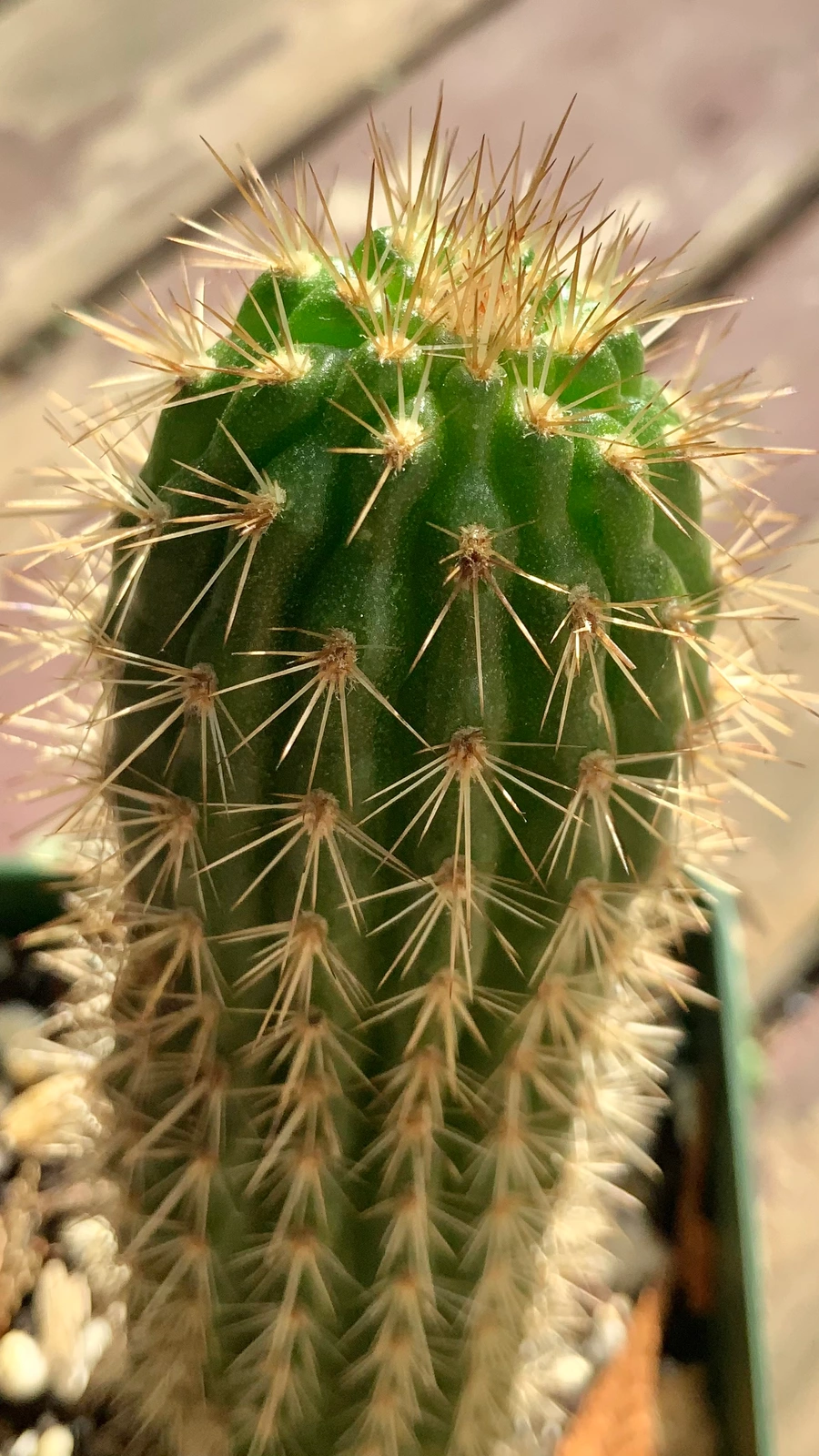 Reference image
Hoxey's Loxanthocereus
Loxanthocereus hoxeyi is an endemic cactus species native to the arid valleys of Peru, characterized by its subshrubby, clustering growth habit and vibrant tubular flowers 1.
The species was named in honor of the British cactus enthusiast and explorer Paul Hoxey, who made significant contributions to the study of Andean cacti 2. It belongs to the genus Loxanthocereus, which is highly valued for its specialized floral ecology.
Endemic to western South America, specifically Peru, this species thrives in dry shrublands and rocky desert environments 3. It is found clinging to steep canyon walls and gravelly slopes where drainage is instantaneous.
The stems are slender, cylindrical, light green, and densely covered with fine needle-like spines. The striking flowers are asymmetrical, tubular, and bright red to orange, adapted for hummingbird pollination.
It requires a mineral-rich, porous soil medium and excellent air circulation. Water thoroughly in summer only after the substrate has dried out completely, and keep virtually dry in winter.
Overwatering during the winter rest period and using heavy, organic peat-rich soils are the main causes of root rot. Lack of sufficient light leads to weak, etiolated growth.
Bright, indirect sunlight or filtered morning sun. Avoid harsh direct midday sun.
Allow the substrate to dry out entirely between waterings. Suspend watering in winter.
Highly mineral, fast-draining potting soil mixed with pumice, perlite, and coarse sand.
Non-toxic chemically, but the sharp spines pose a physical hazard to pets and small children.
Requires careful water management and excellent drainage, making it moderately easy to care for.
Found naturally in the steep, gravelly valleys and dry shrublands of Peru, adapted to low rainfall and intense highland light.
