
Light
Bright Indirect Light
Thrives in bright, filtered sunlight. Avoid harsh, direct afternoon sun during peak summer.
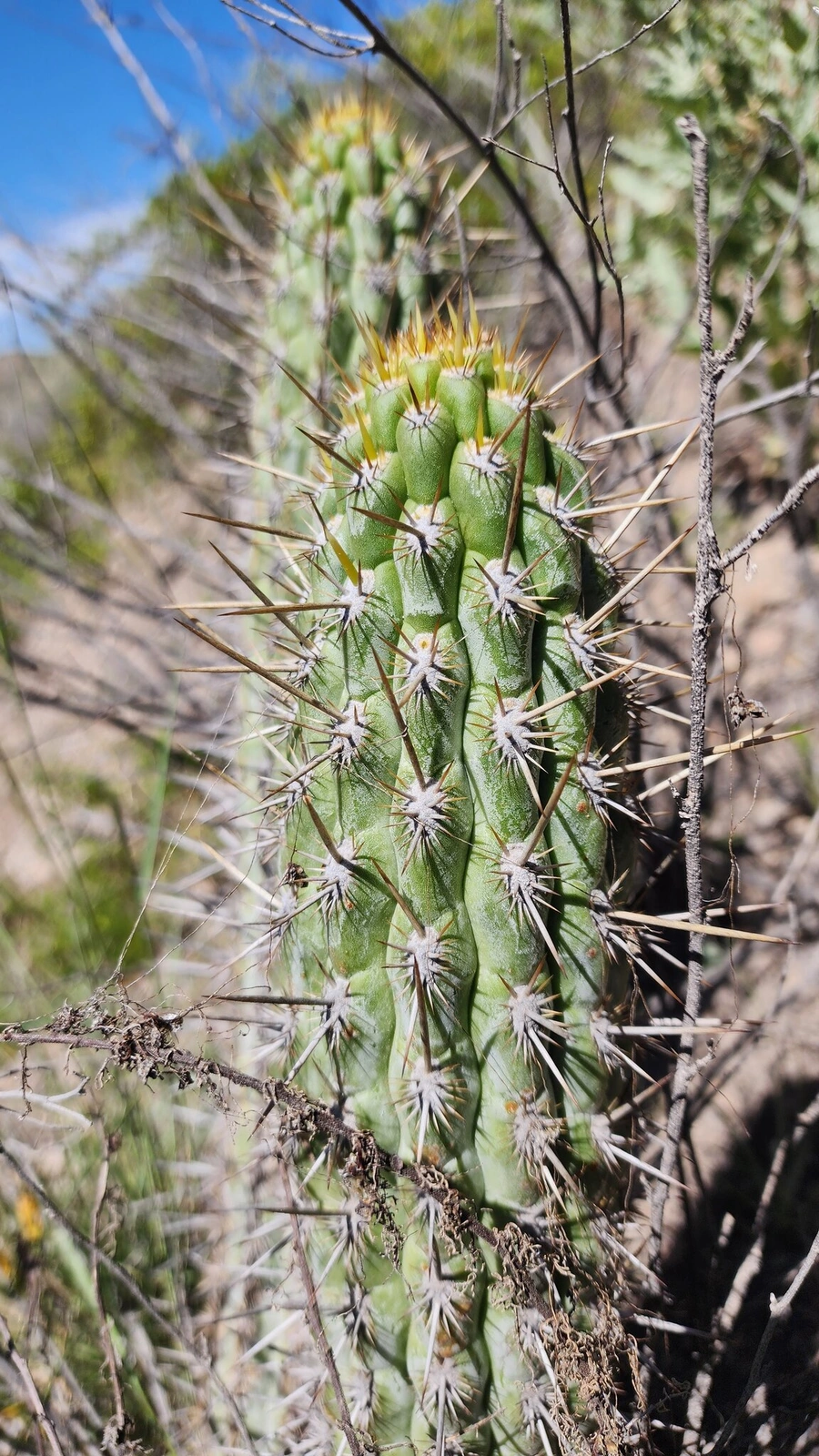 Reference image
Jajoa Pipe Cactus
Loxanthocereus jajoanus is a perennial succulent shrub belonging to the family Cactaceae, characterized by its upright to decumbent cylindrical stems. Known for its tubular, brightly colored blooms, this species is a favored selection among specialized succulent and cactus collectors.
Classified within the genus Loxanthocereus under the Cactaceae family, this species has historically been associated with the genus Cleistocactus by some taxonomists 1. However, modern phylogenetic studies and morphological analyses of its zygomorphic flower structure support its retention in Loxanthocereus 2.
This species is native to the arid, rocky terrains of Western South America, specifically endemic to Peru 1. It thrives in dry shrublands and desert biomes, often found clinging to steep rocky slopes where drainage is instantaneous and organic matter is scarce.
The stems are cylindrical, pale to medium green, branching from the base to form a shrubby cluster. Multiple ribs run vertically along the stems, densely packed with areoles bearing yellowish-brown spines. The zygomorphic, tubular flowers are brilliant red to orange-red, emerging near the stem tips.
In cultivation, it requires a very porous, mineral-rich substrate and bright, filtered sunlight. Watering should follow the 'soak and dry' method during the active growing season (spring and summer) and be strictly withheld during the cold winter dormancy.
The most frequent cultivation error is using standard potting soil that retains too much moisture, leading to rapid root rot. Insufficient sunlight will cause etiolation (stretching), weakening the plant's structural integrity.
Thrives in bright, filtered sunlight. Avoid harsh, direct afternoon sun during peak summer.
Soak thoroughly only when soil is completely dry. Keep almost dry in winter.
Requires an airy, gritty mineral mix rich in pumice, perlite, and coarse sand.
Features sharp spines. Handle with thick gloves and keep away from pets and children.
Moderately easy to care for, provided its drainage and light requirements are strictly met.
Native to the steep rocky slopes and high-elevation arid valleys of Western Peru, growing in highly drained, gravelly soils.
