
Light
Bright Indirect Light
Thrives in bright, filtered sunlight; avoid harsh, direct midday summer sun.
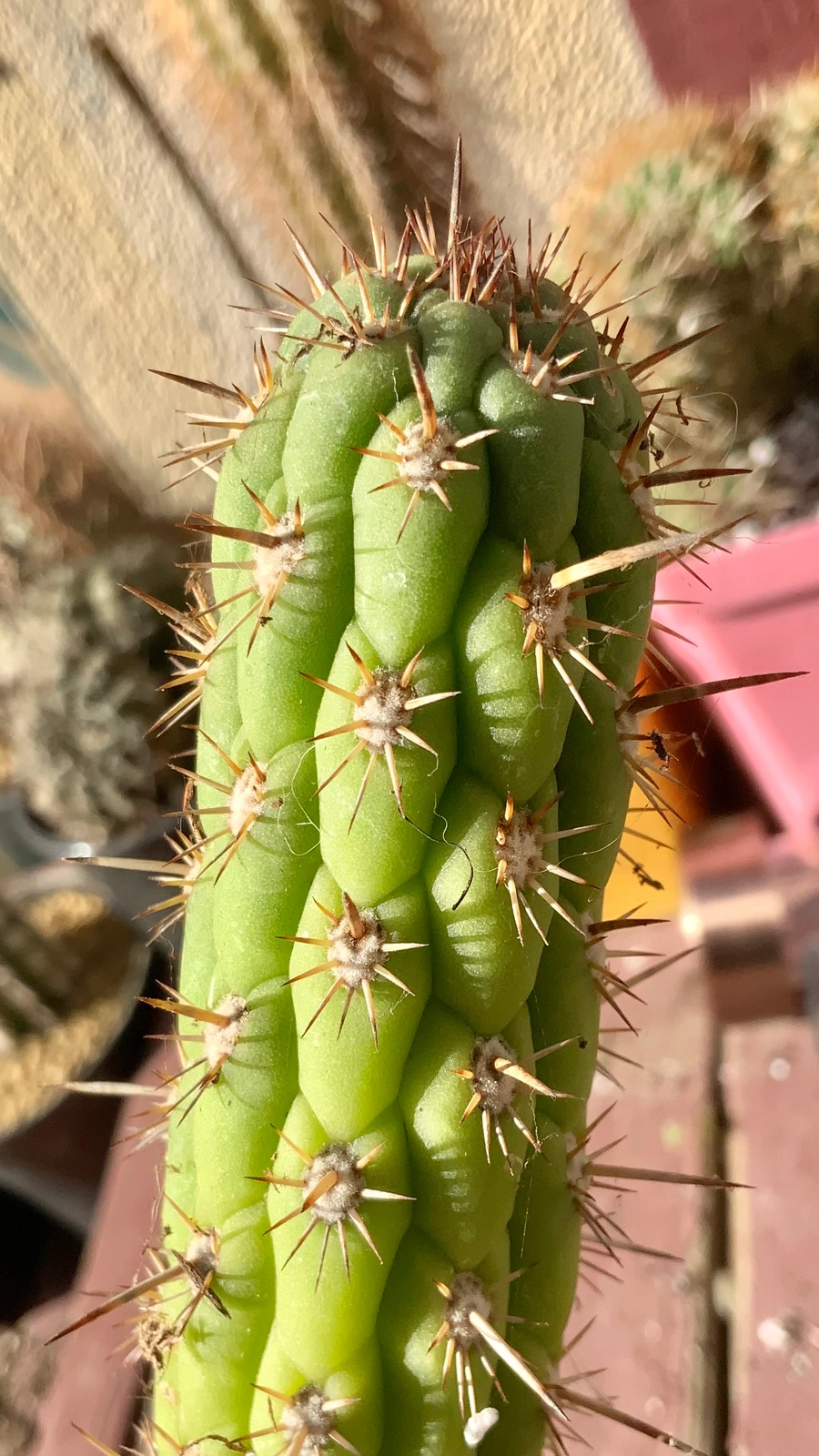 Reference image
Thick-branched Forest Torch
Loxanthocereus pachycladus is an attractive, columnar succulent subshrub belonging to the Cactaceae family. Known for its robust ribbed branches and distinctive golden-brown spines, it represents an outstanding specimen for succulent collectors 1. It is well-adapted to survive prolonged dry spells thanks to its specialized stem structure.
The genus name Loxanthocereus derives from the Greek loxos (slanted) and Latin cereus (candle), referring to the characteristic zygomorphic or slanted flowers 2. The specific epithet pachycladus means "thick-branched," highlighting its sturdy growth habit. Although sometimes grouped under Cleistocactus, current Kew database standards recognize Loxanthocereus as a distinct genus 1.
This species is native to Western South America, particularly endemic to the seasonally dry tropical environments of Peru 3. It thrives on steep rocky slopes and gravelly soils where water drains rapidly after seasonal rains.
It forms upright, segmented columns of a dull grayish-green to bright green shade. The ribs are pronounced, bearing closely set areoles with sharp, needle-like spines. During its blooming season, it produces showy, tubular flowers that are usually bright red to orange, adapted for hummingbird pollination 2.
In cultivation, it requires bright, filtered light and absolute protection against frost. The substrate must be highly mineral and quick-drying 3. Watering should follow the "soak and dry" method, allowing the medium to dry out completely between sessions.
The most prevalent issue is root rot triggered by overwatering or dense, moisture-retaining soil mixes. Low light coupled with high indoor humidity can cause etiolation (stretching) and increase susceptibility to fungal pathogens.
Thrives in bright, filtered sunlight; avoid harsh, direct midday summer sun.
Allow the potting soil to dry out 100% before watering; keep almost dry in winter.
Use a specialized, mineral-heavy cactus soil mix with high pumice or perlite ratio.
Possesses sharp, rigid spines. Handle with gloves and keep away from children and pets.
Moderate. Easy if drainage is excellent, but highly susceptible to rot from overwatering.
Found on the rocky, arid slopes of Peru's mountain valleys within seasonally dry tropical climates, adapting to long drought periods followed by short, intense rainy intervals.
