
Light
Bright Indirect Light
Requires bright, indirect sunlight or filtered morning sun. Protect from intense, direct afternoon heat.
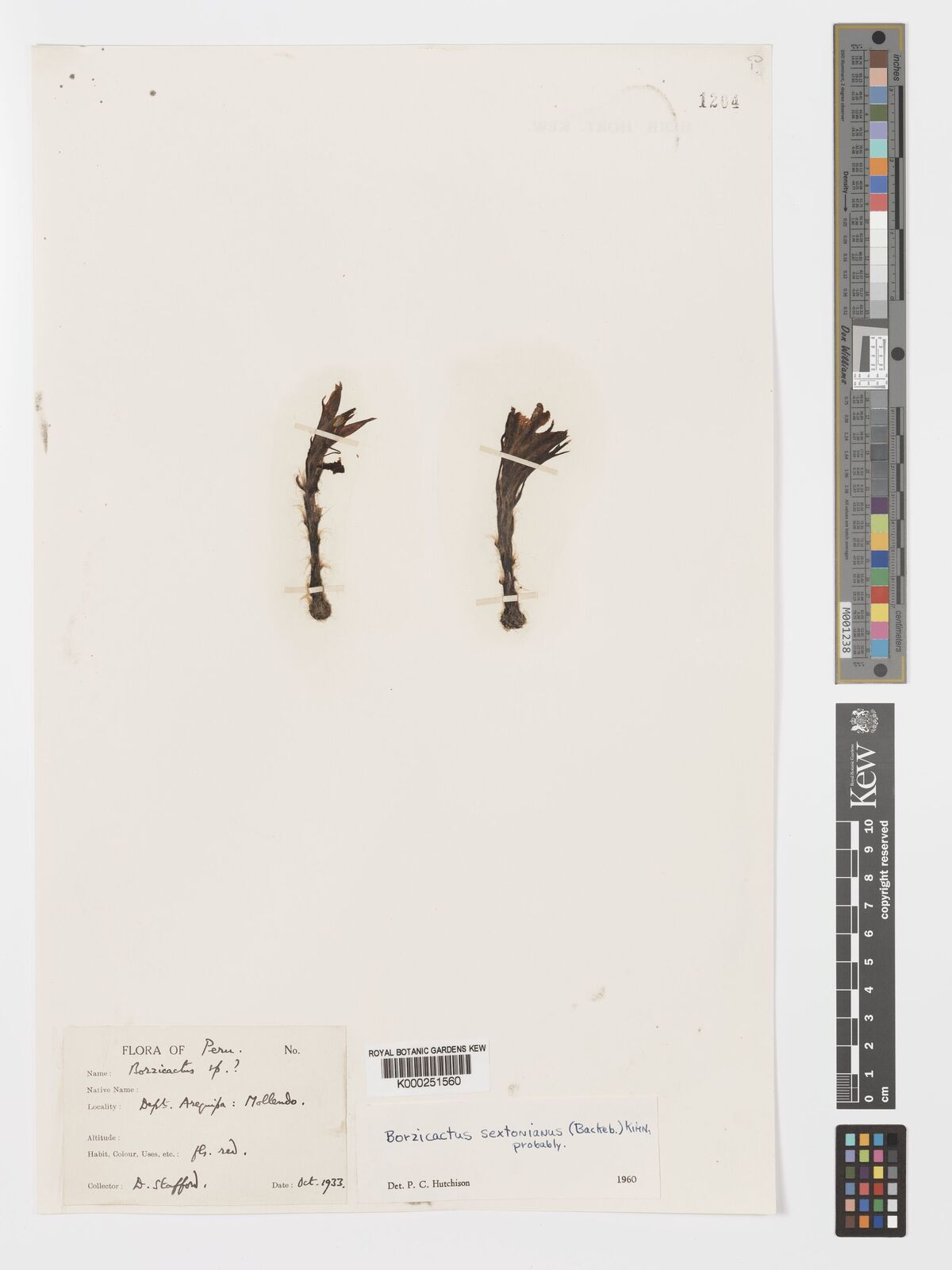 Reference image
Sexton's Columnar Cactus
Loxanthocereus sextonianus is a fascinating decumbent to semi-erect, sun-loving succulent subshrub belonging to the Cactaceae family. Known for its dense, needle-like spine cover and striking tubular orange-red flowers, this species is highly valued by succulent collectors 1.
Originally described by Joseph Nelson Rose, this species has been classified under various synonyms over the decades, including Cleistocactus sextonianus and Borzicactus sextonianus 2. Current taxonomic databases, including Kew's Plants of the World Online (POWO), accept Loxanthocereus sextonianus as the correct botanical name, placing it within a genus of specialized Andean cacti.
Native to the coastal deserts and dry shrublands of western South America, specifically within Peru 3. It thrives in hyper-arid environments, often growing on rocky cliffs where it benefits from coastal fog (locally known as camanchaca) which provides vital moisture in the absence of rain.
The plant develops slender, prostrate or low-scrambling cylindrical stems that branch from the base, measuring around 3 to 5 cm in diameter. The ribs are closely set with small areoles bearing fine, golden-brownish spines. Its diurnal, tubular flowers are adapted for hummingbird pollination, showing off brilliant shades of red and orange 1.
When cultivated indoors or in greenhouses, it requires excellent ventilation, plenty of bright indirect light, and highly porous potting media. Watering must follow the 'soak and dry' method, allowing the substrate to completely dry out between waterings. Winter watering should be minimal to none.
The most common mistake is overwatering, which leads to root and stem rot. Placing the cactus in heavy, clay-rich soil that retains water, or exposing it to freezing, damp winter conditions will quickly prove fatal 2.
Requires bright, indirect sunlight or filtered morning sun. Protect from intense, direct afternoon heat.
Water only when the substrate is completely dry. Keep nearly bone-dry during winter dormancy.
Use a well-draining cactus mix rich in mineral components like pumice, perlite, and coarse sand.
Non-toxic, but the dense, sharp spines can cause skin irritation; keep out of reach of children and pets.
Moderately easy if overwatering is avoided and sufficient light is provided.
Naturally occurs in the coastal deserts of western Peru, thriving on dry, rocky slopes. In this habitat, the plants survive on minimal rainfall, utilizing moisture from dense coastal fogs.
