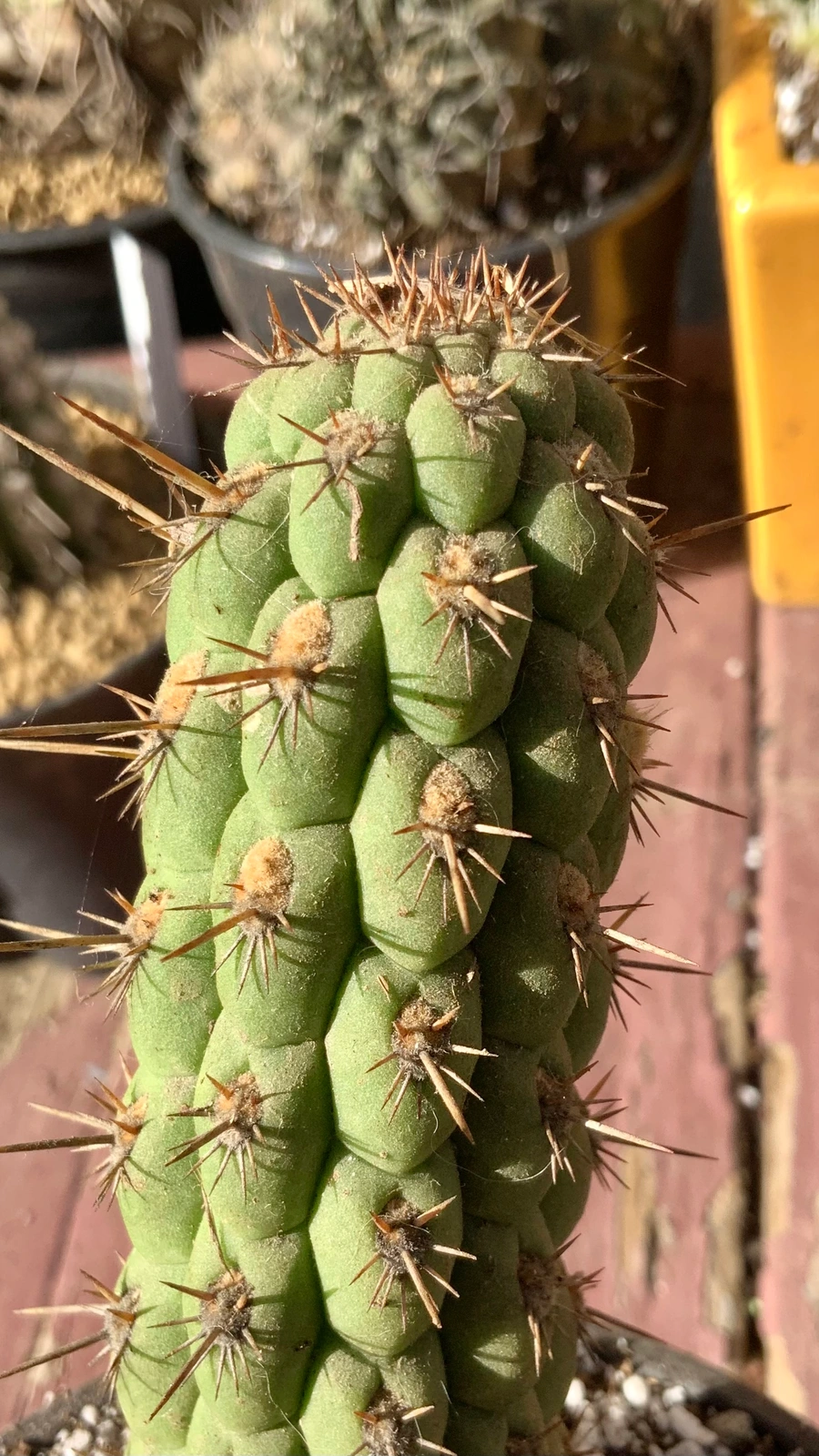
Loxanthocereus sulcifer

Furrowed Loxanthocereus

Overview

Loxanthocereus sulcifer is a sprawling, succulent subshrub in the family Cactaceae, native to the arid valleys of Peru. It adapts beautifully to rocky slopes and dry shrubland biomes, developing a characteristic semi-prostrate growth form 1.

Classification and Naming

This species is classified within the genus Loxanthocereus, though some taxonomists have grouped it under Cleistocactus. The specific epithet 'sulcifer' originates from Latin, meaning 'groove-bearing' or 'furrowed,' which highlights the distinct longitudinal ribs on its stems 2.

Distribution and Habitat

Endemic to western South America, particularly the dry inter-Andean valleys of Peru, Loxanthocereus sulcifer thrives at altitudes ranging from 1,000 to 2,500 meters. It is typically found on steep, gravelly slopes with excellent natural drainage and low precipitation 1.

Appearance

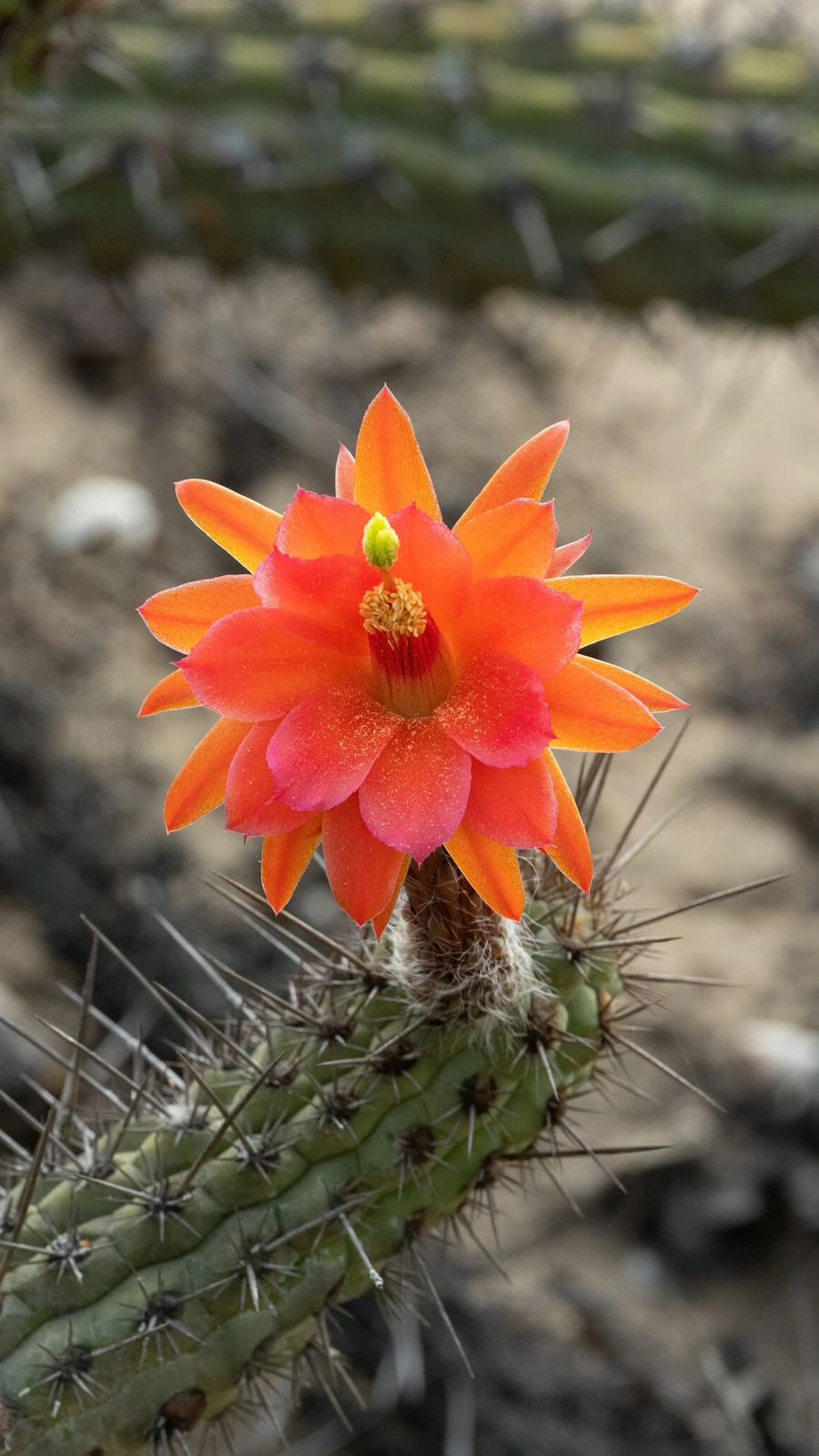
The plant produces branching, cylindrical stems that often lean or lie along the ground. These green stems feature prominent ribs lined with small areoles. The spines are typically thin, needle-like, and yellowish-grey. Its tubular, brightly colored (red to orange) flowers are adapted for hummingbird pollination 2.

Cultivation

In cultivation, it requires bright, indirect sunlight and a well-ventilated location. The substrate must be highly mineral-based to mimic its natural gravelly habitat. Watering should follow the 'soak and dry' method during the active growing season, with virtual drought conditions maintained in winter 3.

Common Care Mistakes

The most frequent issue is root rot triggered by organic-rich soils or overwatering. Inadequate light levels lead to etiolation, causing the stems to grow thin, weak, and lose their natural color.

Bibliography

References

  1. Plants of the World Online (POWO), Royal Botanic Gardens, Kew.
  2. Anderson, E.F. (2001). The Cactus Family. Timber Press.
  3. Hunt, D. (2006). The New Cactus Lexicon. DH Books.
Light

Bright Indirect Light

Prefers bright, indirect sunlight or lightly filtered morning sun.
Watering

12-35 Days

Allow the substrate to dry completely between thorough waterings.

Soil

Well-draining mineral cactus substrate with pumice and fine gravel.

Use a well-aerated mineral mix with pumice, grit, and low organic matter.

Safety

Pet Friendly

Armed with small spines; handle with gloves. Non-toxic to pets.

Difficulty

Moderate

Moderate care; highly sensitive to stagnant moisture and poor lighting.

Native Habitat

Peru, South America

Naturally distributed along the rocky slopes and dry inter-Andean shrublands of Peru.

Frequently Asked Questions

Is Loxanthocereus sulcifer toxic to pets?
No, this cactus species is **non-toxic**. However, its sharp spines pose a physical injury hazard, so it should be kept out of reach of pets and children.
How often should I water my cactus?
In summer, water every 10-12 days once the soil dries out completely. In winter, reduce watering to once every 30-35 days as the plant enters dormancy.
What kind of potting soil should be used?
Choose a highly mineralized cactus soil with excellent drainage, containing **pumice, river sand, and perlite**. Avoid heavy clay or standard garden soils.
Does Loxanthocereus sulcifer flower?
Yes, mature specimens produce tubular, attractive **red-orange** flowers from the sides of the stems during spring and summer.
What is its growth rate?
Its growth rate is **slow to moderate**. Under optimal light, drainage, and nutrients, it will grow a few centimeters each year.
Can it tolerate direct midday sun?
Intense direct midday sun, especially in summer, can cause **sunburn** on the stems. Filtered light or bright, indirect sun is ideal.
Should I keep my cactus at room temperature in winter?
To trigger winter dormancy and encourage spring blooms, keep it in a **cool but frost-free** environment around 5-10°C (41-50°F).
When should I repot the plant?
Repotting is best done in **early spring every 2-3 years**, moving the plant to a slightly larger pot only when it has outgrown its current container.
Why is the base of my cactus softening?
Softening at the base is a classic sign of **overwatering and root rot**. Stop watering immediately and inspect the roots to cut away decayed parts.
Is it easy to propagate this cactus?
Yes, it can be easily propagated via **stem cuttings**. Let the cut callously dry for a few days before placing it into a well-draining potting mix.