
Light
Full Sun
Requires full direct sun or very bright south-facing exposure.
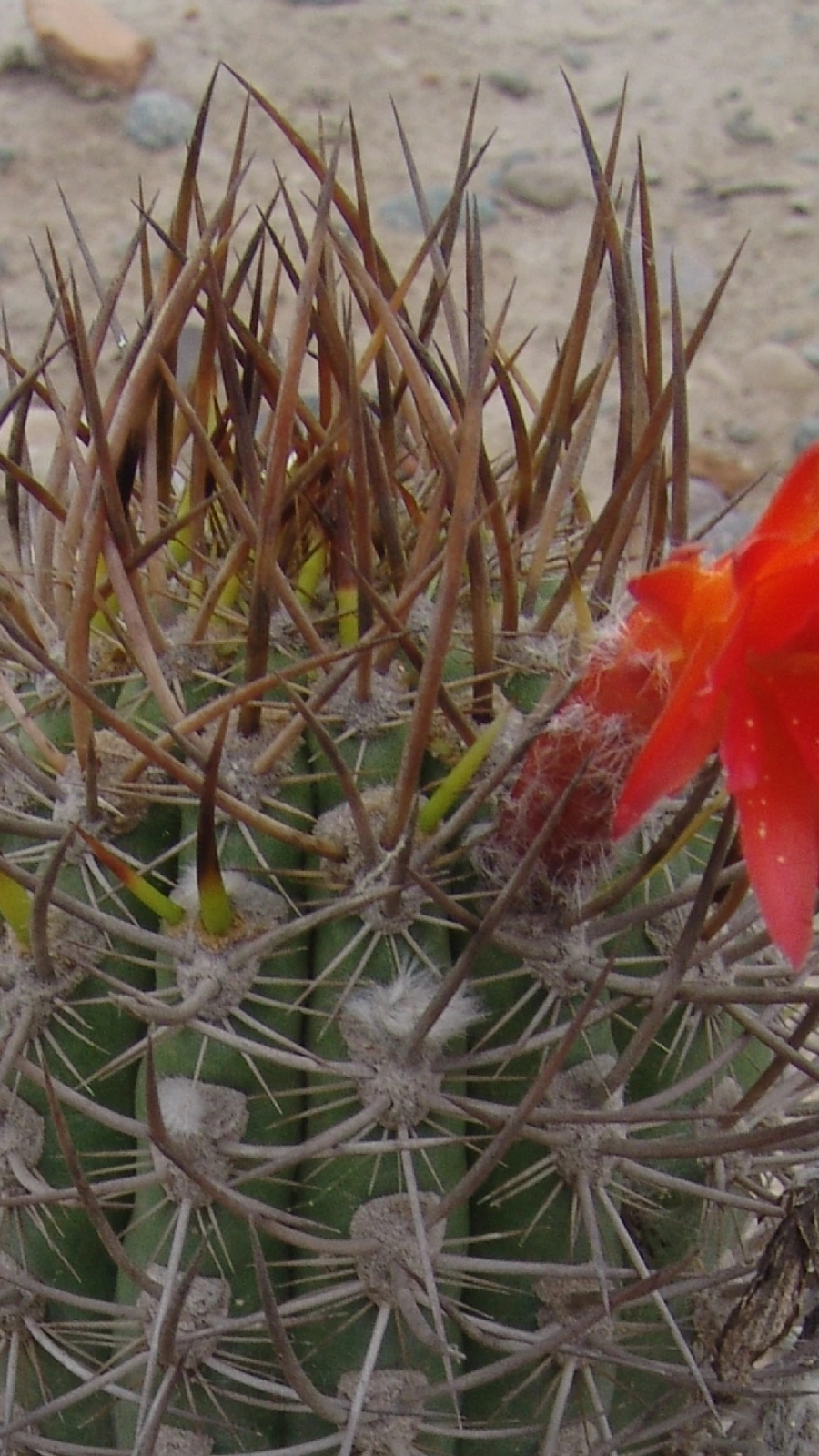 Reference image
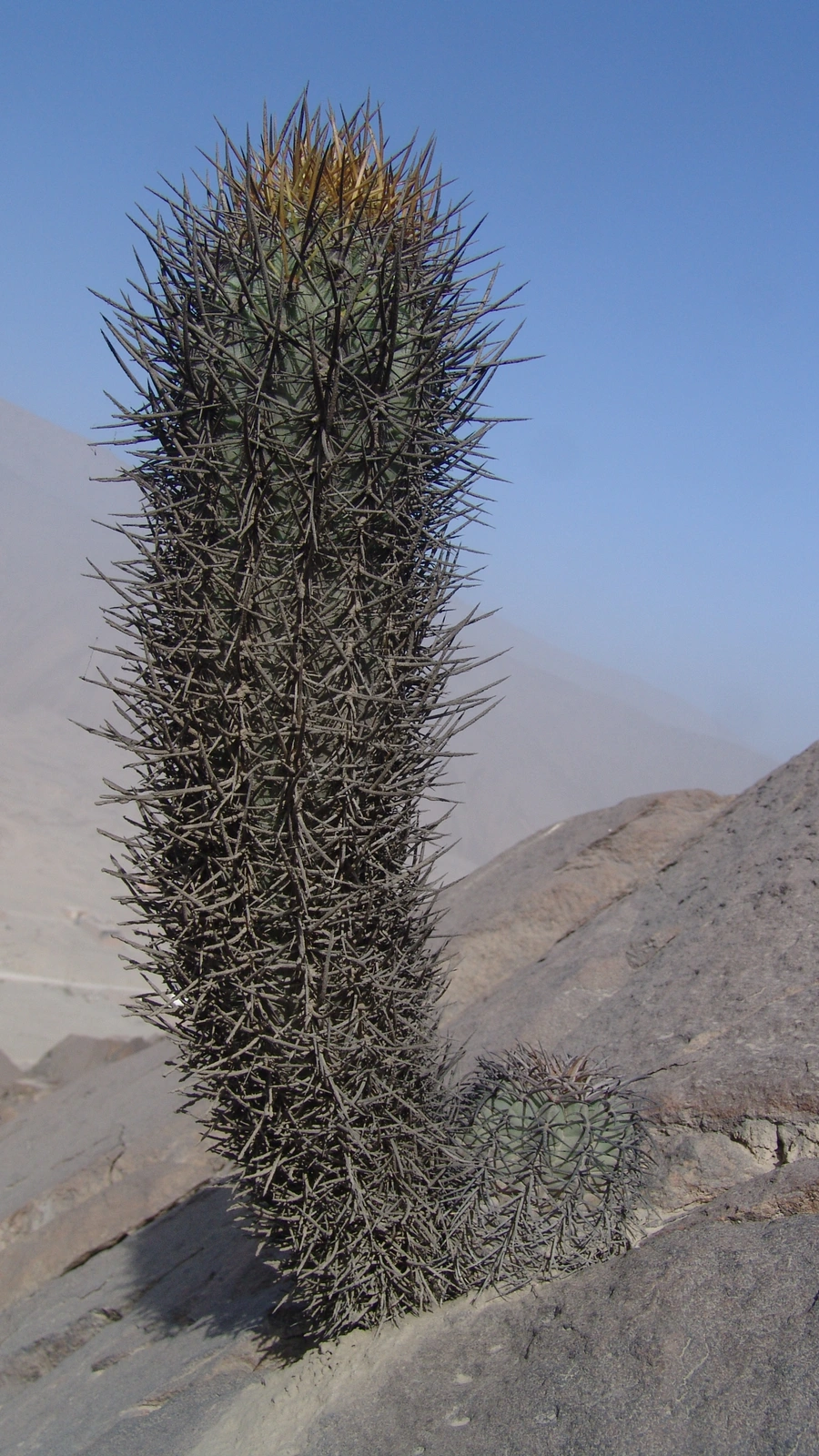 Reference image
Woody-root Loxanthocereus
Loxanthocereus xylorhizus is an extremely rare, critically endangered succulent shrub in the family Cactaceae, native to the arid coastal valleys of Peru. It is notable for its highly specialized woody root structure and bright tubular flowers 1.
This species was first described in 1957 by the German botanist Curt Backeberg. The genus Loxanthocereus refers to the characteristically curved flowers, while the specific epithet xylorhizus translates to "woody root," describing the stout, lignified root system developed to store nutrients and anchor the plant in loose scree 2.
Endemic to western South America, specifically in the dry valleys near Chosica in the Lima region of Peru, it is found at elevations between 1000 and 1500 meters 1. It inhabits hyper-arid desert terrains and dry rocky shrublands, relying heavily on coastal mist (garúa) for atmospheric moisture.
This plant forms a low shrub, with erect to decumbent stems branching from the base. The stems are grayish-green, heavily covered with dense yellowish-brown spines. Its most striking features are the zygomorphic (bilaterally symmetrical), tubular, reddish-orange flowers adapted for hummingbird pollination 2.
In cultivation, it requires a highly porous, mineral-based substrate. It demands full sun exposure to maintain tight spine growth and promote blooming. Watering should be sparse and strictly restricted to the growing season, always allowing the soil to dry out completely between sessions.
The most prevalent errors are overwatering and placing the plant in dim, humid spots. The specialized woody root system is highly vulnerable to rot. Keeping the soil wet during winter temperatures below 10°C is usually fatal.
Requires full direct sun or very bright south-facing exposure.
Water thoroughly only when dry in summer; keep completely dry in winter.
Calcareous, gritty cactus mix with high pumice and sand content.
Densely spined; handle with care. Non-toxic to pets.
Moderate to hard; highly sensitive to excess soil moisture and damp cold.
Found only in a highly restricted geographical pocket near Chosica, Peru, growing on dry, rocky slopes of Andean foothills facing the Pacific coast.
