
Light
Bright Indirect Light
Requires bright, indirect or filtered sunlight. Direct harsh sun can scorch the delicate stems.
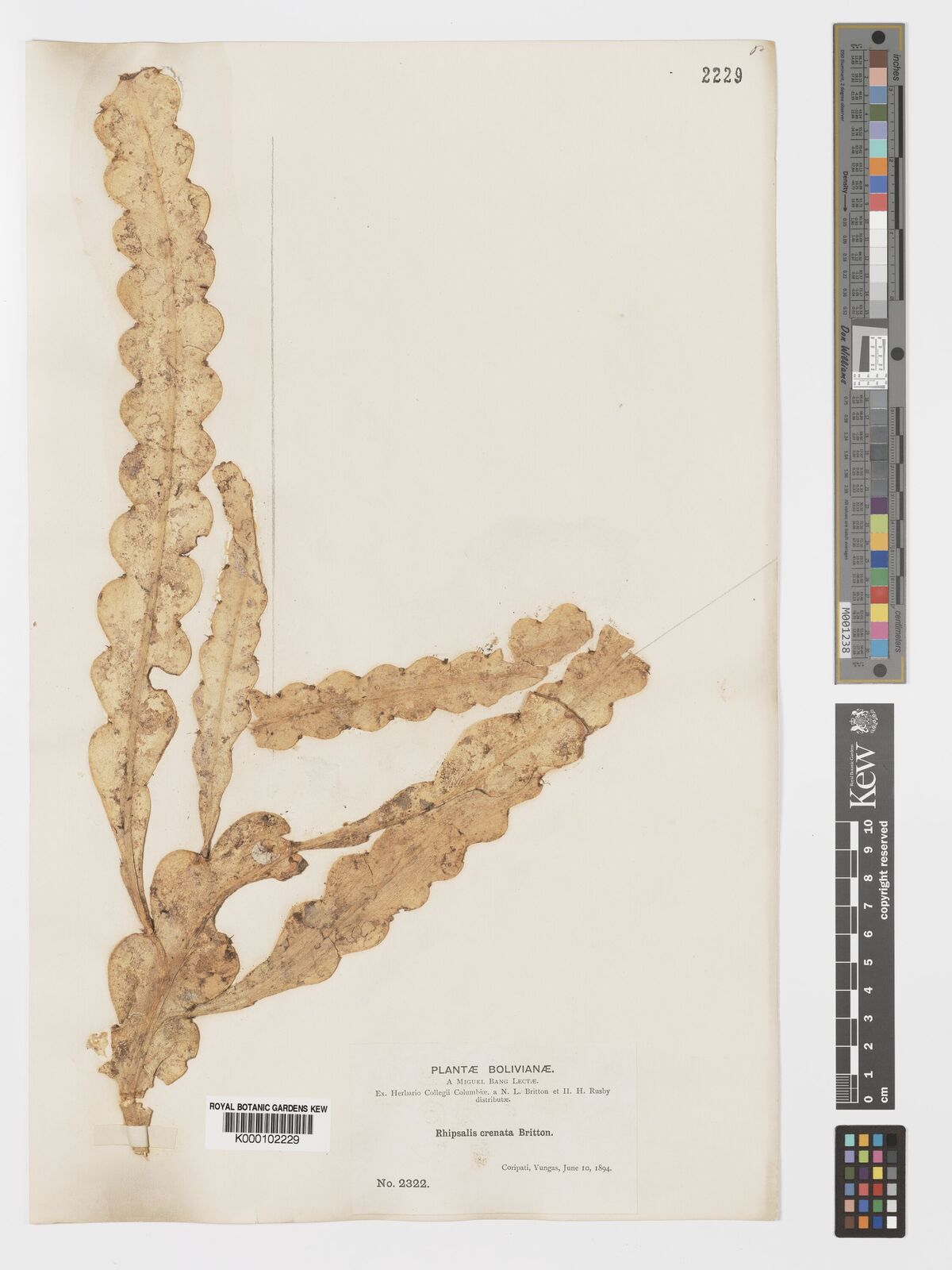 Reference image
Crenate Lymanbensonia
Lymanbensonia crenata is a rare, epiphytic cactus species belonging to the family Cactaceae 1. Unlike typical desert cacti, it has adapted to life in humid, shaded forest canopies where it grows on tree trunks and branches.
The genus name Lymanbensonia honors the eminent American botanist Lyman Benson. The specific epithet crenata refers to the scalloped or crenate margins of its flattened stems 2. In older literature, this species has been classified under Pfeiffera or Lepismium.
This species is native to Western South America, particularly Bolivia, where it occurs in seasonally dry tropical forests and Yungas montane forests 1. It grows as an epiphyte or lithophyte, benefiting from high atmospheric humidity during the wet season.
It features pendulous or semi-erect, flattened, green stems with distinct wavy (crenate) edges. The areoles are small and carry minimal to no significant spines. During the blooming season, it produces delicate, bell-shaped flowers of a creamy white or pale pink color along the stem margins 2.
It thrives in bright, filtered indirect light and requires an airy, moisture-retaining but fast-draining potting medium. A mix of orchid bark, perlite, and peat moss mimics its natural epiphytic habitat. The soil should be kept moderately moist but never waterlogged 2.
Using heavy, compacted soil leads to rapid root rot. Overwatering and leaving water in the drip tray are the primary causes of failure. Insufficient ambient humidity can also lead to bud drop.
Requires bright, indirect or filtered sunlight. Direct harsh sun can scorch the delicate stems.
Water when the top inch of soil dries out. Do not allow the root zone to sit in stagnant water.
An open, organic-rich epiphytic mix with orchid bark, peat, and coarse perlite is best.
Non-toxic to humans and domestic pets, making it a safe choice for home interiors.
Moderate. Easy if treated like a Christmas cactus, but susceptible to rot in heavy soils.
Native to the Andean slopes of Bolivia, where it populates seasonally dry tropical montane forests, growing high up in tree canopies as an epiphytic survivor.
