
Maihuenia poeppigii

Maihuenia Poeppigii

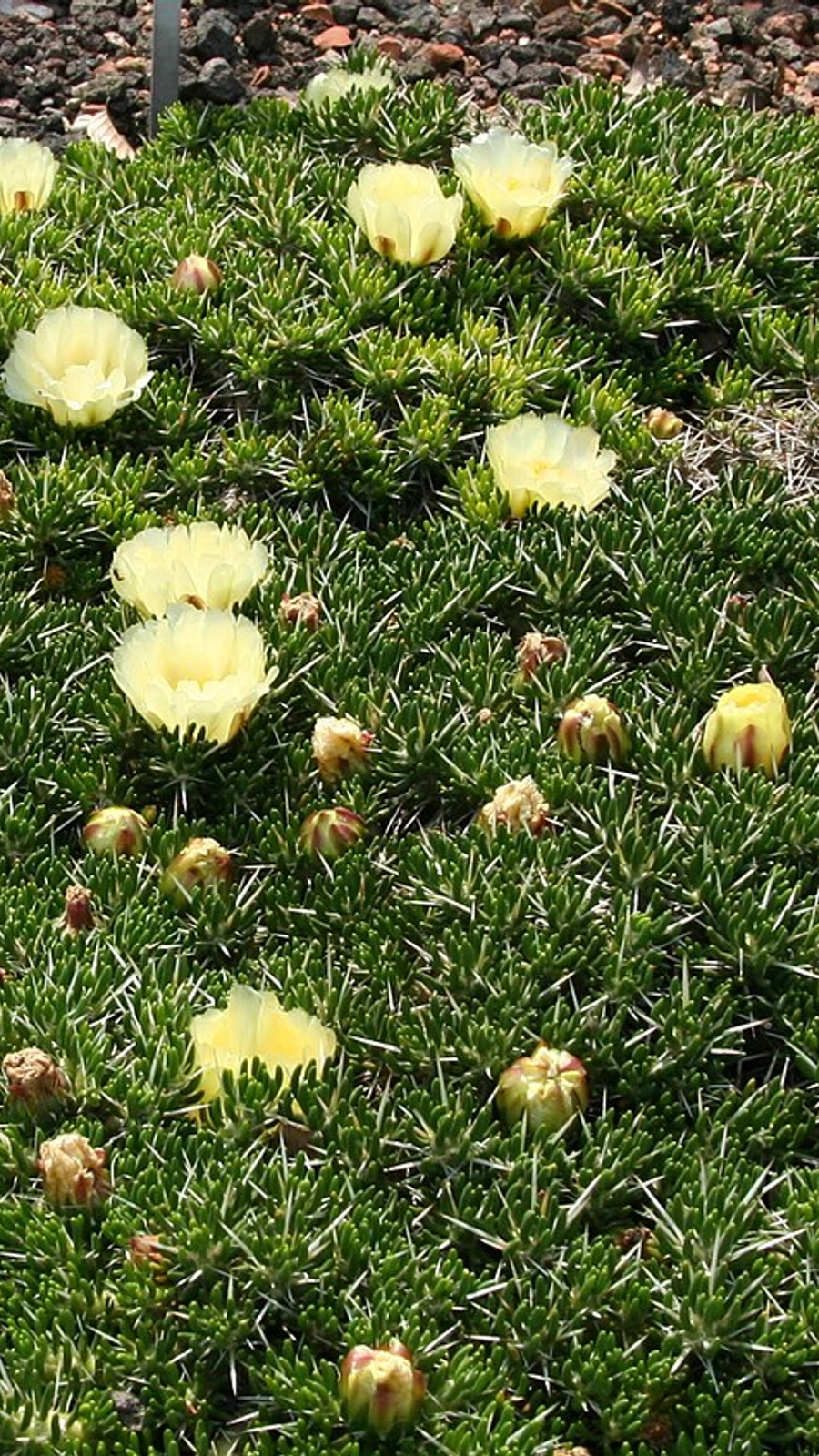
Maihuenia poeppigii is a unique and hardy member of the Cactaceae family, native to the rugged, high-altitude regions of Patagonia in Argentina and central Chile 1. Unlike most cacti, this species retains small, fleshy, persistent leaves on its stems, a primitive trait that sets it apart. It forms low-growing, sprawling mats or cushions, typically reaching up to 10-20 cm in height and spreading significantly wider 2.

Physical Characteristics

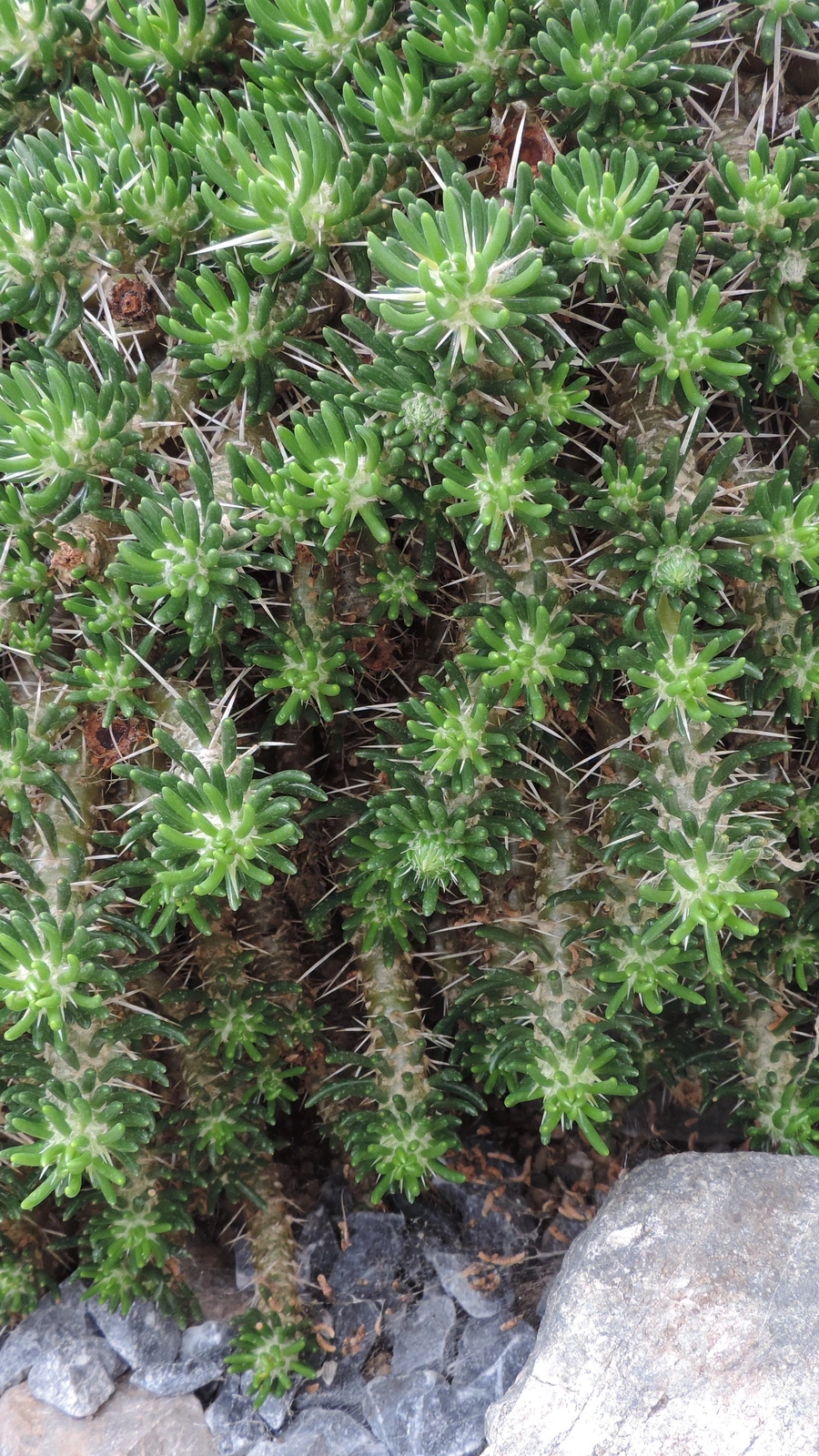
  • Stems: Composed of numerous short, segmented, cylindrical green stems that branch profusely, forming a dense, tangled mat.
  • Leaves: Small, ovate to lanceolate, fleshy leaves that are deciduous but persistent for a longer period than in other cacti genera. These leaves help in water storage and photosynthesis, contributing to its hardiness in cold environments.
  • Spines: Each areole typically bears several sharp, needle-like spines, varying in color from white to yellow or brown, providing protection from herbivores.
  • Flowers: Bright yellow to orange, cup-shaped flowers emerge from the tips of the stems in spring and early summer. These showy blooms are relatively large compared to the plant's small stature, often attracting pollinators in its native habitat.

Habitat and Adaptations

Maihuenia poeppigii is incredibly cold-hardy, thriving in environments where many other cacti would perish. It is found on rocky slopes and sandy plains at elevations up to 2,000 meters, enduring harsh winters with snow cover and dry, sunny summers 1. Its mat-forming habit helps it to conserve moisture and protect its root system from extreme temperatures. The persistent leaves, though small, contribute to its photosynthetic capacity during the short growing season.

Cultivation

In cultivation, Maihuenia poeppigii requires conditions that mimic its natural habitat: abundant sunlight, excellent drainage, and protection from excessive winter moisture. It is an excellent choice for rock gardens in temperate climates or as a potted specimen for alpine house enthusiasts. Its unique morphology and striking blooms make it a fascinating addition to any collection.

References

  1. IUCN Red List of Threatened Species. Maihuenia poeppigii. Available at: https://www.iucnredlist.org/species/152431/5856994
  2. Cactiguide.com. Maihuenia poeppigii. Available at: http://www.cactiguide.com/cactus/?genus=Maihuenia&species=poeppigii
Light

Direct Sun

Maihuenia Poeppigii prefers direct sun. An ideal location would receive at least 6-8 hours of direct sunlight daily.
Watering

10-25 Days

Water thoroughly when the soil is completely dry. During winter dormancy, reduce watering almost entirely.

Soil

Very well-draining, gritty, mineral-rich cactus and succulent mix

Use a specialized cactus and succulent mix that drains rapidly, enriched with mineral additives like sand and pumice.

Safety

Contact/Ingestion Risk

The plant's sharp spines can cause skin irritation. It is advisable to keep it out of reach of children and pets.

Difficulty

Moderate

While quite resilient when given the right conditions, its care is considered moderately difficult due to the specific requirements of its natural habitat.

Native Habitat

South America (Argentina and Chile)

Maihuenia poeppigii is native to the Patagonian region of South America and central Chile. It thrives on the high slopes of the Andes Mountains, typically in temperate to cold climates, growing in rocky and sandy soils. Its natural distribution includes the Argentine provinces of Río Negro, Neuquén, Córdoba, Santa Cruz, and Tierra del Fuego, as well as the Chilean regions of Valparaíso, O'Higgins, Maule, and Biobío. In these areas, it often forms mat-like colonies alongside other xerophytic plants and can be found covered by snow during winter months.

Frequently Asked Questions

How often should I water my Maihuenia Poeppigii?
During summer, water every 7-10 days or when the topsoil is completely dry. In winter, as the plant goes dormant, reduce watering to every 20-30 days or cease entirely. Avoid overwatering, which can lead to root rot.
What are the best light conditions for Maihuenia Poeppigii?
This cactus loves full sun. An ideal spot would be a windowsill or outdoor location where it can receive at least 6-8 hours of direct sunlight daily. Insufficient light can lead to etiolation and prevent flowering.
What type of soil does Maihuenia Poeppigii prefer?
You should use a specialized cactus and succulent mix that drains exceptionally well, enriched with mineral additives like sand, perlite, or pumice. A mix that provides good aeration and allows water to pass quickly is crucial for root health.
When does Maihuenia Poeppigii bloom?
It typically blooms in late spring and early summer, producing vibrant yellow to orange flowers. Adequate sunlight and proper winter dormancy are key factors that encourage flowering.
Is Maihuenia Poeppigii toxic to pets?
The plant itself is not considered chemically toxic. However, its sharp spines can cause physical injury to pets' mouths, throats, or skin if ingested or touched. Caution is therefore advised.
How large does Maihuenia Poeppigii grow and what is its growth rate?
It is typically a low-growing, sprawling plant, reaching 10-20 cm in height and spreading considerably wider. Its growth rate is slow, but over time it can form a dense mat.
How should I care for Maihuenia Poeppigii in winter?
In winter, the plant enters dormancy. You should minimize or cease watering, keeping the plant dry. It has high cold tolerance (down to -15°C), but it must be protected from excessive moisture at sub-freezing temperatures.
When should I repot Maihuenia Poeppigii?
You can repot in early spring when you notice the roots have filled the pot or if the plant's growth has slowed. Repotting into a slightly larger pot with fresh cactus mix every 2-3 years should suffice.
What temperature range should I keep Maihuenia Poeppigii in?
This cactus is tolerant of a wide temperature range. It can withstand a minimum of -15°C and tolerate a maximum of 30°C. The optimal growing temperature is around 20°C.
What pests and diseases is Maihuenia Poeppigii susceptible to?
It is generally quite robust but can be susceptible to root rot and fungal diseases, especially in overly humid conditions. Occasionally, common cactus pests like spider mites or mealybugs may appear.