
Light
Full Sun
Requires full sun, ideally a south-facing window or outdoor position with direct sunlight.
 Reference image
Atacama Mound Cactus
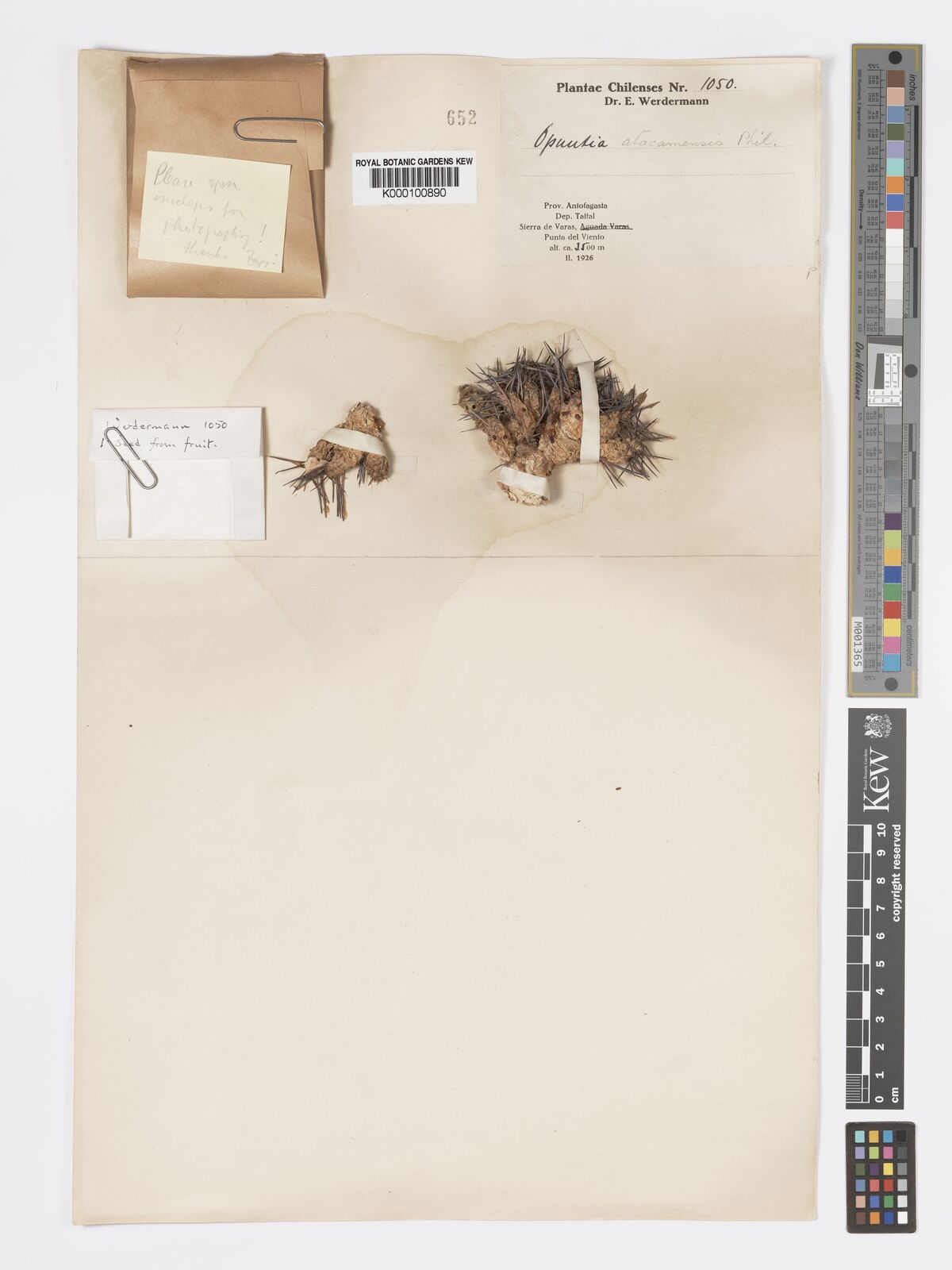
Maihueniopsis atacamensis is a highly specialized cactus species belonging to the family Cactaceae, native to the high-altitude regions of the Atacama Desert and the Andes in Chile 1. It forms dense, dome-shaped cushions that are superbly adapted to extreme drought and freezing mountain temperatures.
Originally described under the genus Tephrocactus as Tephrocactus atacamensis, molecular and morphological revisions placed this species in the genus Maihueniopsis 2. The specific epithet "atacamensis" refers to its native range in the Atacama region. It is commonly referred to as the Atacama mound cactus due to its growth habit.
This species is native to northern Chile, specifically in the regions of Antofagasta, Atacama, and Tarapacá 1. It thrives at elevations between 2,000 and 4,000 meters above sea level in subalpine, gravelly, and rocky desert slopes exposed to intense solar radiation and high winds.
Maihueniopsis atacamensis forms low, compact mounds of tightly packed, globose to cylindrical segments. The segments are grayish-green, heavily armed with stiff, pale spines arising from prominent areoles. In summer, it produces beautiful yellow to orange flowers at the tips of the joints.
In cultivation, it requires maximum direct sunlight and exceptional drainage. Watering must be sparse, allowing the substrate to dry completely between sessions 2. In winter, the plant must be kept dry and can withstand temperatures dropping to -10°C if kept completely free of moisture.
The most prevalent issue is overwatering and using heavy, organic soils, which inevitably leads to root rot. Insufficient sunlight will cause the segments to stretch abnormally (etiolation), weakening the overall structure.
Requires full sun, ideally a south-facing window or outdoor position with direct sunlight.
Allow the potting medium to dry out completely before watering again.
Highly porous mineral mix with minimal organic matter and plenty of pumice/grit.
Equipped with sharp, rigid spines. Handle with thick leather gloves or tongs.
Moderate. Easy if underwatered, but highly susceptible to rot from excessive moisture.
Inhabits the high-altitude slopes of northern Chile, growing in barren, windswept environments where the soil consists of volcanic gravel and sand.
