
Light
Full Sun
Requires full sun to maintain dense growth and robust spine development.
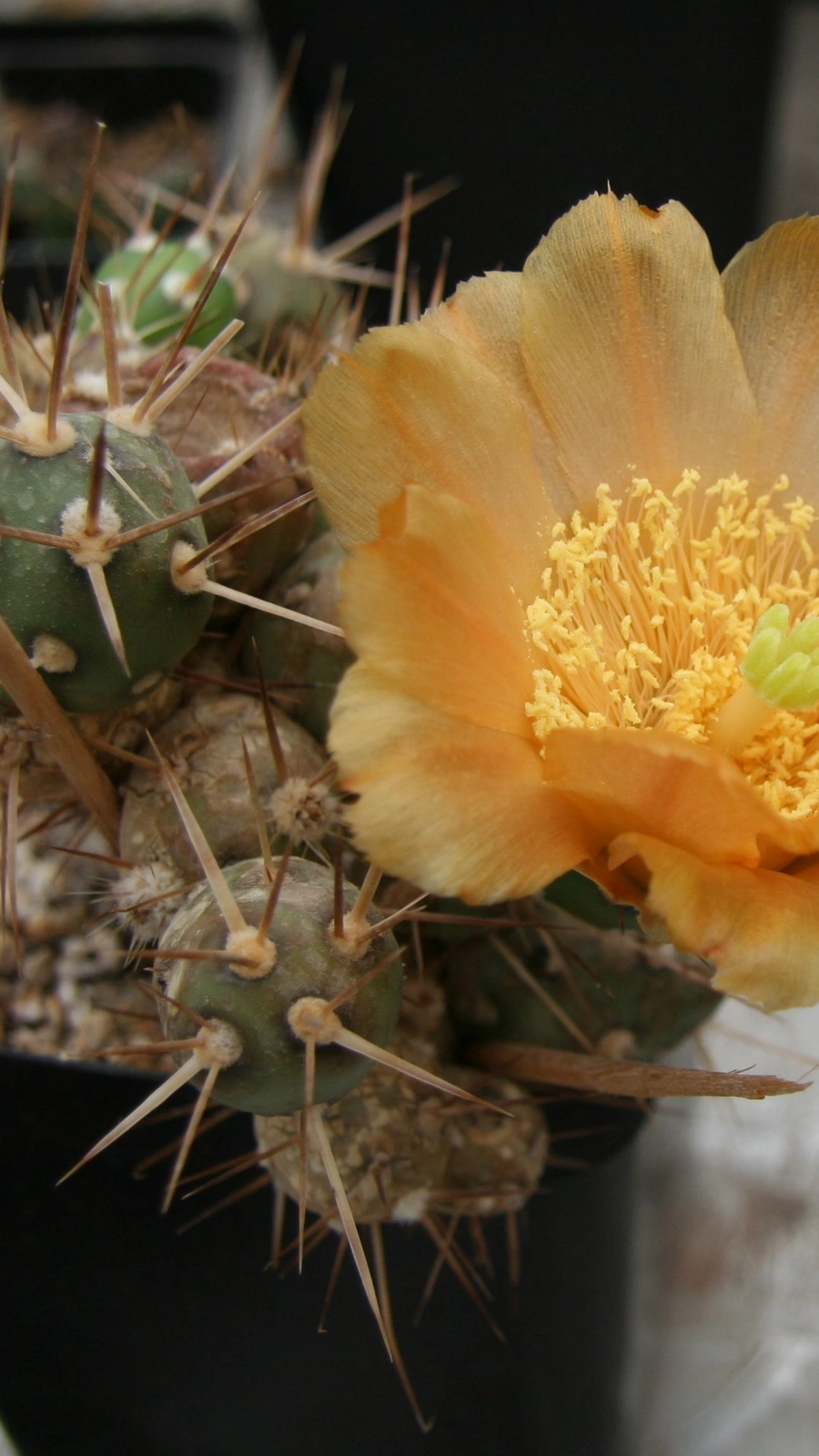 Reference image
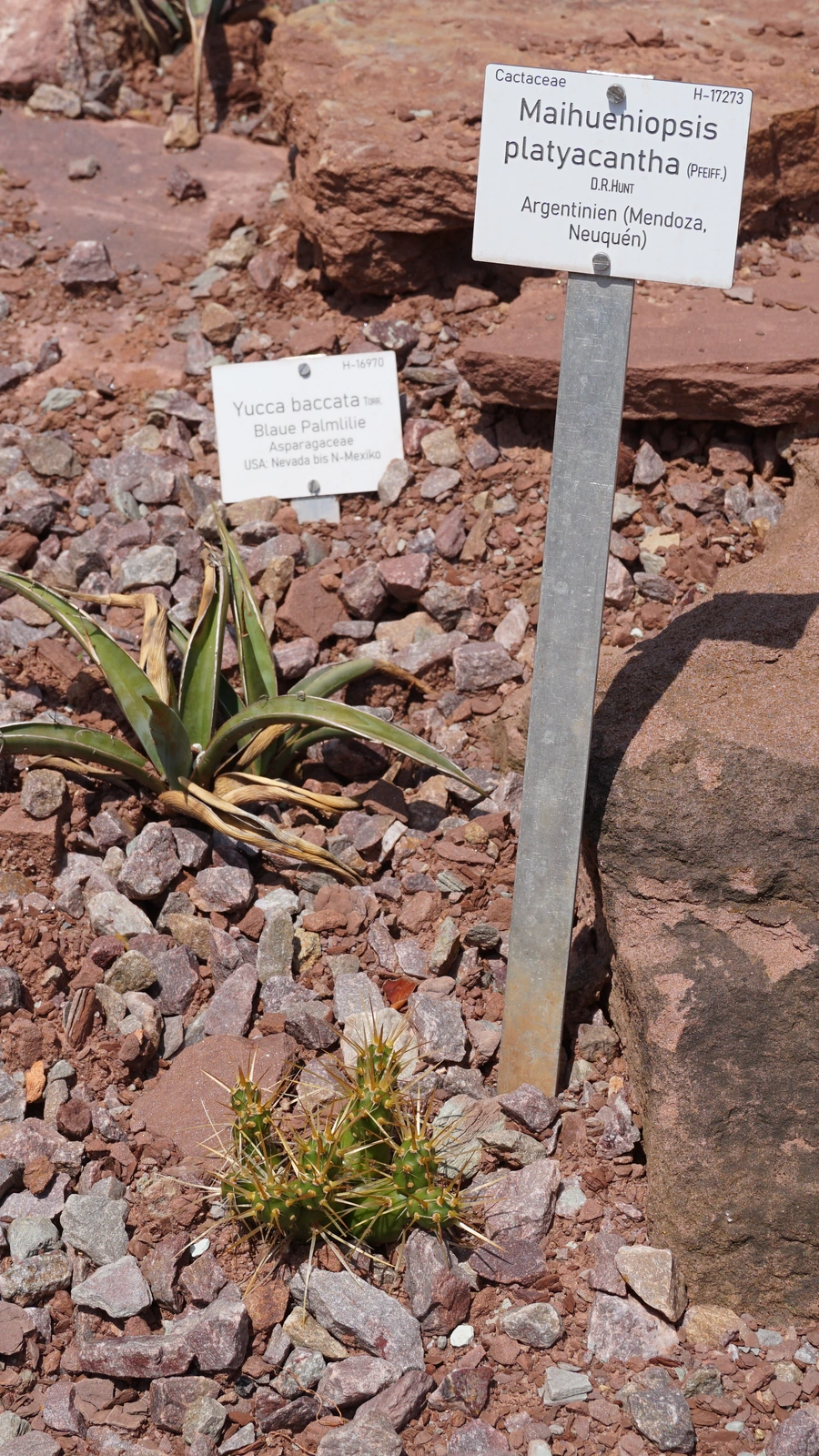 Reference image
Flat-spined Mountain Cactus
Maihueniopsis platyacantha is an extraordinary succulent subshrub belonging to the family Cactaceae, highly adapted to survive some of the harshest environments on Earth. Forming low, dense cushions, this high-altitude specialist is prized among cactus enthusiasts for its unique, paper-like flat spines and robust cold hardiness 1.
Classified within the subfamily Opuntioideae of the Cactaceae, the genus Maihueniopsis comprises species native to the high-elevation Andean regions of South America. The specific epithet platyacantha derives from the Greek words 'platys', meaning broad or flat, and 'akantha', meaning spine. This refers directly to its distinctive flattened, strap-like spines that distinguish it from related taxa 2.
This species is native to southern South America, particularly the Patagonian region of Argentina and high-altitude areas of Chile 1. It thrives in subalpine or subarctic biomes, occupying rocky slopes, gravelly plains, and volcanic soils. It is well-adapted to withstand intense winds, severe winter frosts, and prolonged periods of snow cover in its natural range.
Maihueniopsis platyacantha forms compact, low-growing mounds or cushions composed of many segmented, globose to cylindrical cladodes. The most striking feature is the array of broad, flattened, papery spines that emerge from the areoles, shifting in color from brownish-yellow to weathered grey. In summer, bright yellow cup-shaped flowers appear at the tips of the segments 2.
In cultivation, replicating its natural high-light and low-moisture environment is vital. It requires full sun exposure to maintain its compact growth form and develop strong spines. The substrate must be highly mineral-based and exceptionally free-draining. Water thoroughly during the spring and summer active growth phase, allowing the soil to dry out completely. Keep absolutely dry during the cold winter dormancy 1.
Overwatering and poor soil drainage are the most common causes of failure, quickly leading to root rot. Lack of sufficient sunlight will cause etiolation, where the plant segments become elongated, pale, and structurally weak, losing their characteristic aesthetic appeal.
Requires full sun to maintain dense growth and robust spine development.
Water only when the soil is completely dry. Keep dry in winter.
Use a highly mineral substrate with plenty of pumice, coarse sand, and gravel.
The flattened spines are sharp; handle with protective gloves and keep away from pets.
Moderate. Easy if kept in full sun and not overwatered.
Naturally distributed across the windswept Patagonian steppes and rocky Andean slopes of southern South America. It thrives in harsh, cold, and dry alpine environments where few other plants can survive.
