
Light
Bright Indirect Light
Thrives in bright, indirect light or filtered sun. Protect from intense, direct afternoon sun.
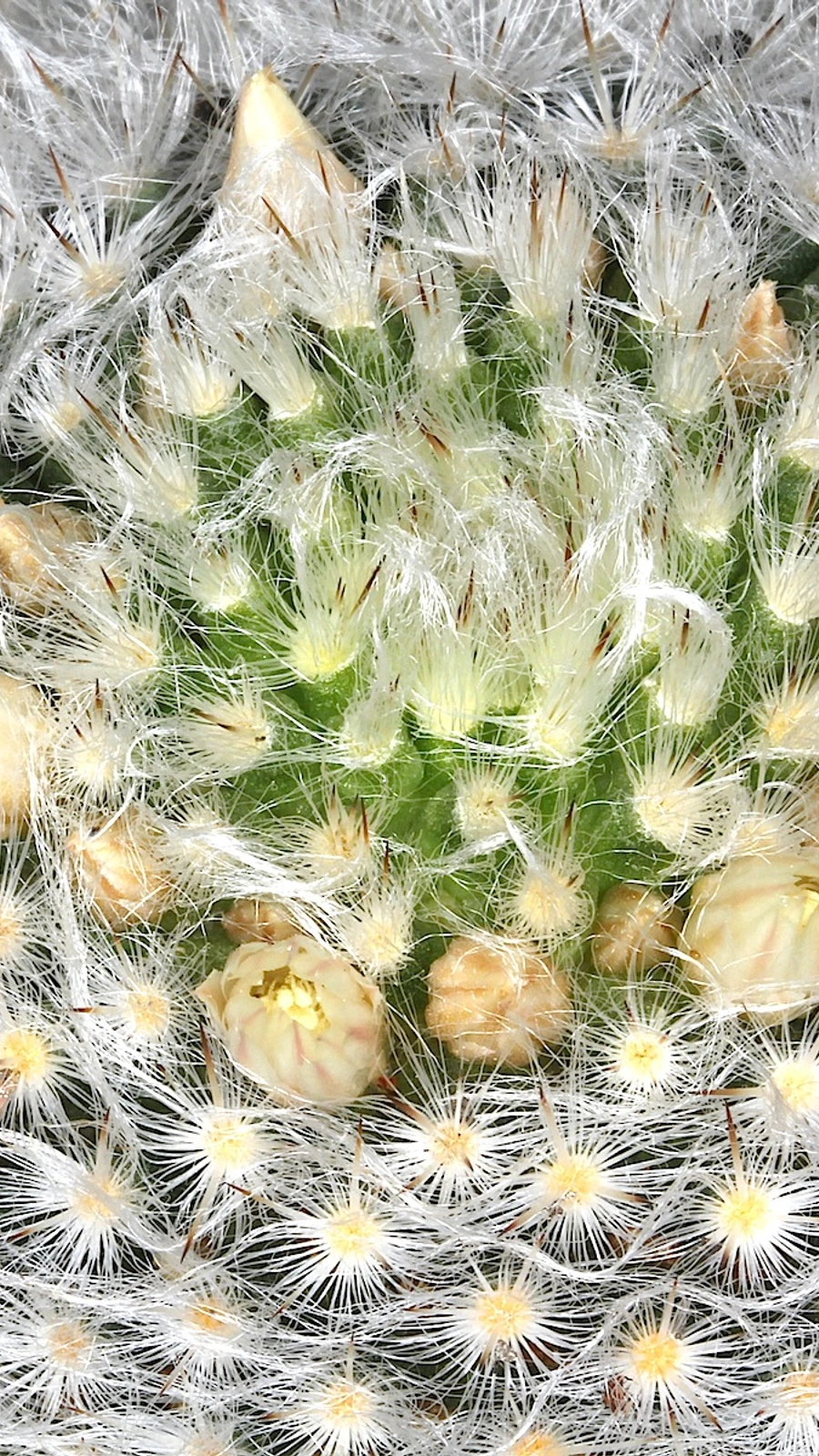 Reference image
 Reference image
White-Haired Pincushion Cactus
Mammillaria albicoma is a highly sought-after, miniature globose cactus renowned for its dense covering of soft, white, hair-like spines 1. These specialized spines act as a natural sun and temperature shield, adapting the plant to survive harsh environments while giving it a highly ornamental, woolly appearance.
First described by Erich Werdermann in 1929, the species name 'albicoma' is derived from the Latin words 'albus' (white) and 'coma' (hair of the head), directly referring to its signature snowy appearance 2. It belongs to the large and diverse genus Mammillaria within the family Cactaceae.
This species is native to northeastern and central Mexico, specifically found in the states of San Luis Potosí, Tamaulipas, and Nuevo León 1. It typically grows on limestone rocks and gravelly hillsides in semi-arid desert shrublands. Due to heavy collecting and habitat destruction, it is listed as Endangered (EN) on the IUCN Red List 3.
Mammillaria albicoma forms small, clustering mounds of globose to short-cylindrical stems, each up to 5 cm in diameter. The stems are completely hidden under 30 to 40 fine, soft, white radial spines per areole. In late spring, small, delicate creamy-yellow or greenish flowers emerge in a ring near the crown.
It thrives in bright, filtered sunlight with excellent air circulation. The potting medium must be highly porous with exceptional drainage. Water thoroughly only when the soil has completely dried out, and keep the plant dry and cool during winter dormancy.
Overwatering and poor soil drainage are the most common causes of plant loss, leading to rapid root rot 2. Lack of adequate light causes etiolation, where the plant stretches unnaturally and loses its dense, white woolly appearance.
Thrives in bright, indirect light or filtered sun. Protect from intense, direct afternoon sun.
Allow soil to dry out completely before watering. Keep almost dry during winter dormancy.
Requires a gritty, well-draining cactus soil mix with pumice, perlite, and coarse sand.
Non-toxic to pets and humans. Spines are very fine and soft, but handle with care.
Easy to grow if overwatering is avoided and bright light is provided.
Found growing in semi-arid regions of Mexico, nestled in limestone crevices and gravelly slopes among dry shrublands.
