
Light
Bright Indirect Light
Thrives in bright indirect sunlight or partial morning sun. Protect from intense midday sun.
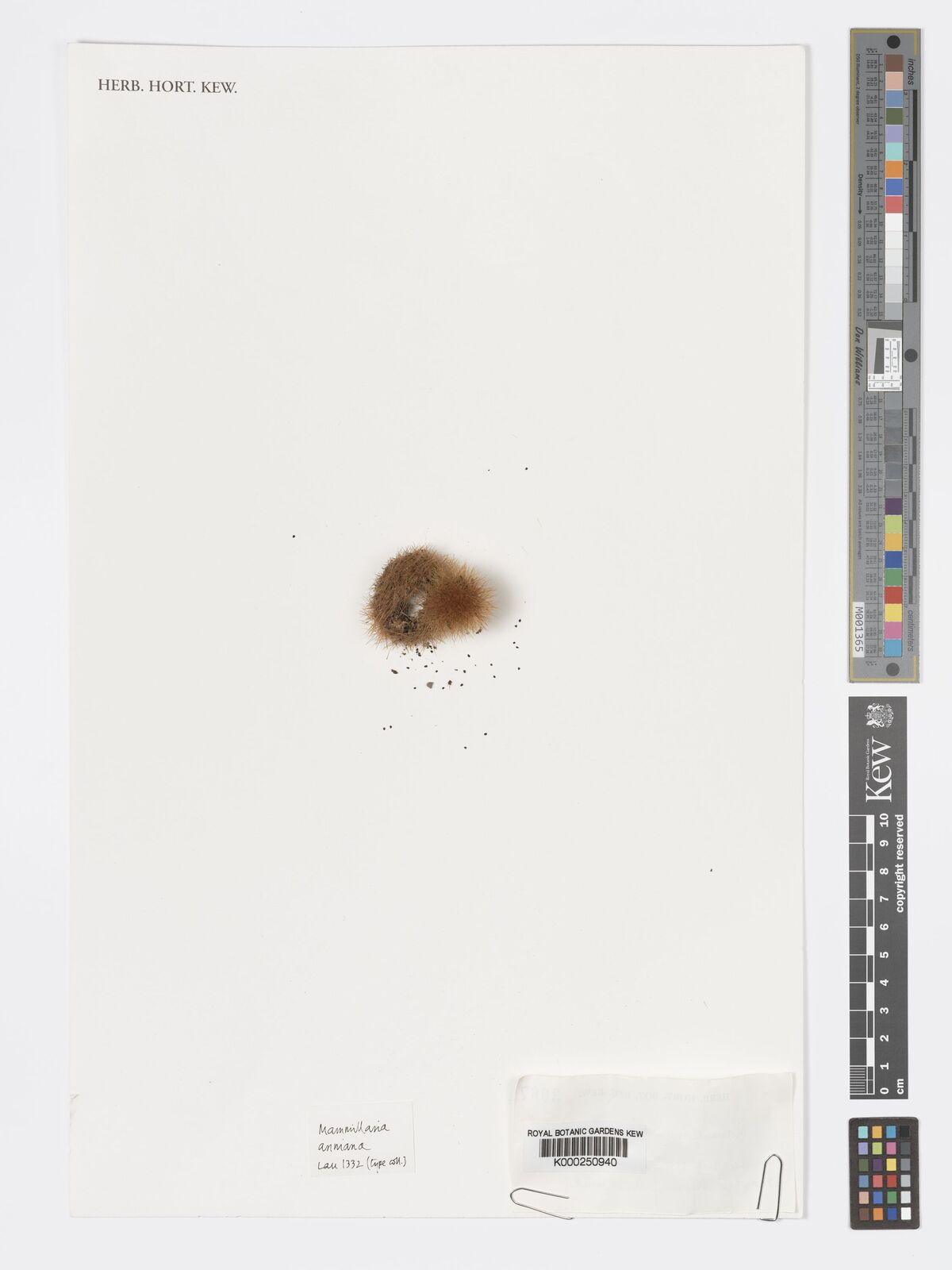 Reference image
Anni's Mammillaria
Mammillaria anniana is a small, clustering succulent subshrub belonging to the family Cactaceae. Known for its prolifically offsetting habit and delicate spination, this species is highly prized among succulent collectors but faces severe threats in its wild habitat.
The species was named in honor of Anni Lau, a prominent plant collector and explorer 1. Within the genus Mammillaria, it is distinguished by its small globular stems, golden-yellow central spines, and pale cream-colored flowers.
Mammillaria anniana is endemic to the Mexican state of Tamaulipas 2. It grows primarily in dry shrublands and semi-arid desert biomes, often found wedged in rock crevices or sheltered under larger shrubs on calcareous soils.
The individual stems are globose, bright green, and reach up to 3-5 cm in diameter, readily forming dense cushions. The tubercles are small, bearing fine, bristly radial spines and hooked yellow-brown central spines. Small cream to pale-yellow flowers emerge in a ring near the stem apex, followed by red berries.
In cultivation, it is a rewarding and relatively fast-growing species. It thrives in bright, indirect sunlight and requires excellent drainage. Watering should be thorough but infrequent, allowing the potting medium to dry out completely between waterings.
Overwatering is the primary cause of failure, quickly leading to root rot. Using heavy, peat-rich soils that retain moisture for too long or exposing the plant to freezing temperatures while wet will result in rapid decline.
Thrives in bright indirect sunlight or partial morning sun. Protect from intense midday sun.
Allow soil to dry out 100% between waterings. Reduce to a minimum in winter.
Requires excellent drainage. Use a mix of pumice, grit, and coarse sand.
Non-toxic to pets, but has sharp hooked spines that require careful handling.
Very easy for beginners, provided they avoid overwatering and heavy soils.
Native to the dry shrublands and limestone cliffs of Tamaulipas, Mexico, where it grows in pockets of organic matter among rocky crevices.
