
Light
Bright Indirect Light
Bright indirect light or at least 4-6 hours of filtered morning sun is optimal.
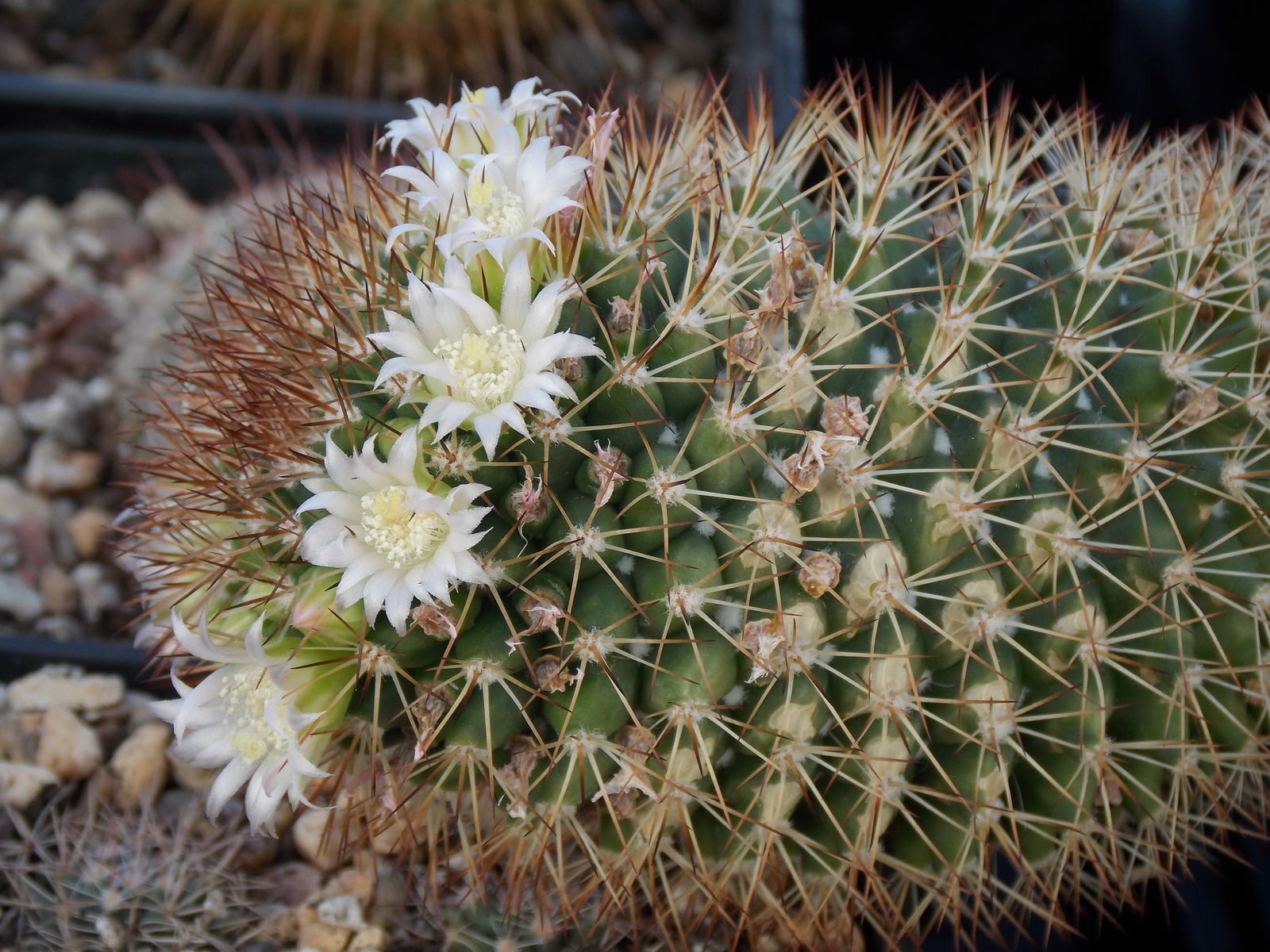 Reference image
Backeberg's Pincushion Cactus
Mammillaria backebergiana is a cylindrical, succulent subshrub belonging to the prominent genus Mammillaria within the cactus family (Cactaceae). Celebrated for its neat, upright growth habit and its spectacular ring of magenta-pink flowers, it is highly valued by global collectors 1.
The species epithet honors Curt Backeberg, a highly respected German botanist and cactus explorer. Under the current botanical consensus, it belongs to the subgenus Mammillaria, characterized by non-milky sap in its tubercles and dense spination 2.
This species is native to central and southwestern Mexico, predominantly found in the states of Guerrero, Michoacán, and Estado de México. It populates dry deciduous shrublands and steep rocky slopes at moderate elevations, often thriving in micro-crevices with minimal organic matter 2.
The plant grows primarily solitary at first, occasionally offsetting from the base with age. Stems are cylindrical, reaching up to 30 cm in height and about 5-6 cm in diameter. The green tubercles are covered with 10-12 radial spines and 1-3 central spines, varying in color from yellowish-brown to grayish. The small, vivid purplish-pink flowers emerge in a neat crown around the upper stem during spring.
Mammillaria backebergiana thrives under bright, filtered sunlight or light shade in extremely hot climates. It requires a very porous gritty medium to prevent root rot. Watering must be thorough but infrequent, allowing the substrate to dry completely between sessions. During winter, keeping the plant dry and cool promotes healthy spring blooming 1.
Overwatering during the winter dormancy period is the primary cause of failure, quickly leading to root decay. Insufficient light results in etiolation, causing the stems to become pale, thin, and prone to pests.
Bright indirect light or at least 4-6 hours of filtered morning sun is optimal.
Allow the soil mix to dry out 100% between waterings. Restrict watering severely in winter.
A highly porous, mineral-heavy substrate with plenty of pumice, perlit, and coarse sand.
Non-toxic to pets, but the sharp and dense spines can cause physical injury. Handle with care.
Very easy to grow as long as you avoid overwatering and provide sufficient light.
Sparsely distributed along rocky cliffs, volcanic slopes, and dry shrublands of central-southwest Mexico, acclimated to prolonged seasonal dry periods.
