
Light
Bright Indirect Light
Bright, indirect sunlight or filtered sun. Protect from scorching afternoon rays.
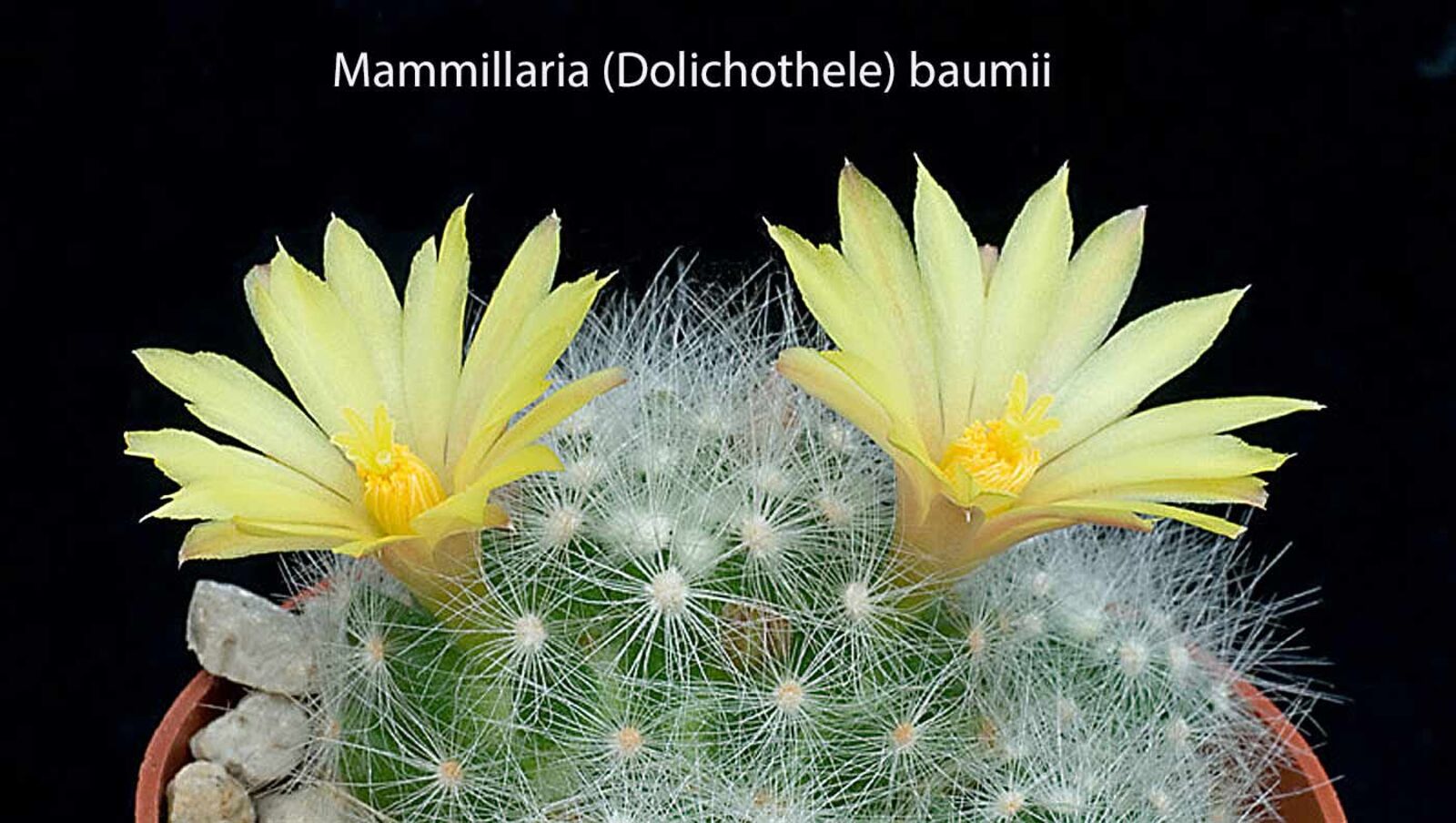 Reference image
Baum's Pincushion Cactus
Mammillaria baumii is a popular clustering cactus species in the family Cactaceae, famous for its sweet-scented yellow flowers and soft-looking white spines. It is highly valued in cultivation for its neat growth habit and ease of care 1.
The species was named in honor of Hugo Baum, a German botanist. Like other members of the genus Mammillaria, its body is characterized by distinct tubercle structures. In older literature, it is occasionally classified under the genus Dolichothele as Dolichothele baumii 1.
Mammillaria baumii is endemic to Tamaulipas, Mexico. It typically grows in dry matorral, rocky crevices, and limestone hillsides, often sheltered under the canopy of larger desert shrubs 2.
This cactus forms low-growing, dense clumps of spherical, bright green stems. The stems are densely covered in radial, hair-like white spines that give the plant a fuzzy appearance. During spring and early summer, it produces relatively large, funnel-shaped yellow flowers that emit a pleasant fragrance 1.
Mammillaria baumii thrives in bright, indirect light or filtered morning sun. It requires highly porous soil and a strict soak-and-dry watering routine. Keeping the plant dry and cool during winter promotes abundant flowering in spring 2.
The most prevalent issue is overwatering combined with poorly draining soil, which quickly leads to root rot. Keeping the plant in warm, humid rooms during the winter months prevents it from going dormant, thus hindering bloom development.
Bright, indirect sunlight or filtered sun. Protect from scorching afternoon rays.
Water only when the soil is completely dry. Keep dry in winter.
Extremely well-draining, mineral-based cactus potting mix with pumice.
Spines are relatively soft but handle with care. Non-toxic to pets.
Very easy to care for, ideal for collectors and beginners alike.
Endemic to the state of Tamaulipas in Mexico, growing on limestone slopes and dry scrublands, sheltered under desert shrubs from harsh midday sun.
