
Light
Bright Indirect Light
Requires bright, filtered sunlight or light shade. Avoid scorching midday sun in summer.
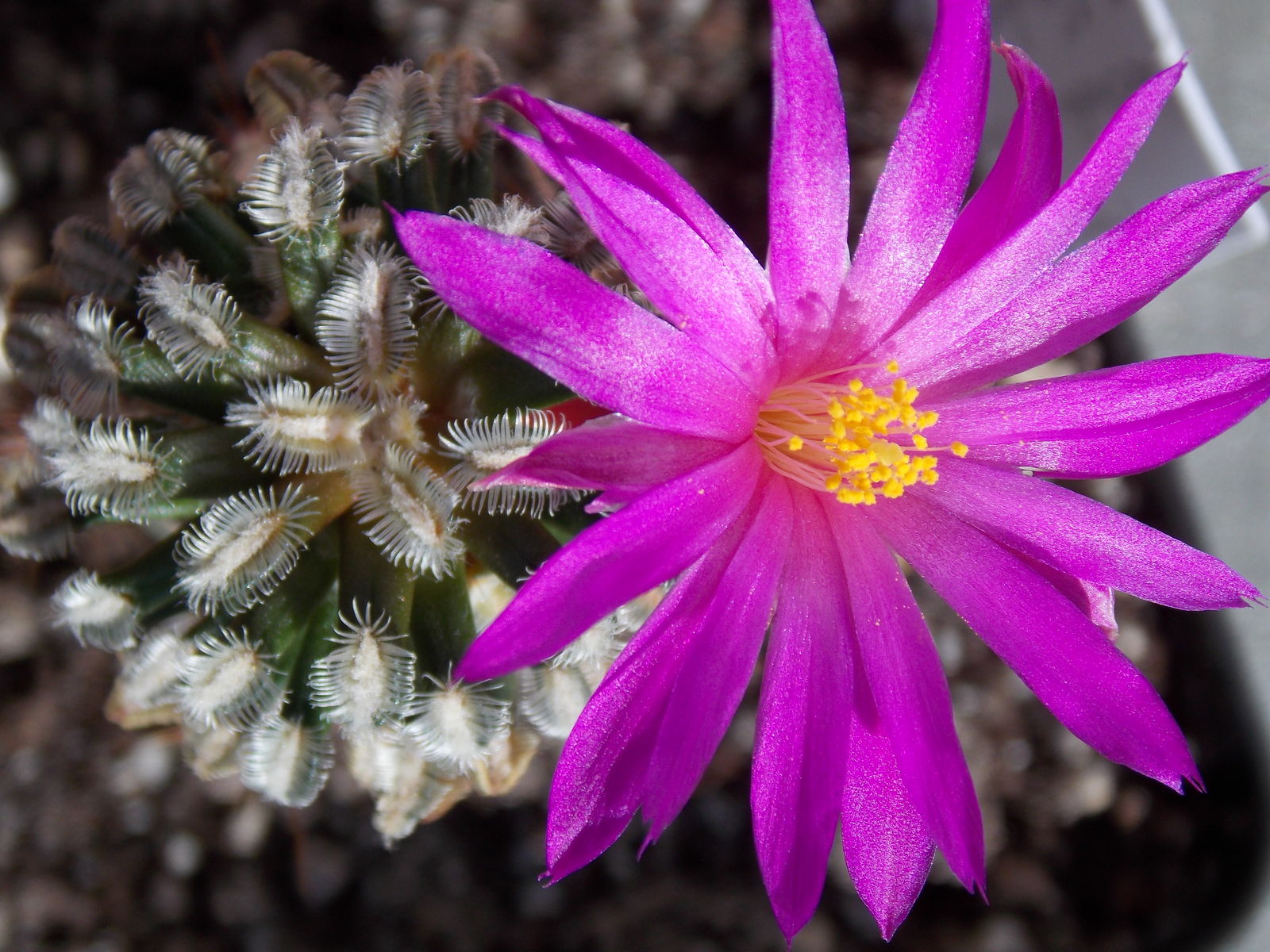 Reference image
Berthold's Mammillaria
Mammillaria bertholdii is one of the most exciting and highly sought-after discoveries in the cactus family in recent decades. This geophytic, tuberous succulent grows almost flat or semi-submerged at the soil level, making it extremely well-camouflaged in its natural habitat 1.
Belonging to the genus Mammillaria within the family Cactaceae, this species was formally described after its discovery by Andreas Berthold in the early 2010s 1. Its unique pectinate tubercle morphology strongly resembles the genus Pelecyphora, setting it apart from typical Mammillaria species.
This species is narrowly endemic to the state of Oaxaca in southern Mexico 2. It is restricted to limestone formations, rocky crevices, and gravelly slopes under dry deciduous scrubland. It thrives in conditions of high light and low water availability.
The body is flattened-globose, usually reaching only 2-3 cm in diameter, and arises from a thick, fleshy taproot. Its tubercles are crowned with extremely fine, comb-like (pectinate) white spines that cover the plant like tiny scales. Large, striking magenta-purple flowers emerge from the crown during the hot summer months 2.
In cultivation, Mammillaria bertholdii is exceptionally delicate. Its massive taproot is highly susceptible to rot, which is why it is frequently sold as a grafted specimen on robust rootstocks like Echinopsis. Own-root cultivation requires an expert hand and a strictly mineral substrate.
The most prevalent issue is root rot due to organic soil mixtures or overwatering. Cultivators must suspend all watering during the winter dormancy and ensure maximum ventilation during the hot growing season.
Requires bright, filtered sunlight or light shade. Avoid scorching midday sun in summer.
Water minimally during summer. Keep absolutely bone-dry during winter hibernation.
Purely mineral mix consisting of pumice, perlite, limestone grit, and no organic matter.
Non-toxic, but the tiny pectinate spines can irritate sensitive skin if handled roughly.
Highly challenging due to root sensitivity. Recommended primarily for experienced growers.
Endemic to the rugged limestone hills of Oaxaca, Mexico, where it grows in harsh, dry scrublands, mimicking surrounding gravel to survive intense heat and droughts.
