
Light
Bright Indirect Light
Provide a bright position and increase direct sun over several weeks for a plant raised under lower light.
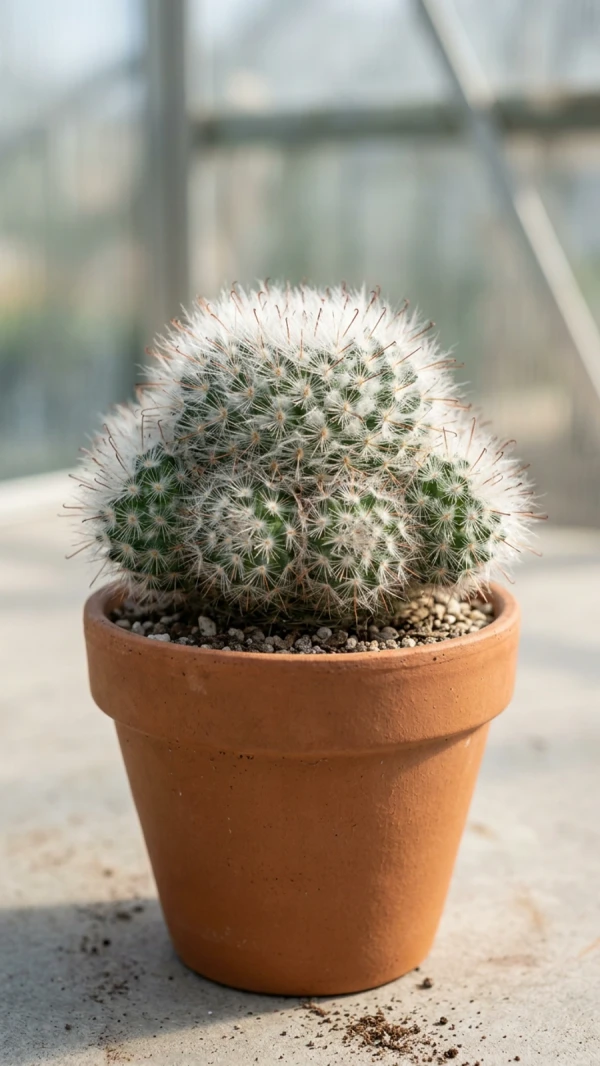
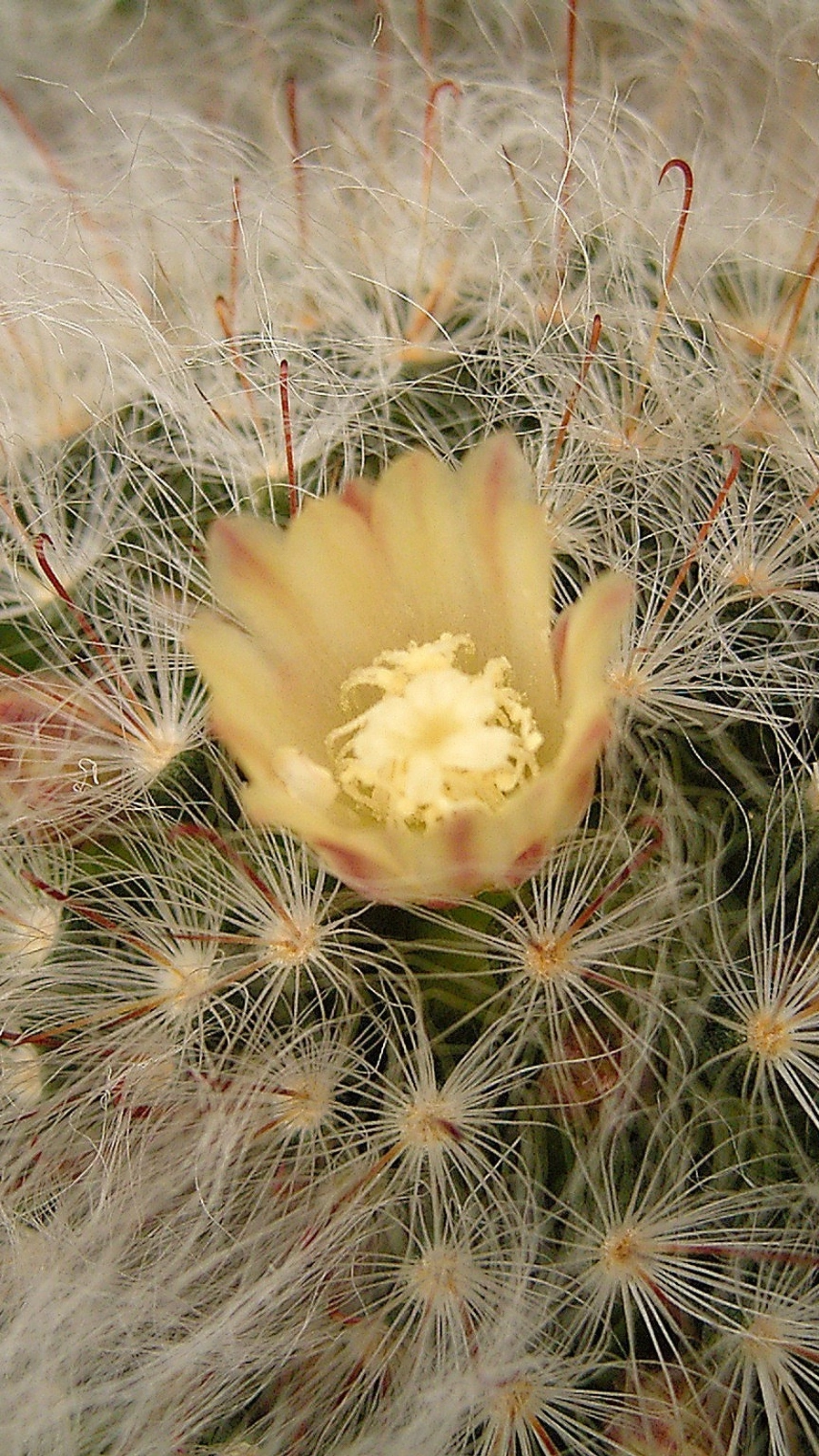 Reference image
Powder Puff Cactus
Mammillaria bocasana is a clustering Mexican cactus whose white hair-like radial spines and often hooked central spines create the familiar “powder puff” appearance.12 Stems may be globose when young and short-cylindrical with age, and basal offsets can form multi-headed clumps. The woolly surface is ornamental but also makes it important not to leave water trapped against the stem.
Hair density, central-spine count, spine colour, and flower colour can vary among living specimens. This variation alone does not establish a natural subspecies, variety, or form; an infraspecific name requires reliable provenance and publication evidence.
Kew records the native range from north-eastern Mexico to Jalisco.1 The global IUCN category is LC.3 A broad range and low overall decline do not guarantee that every local population is secure. Choose documented nursery-propagated material and avoid plants removed from the wild.
Strong filtered light supports compact growth and balanced spine development. A plant raised under lower light should not be moved abruptly into harsh midday sun; increase direct exposure over several weeks. Insufficient light can produce stretched growth and weaker spine development.
Water the growing mix deeply after it has dried throughout and drain all excess. Apply water to the mix rather than leaving droplets in the woolly crown, which can increase staining and rot risk. Drying slows during cool or low-light periods, so the interval becomes longer automatically; do not follow a fixed-day calendar.
Use a mineral-rich, airy, fast-draining mix and a pot with drainage holes. Dense organic soil can keep the compact root zone wet for too long. Even when offsets fill the pot, increase container size gradually according to the actual root volume rather than moving directly into an oversized pot.
Strong evidence of chemical toxicity is lacking; the main hazard is the hooked central spine catching skin, fur, and fabric. Gloves alone may not stop a hook, so use tongs, folded cardboard, or newspaper when handling the plant. Restrict access for children and pets.
Provide a bright position and increase direct sun over several weeks for a plant raised under lower light.
Do not use a calendar. Water the mix after complete drying and avoid trapping water in the woolly crown.
Use a mineral-rich, airy, fast-draining mix in a pot with drainage holes.
Hooked spines catch skin, fabric, and fur. Keep away from children and pets, and use tongs or folded cardboard when handling.
Basic care is easy, but sun acclimation and keeping the woolly stem dry require attention.
Kew records the native range from north-eastern Mexico to Jalisco. The exact state and substrate list in the old live text was unsupported and has been removed.[^1] [^1]: Plants of the World Online. “Mammillaria bocasana Poselg.” Accessed: 2026-08-04. https://powo.science.kew.org/taxon/urn:lsid:ipni.org:names:150672-2
