
Light
Filtered Sun
Requires abundant bright, filtered sunlight; insufficient light causes etiolation.
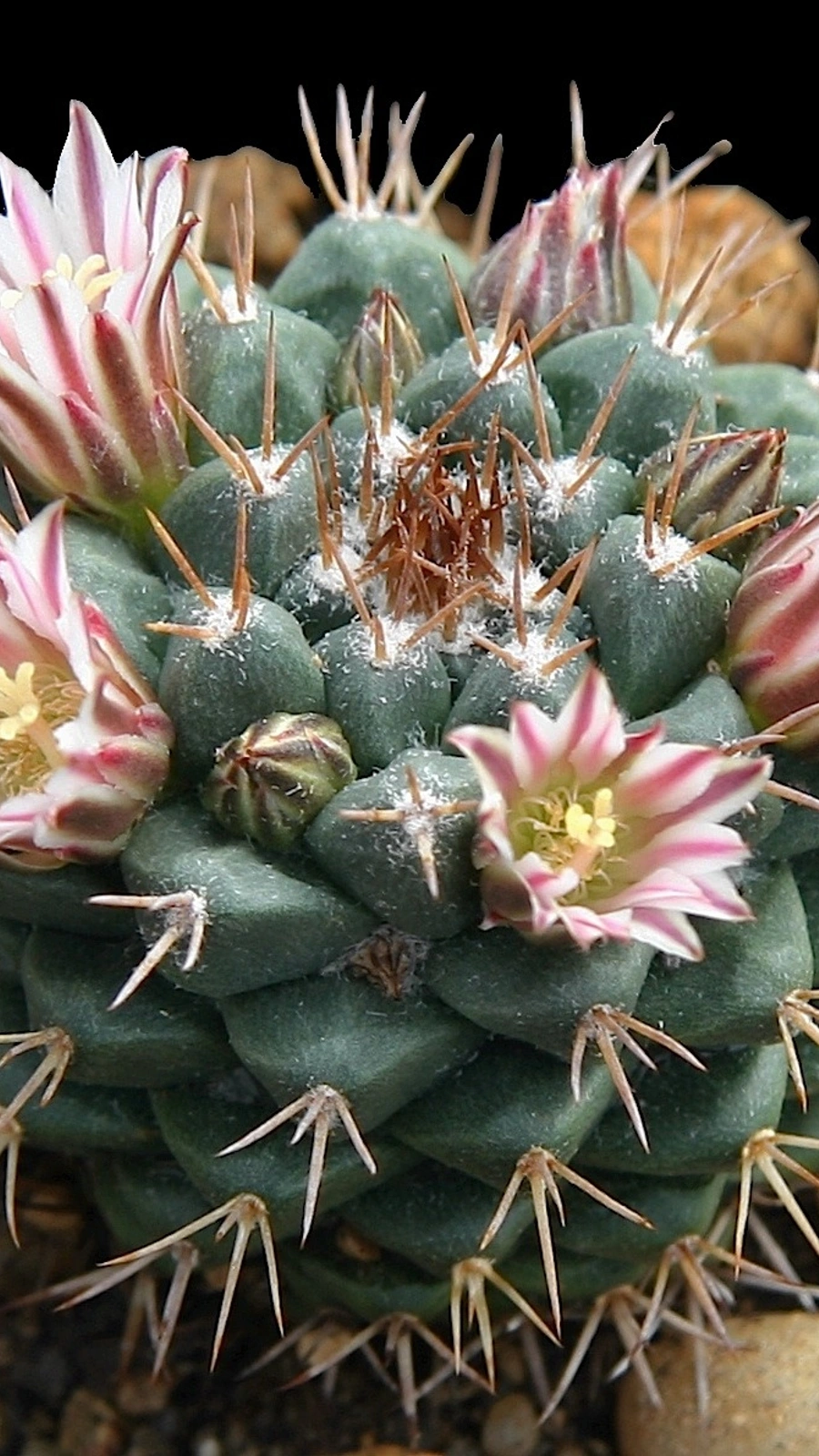 Reference image
Boelderliana Cactus
Mammillaria boelderliana is a succulent subshrub cactus species in the family Cactaceae, endemic to the arid and semi-arid regions of northern and central Mexico 1. It is highly appreciated by collectors for its compact, flattened globose body and symmetrical spine arrangement.
The species is classified under the large and diverse genus Mammillaria, which gets its name from the Latin word "mamilla", meaning nipple or tubercle, referring to the characteristic tubercle structures covering the plant body 2.
This species is native to several Mexican states including Durango, Coahuila, San Luis Potosí, and Zacatecas 1. It thrives in high-altitude desert shrublands, often growing in rocky limestone crevices under the partial shade of nurse bushes.
It typically grows solitary as a globose to depressed-globose, blue-green to dark green stem. The axils between the tubercles are filled with dense white wool, especially when young. It bears 1–4 central spines and 6–8 radial spines. The funnel-shaped flowers are creamy white with distinct pinkish-red midstripes.
In cultivation, Mammillaria boelderliana requires a highly porous, gritty mineral substrate to ensure rapid drainage. It thrives in bright, filtered sunlight to direct morning sun. Water thoroughly only when the soil has completely dried out, and keep it dry during the cold winter dormancy 2.
The most frequent mistake is overwatering or utilizing dense, organic-rich soil mixes, which rapidly lead to root rot. Insufficient light causes the plant to etiolate (stretch weakly), ruining its compact shape and weakening its defense against pests.
Requires abundant bright, filtered sunlight; insufficient light causes etiolation.
Water only when the substrate is completely dry; keep dry throughout winter.
High-drainage mineral substrate such as a mix of fine sand, pumice, and clay.
Spines are sharp; keep out of reach of pets and small children.
Ideal for beginners due to its outstanding drought tolerance.
Naturally distributed across the high-altitude arid highlands and semi-desert shrublands of northern and central Mexico.
