
Light
Direct Sun
Requires at least 6 hours of direct sun daily to maintain its shape and bright spines.
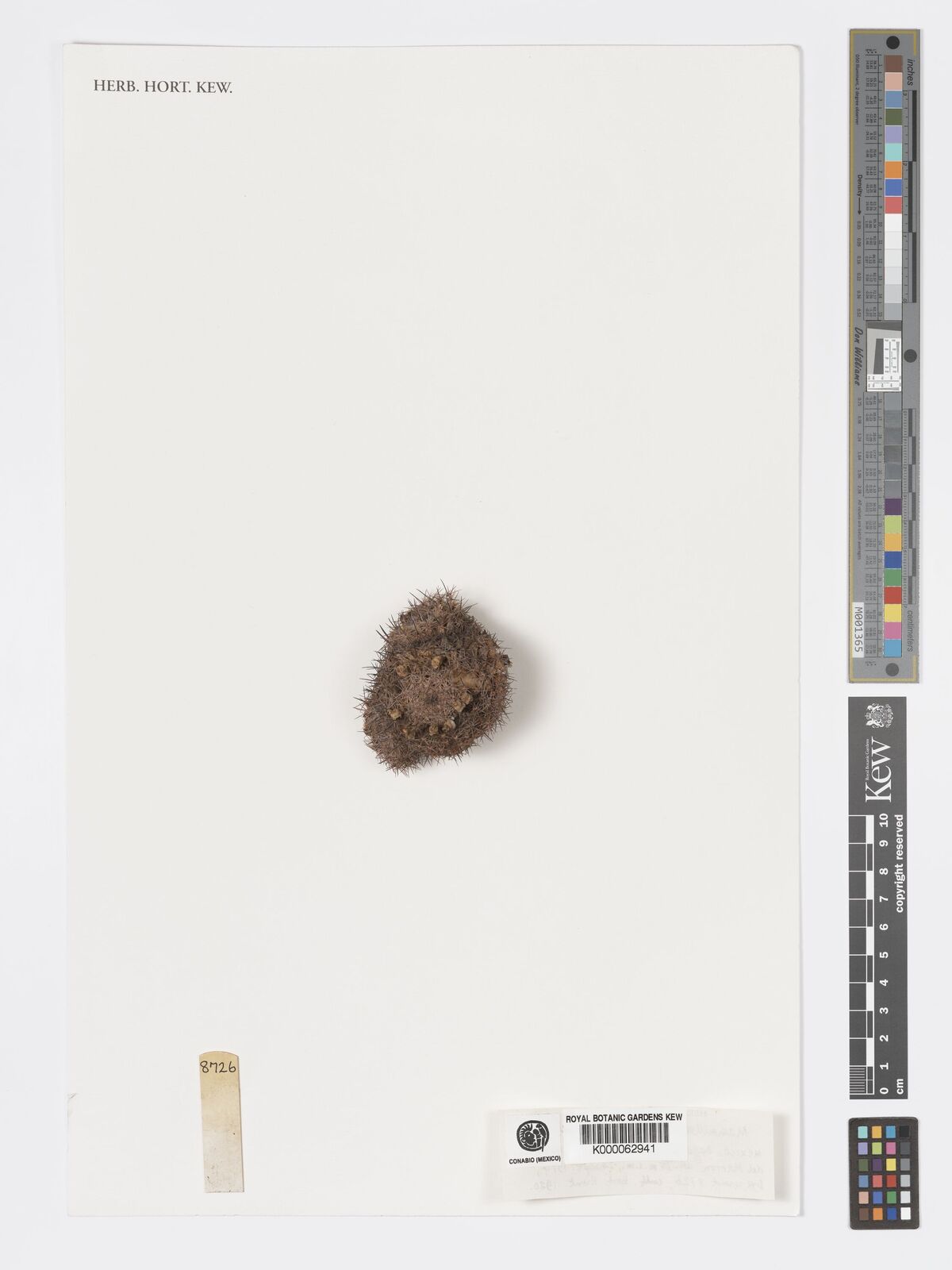 Reference image
Brandegee's Nipple Cactus
Mammillaria brandegeei is a resilient, perennial cactus species belonging to the diverse and highly popular genus Mammillaria within the family Cactaceae 1. Known for its clustering habit and robust nature, it is a favored choice among succulent collectors worldwide.
The specific epithet honors Townshend Stith Brandegee, a celebrated American botanist who documented the rich flora of Baja California 2. The genus name Mammillaria refers to the characteristic nipple-like tubercles that cover the plant body.
This species is endemic to the Baja California Peninsula of Mexico and adjacent islands 1. It thrives in desert environments, dry coastal shrublands, and rocky hillsides, growing in mineral-rich, extremely well-drained soils under intense solar radiation.
The stems are globose to shortly cylindrical, often branching from the base to form small colonies. The tubercles are prominent, bearing stout, yellowish-brown to grayish spines. During spring and summer, it produces small, funnel-shaped, yellowish-green or cream-colored flowers. These are followed by attractive, bright red, elongated fruits.
Mammillaria brandegeei requires direct sunlight to maintain its compact shape and vibrant spine coloration 2. Watering should follow the soak-and-dry method, ensuring the growing medium completely dries out between waterings. In winter, the plant enters dormancy and requires dry conditions.
The most critical error is overwatering, which rapidly leads to root and stem rot. Placing the plant in low-light environments causes etiolation, characterized by pale, stretched growth and weakened spines.
Requires at least 6 hours of direct sun daily to maintain its shape and bright spines.
Only water when the soil is dry. Suspend watering almost entirely in winter.
Use a specialized cactus soil enriched with pumice, perlit, and gravel.
Non-toxic, but sharp spines require cautious handling around kids and pets.
Very easy to care for if provided with full sun and spared from overwatering.
Native to the arid desert landscapes of Mexico's Baja California Peninsula, where it thrives on rocky slopes and dry coastal terrains.
