
Light
Bright Indirect Light
Bright indirect light or filtered sun is ideal for optimal spination.
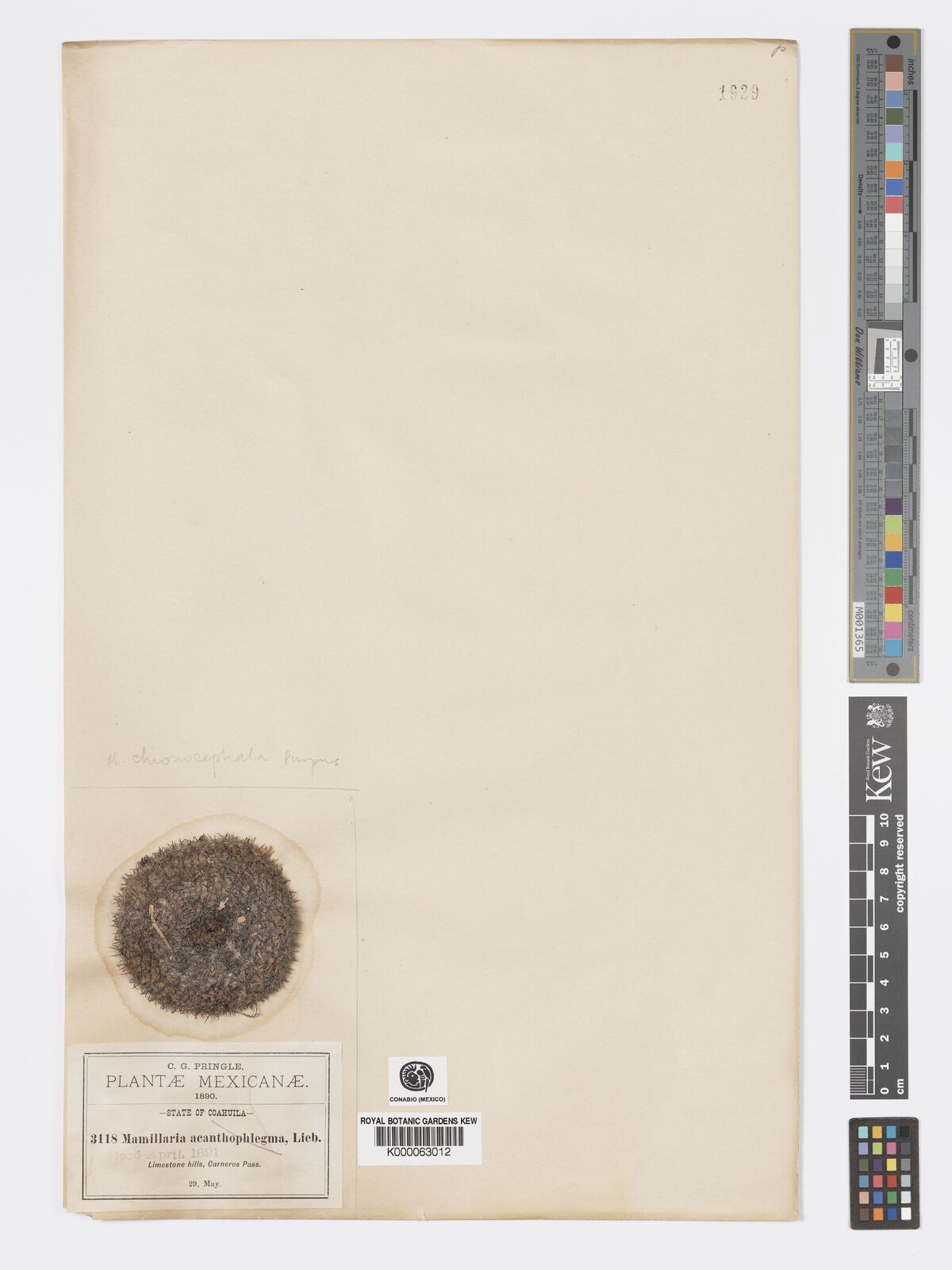 Reference image
Snowhead Pincushion Cactus
Mammillaria chionocephala, commonly known as the Snowhead Pincushion, is a highly attractive and robust member of the Cactaceae family, prized for its snowy white spines and woolly crown 1.
Scientifically described by J.A. Purpus, the specific epithet 'chionocephala' originates from the Greek words 'chion' (snow) and 'cephale' (head), referring to the woolly apex 2. It belongs to the genus Mammillaria, characterized by tubercle-bearing stems.
This species is native to northeastern and central Mexico, including Nuevo León, Coahuila, Durango, and San Luis Potosí 3. It thrives in semi-arid desert shrublands, rocky limestone slopes, and gravelly soils at elevations between 1500 and 2400 meters above sea level.
The stem is solitary or clustering, globose to short-cylindrical, reaching up to 15 cm in height. It is densely covered with white radial spines and 2-4 central spines. In spring, it produces a ring of small, pale pink to deep pink-red flowers near the woolly crown, followed by red club-shaped fruits.
In cultivation, it requires a very gritty, fast-draining substrate and bright light to maintain its dense spination. Watering should follow the soak-and-dry method, with a completely dry winter rest to encourage spring flowering.
Overwatering is the primary cause of failure, leading to root rot. Insufficient light results in etiolation, where the plant loses its globose shape and grows weak and elongated.
Bright indirect light or filtered sun is ideal for optimal spination.
Allow soil to dry fully before watering. Keep completely dry in winter.
Highly porous, grit-heavy mineral mix with excellent drainage.
Spiny, keep away from curious pets and children. Non-toxic.
Very easy and forgiving, making it perfect for beginner collectors.
Endemic to the high-elevation rocky limestone hills and arid desert shrublands of northern and central Mexico, specifically across the Chihuahuan Desert regions.
