
Light
Bright Indirect Light
Requires bright indirect light or partial morning sun; protect from scorching midday summer sun.
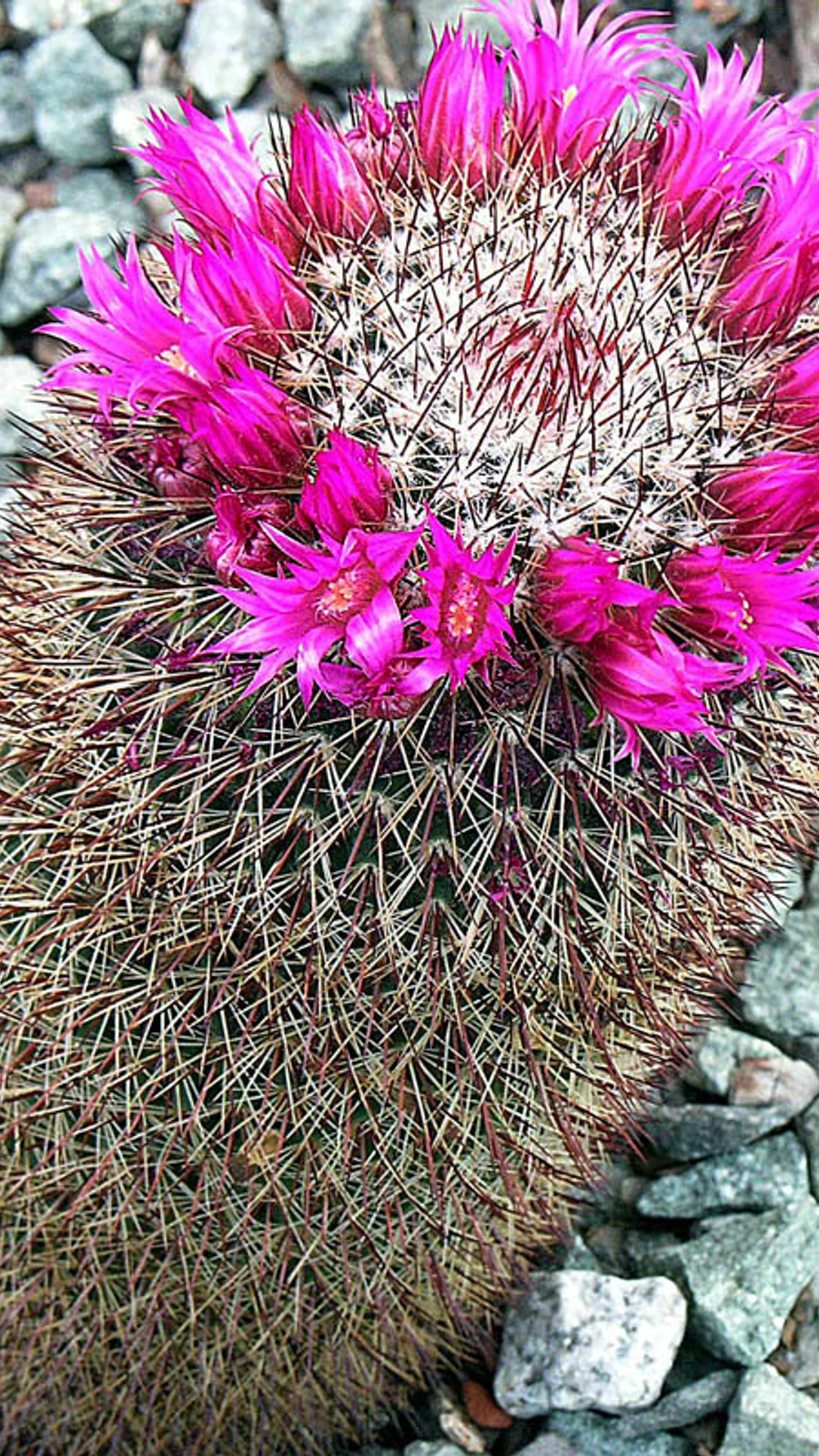 Reference image
Cylindrical Nipple Cactus
Mammillaria cylindrica (often classified under or associated with Mammillaria backebergiana) is a popular, columnar succulent belonging to the Cactaceae family. Characterized by its dense spination and cylindrical growth habit, it produces beautiful rings of purple-pink flowers near the crown during spring, making it a highly desirable species for collectors 1.
The genus name Mammillaria refers to the nipple-like tubercles covering the plant's body. The specific epithet 'cylindrica' denotes its vertical, cylinder-like stem structure. Taxonomists often view this plant within the complex of M. backebergiana 2.
This species is native to the semi-arid, mountainous regions of Mexico. In its natural environment, it grows on rocky slopes, volcanic soils, and limestone cliffs, often partially shaded by sparse desert scrub 1.
The stem is light green, growing upright and occasionally offsetting from the base to form small clumps over time. Radial and central spines cover the body in shades of cream, yellow, and reddish-brown. The small, funnel-shaped flowers appear in a distinct crown-like circle.
It thrives in bright, indirect sunlight, with some morning or late afternoon direct sun. Soil must be extremely porous. Water thoroughly only when the soil has dried out completely, and keep the plant dry and cool during winter 2.
Overwatering is the primary cause of failure, quickly leading to root rot. Keeping the cactus in low-light conditions causes etiolation, where the stem stretches unnaturally and loses its compact shape.
Requires bright indirect light or partial morning sun; protect from scorching midday summer sun.
Allow soil mix to dry out entirely between waterings. Reduce to a minimum in winter.
Use a highly porous mineral mix containing pumice, perlite, and coarse sand.
Non-toxic to pets, but the sharp spines can cause physical injury, so handle with care.
Very easy for beginners, provided that overwatering and poorly draining soil are avoided.
Native to the high-elevation rocky slopes of Mexico, where it thrives in well-drained volcanic soils and experiences dry, cool winters and warm summers.
