
Light
Bright Indirect Light
Requires abundant bright, indirect sunlight; harsh afternoon sun can cause tissue burns.
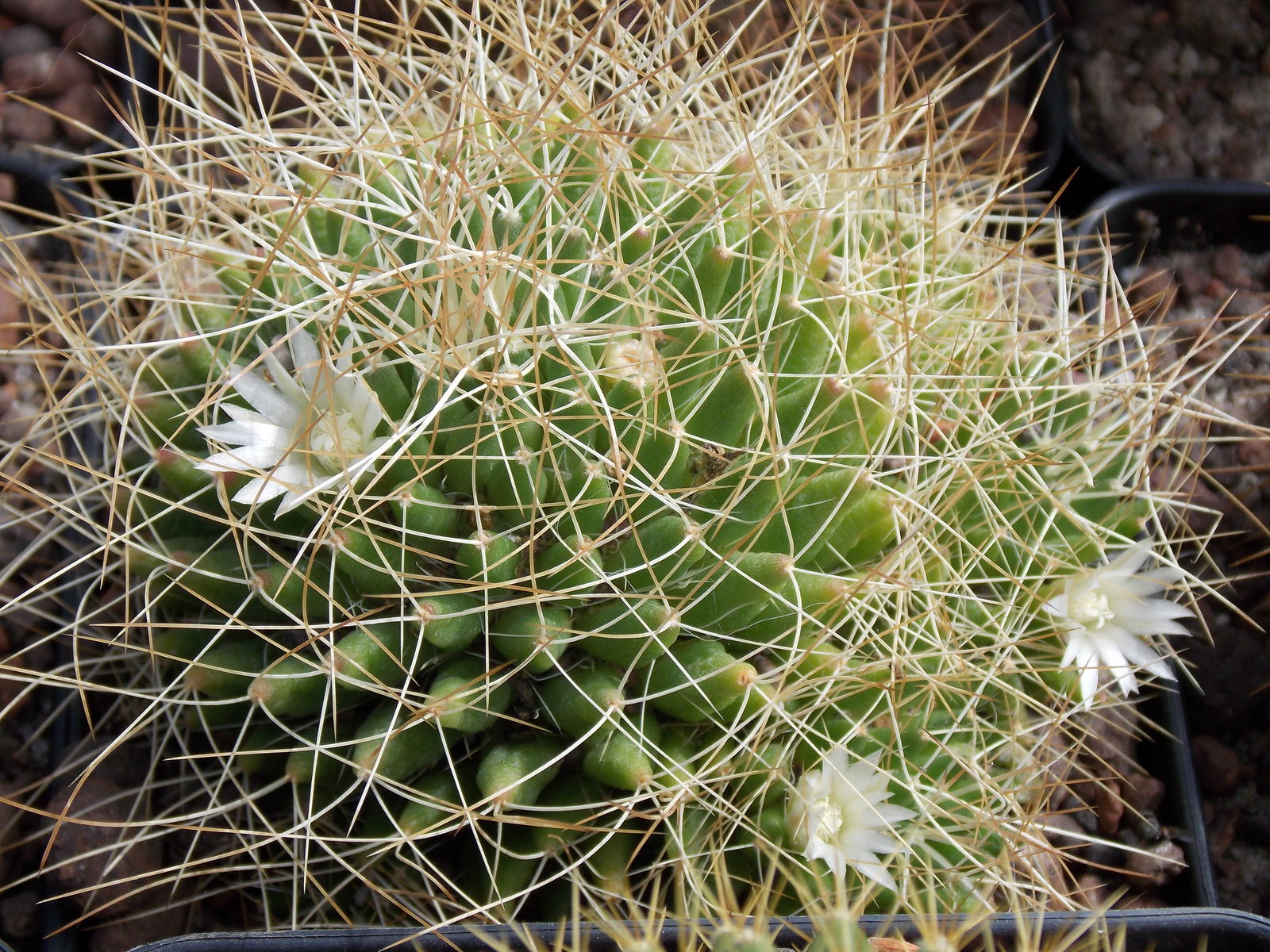 Reference image
Deceptive Pincushion Cactus
Mammillaria decipiens is a small, clump-forming succulent subshrub belonging to the Cactaceae family. Highly appreciated by collectors, this plant is well-known for its charming spination and delicate whitish flowers 1.
Described in 1838 by M. J. Scheidweiler, the specific epithet decipiens comes from Latin, meaning 'deceiving' or 'misleading', referencing the highly variable spine arrangements that often confuse botanists 2.
Native to central Mexico, specifically in the states of San Luis Potosí, Guanajuato, and Querétaro 1. It thrives in semi-desert scrublands and deciduous dry forests at elevations between 1500 and 2100 meters, typically growing in the shade of nurse plants on limestone soils.
The stems are globose to short cylindrical, bright green, and densely covered in prominent tubercles. Spines are needle-like, ranging from white to yellow-brown. In late spring, sweet-scented, funnelform, creamy white or pale pink flowers emerge from between the tubercles 2.
It prefers bright, indirect sunlight and extremely well-draining soil. It is susceptible to rot in heavy, clayey substrates. Watering should follow the 'soak and dry' method, and winter dormancy requires cool, dry conditions.
Overwatering is the primary cause of plant death due to root rot 1. Insufficient lighting causes the stems to stretch abnormally (etiolation), ruining its compact globular shape.
Requires abundant bright, indirect sunlight; harsh afternoon sun can cause tissue burns.
Water only when the substrate is fully dry. Reduce watering to a bare minimum in winter.
Needs a very porous soil mix containing coarse sand, pumice, and minimal organic matter.
Non-toxic, but the spines are sharp and can cause mechanical injury to curious pets or children.
An excellent, low-maintenance choice for beginners due to its high drought tolerance.
Naturally distributed in the dry shrublands of central Mexican states such as San Luis Potosí, Guanajuato, and Querétaro, where it thrives in rocky, calcareous soils shielded by larger desert vegetation.
