
Light
Filtered Sun
Requires bright, filtered sunlight; shield from intense afternoon summer sun.
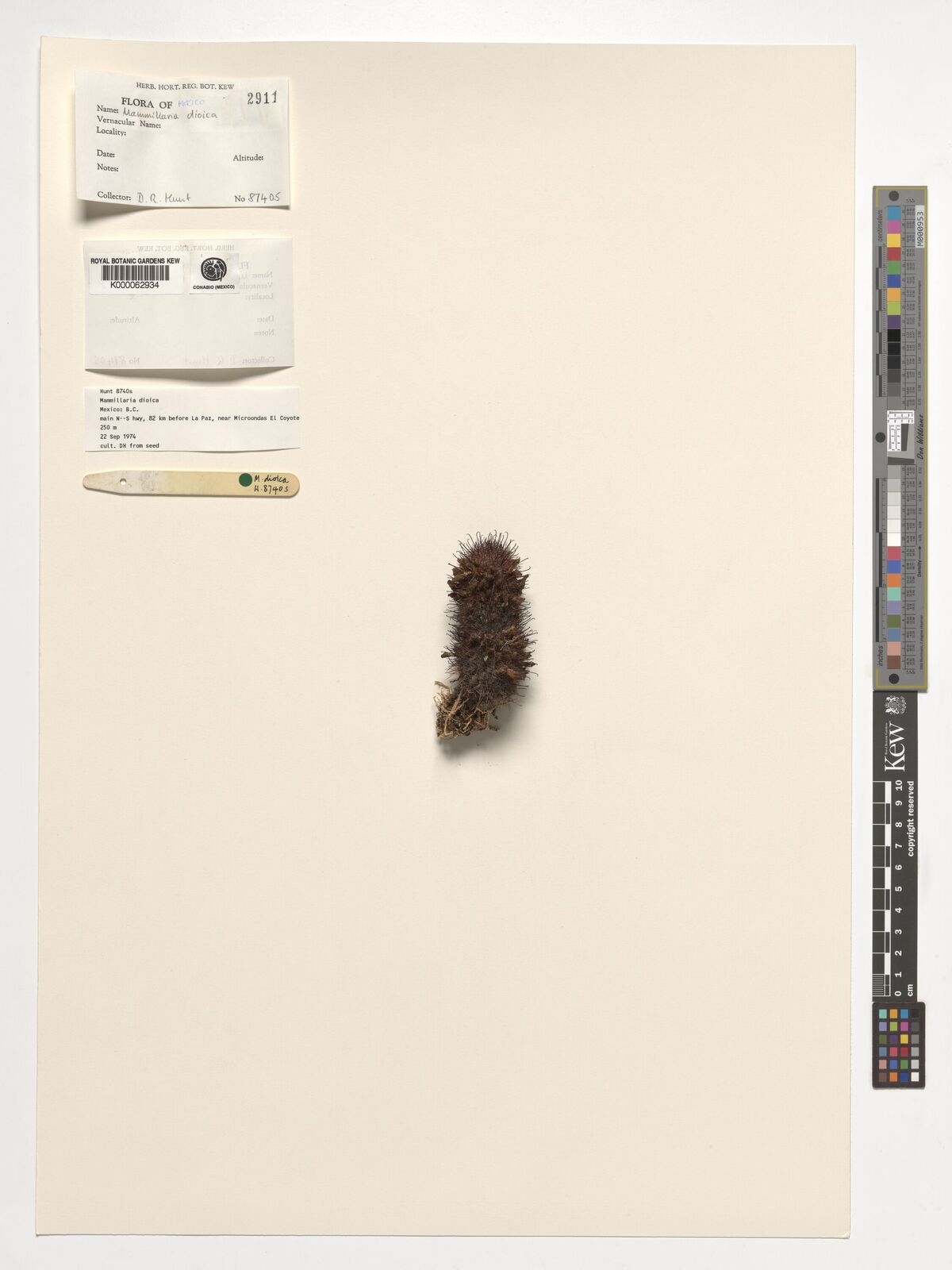 Reference image
Ekman's Nipple Cactus
Mammillaria ekmanii is a rare and highly prized succulent species belonging to the diverse genus Mammillaria within the family Cactaceae. Adapted to seasonally dry tropical environments, it represents a unique element of Caribbean xerophytic flora 1.
The species epithet honors the prolific Swedish botanist Erik Leonard Ekman, who collected extensively in the Caribbean 2. The genus name Mammillaria refers to the characteristic nipple-like tubercles covering the plant body.
This cactus is native to the Caribbean, specifically endemic to the dry, rocky limestone regions of Haiti (Hispaniola). It thrives in seasonally dry tropical biomes, often anchored in crevices of steep cliffs where moisture drains away instantly 1.
The stem is globose to short-cylindrical, typically dark green, covered with distinct tubercles. Areoles bear clusters of radial and central spines that vary from gray to pale yellow. The small, bell-shaped flowers emerge in a ring near the crown, exhibiting cream to light pink hues.
Mammillaria ekmanii requires exceptional drainage and bright, filtered sunlight. It is best grown in a porous mineral substrate. Water thoroughly only when the soil has completely dried, and keep dry during winter dormancy to prevent root rot.
Overwatering and low-drainage soils are the primary causes of failure, quickly leading to root decay. Insufficient air circulation combined with high humidity can also trigger fungal infections on the epidermis.
Requires bright, filtered sunlight; shield from intense afternoon summer sun.
Allow the potting medium to dry out completely between waterings. Dry in winter.
Highly porous substrate with high grit, pumice, and coarse sand content.
Features sharp spines. Handle with care or wear gloves. Non-toxic to pets.
Moderate. Demands strict adherence to dry-winter cycles and porous soil.
Endemic to the limestone cliffs and rocky, seasonally dry tropical shrublands of Hispaniola, particularly in Haiti.
