
Light
Filtered Sun
Requires plenty of filtered sunlight to maintain its vibrant yellow spine coloration.
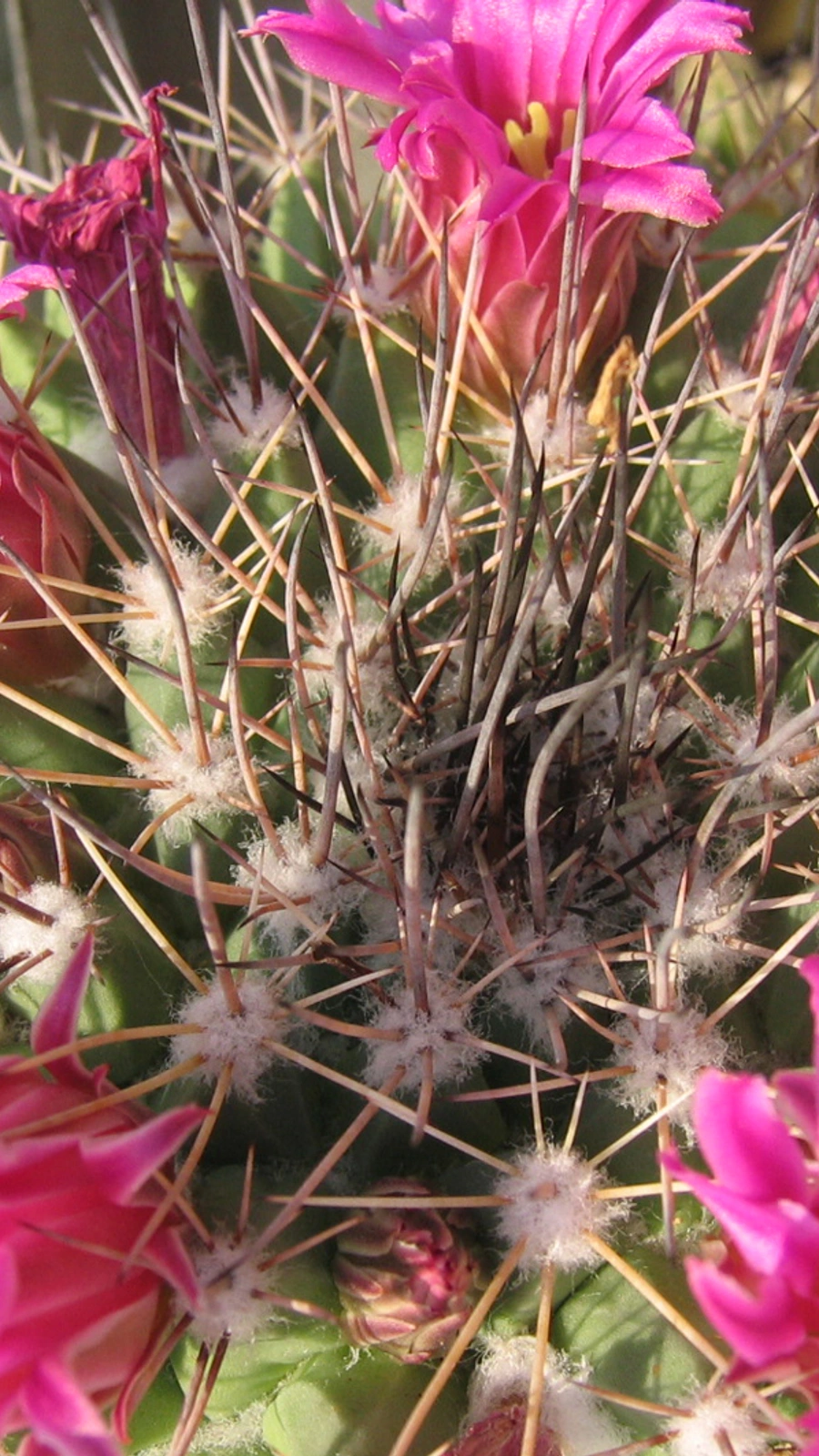 Reference image
Yellow-Centered Nipple Cactus
Mammillaria flavicentra is a slow-growing, cylindrical, and highly attractive cactus species belonging to the Cactaceae family. In its natural habitat, it thrives on rocky surfaces and dry shrublands.
It belongs to the genus Mammillaria within the family Cactaceae. The specific epithet 'flavicentra' is derived from the Latin 'flavus' (yellow) and 'centrum' (center), referring to the prominent yellow central spines clustered at the plant's apex 1.
This species is endemic to southern Mexico, particularly in the states of Oaxaca and Puebla. It typically grows at elevations of 1,000 to 2,000 meters above sea level on limestone hills, arid valley slopes, and as a lithophyte in rocky crevices 2.
The stem is usually solitary but may branch sparsely from the base with age. The stem color ranges from light green to grayish-green. The body is densely covered with whitish radial spines, while the 4-6 central spines are a striking golden-yellow or brownish-yellow. In late spring, it produces small, funnel-shaped pinkish-red flowers in a ring near the crown.
It performs exceptionally well in bright, filtered sunlight or partial sun. Avoid overwatering; allow the substrate to dry out completely between waterings. During winter, watering must be suspended almost entirely.
The most frequent mistake is using poorly draining pots or heavy soil mixtures, combined with excessive watering. This easily leads to root rot. Keeping the cactus wet during cold winter months is also fatal.
Requires plenty of filtered sunlight to maintain its vibrant yellow spine coloration.
Do not water until the soil is fully dry; restrict watering entirely during the winter dormancy.
Use a highly porous, pumice-rich grit mix to prevent any water stagnation around the roots.
Non-toxic to pets, but the dense, sharp spines can cause physical injury, so handle with care.
Very easy to maintain as long as you avoid overwatering and provide adequate light.
Native to the dry, rocky valleys and limestone hillsides of southern Mexico, where it grows as a lithophyte under intense sun and minimal organic matter.
