
Light
Bright Indirect Light
Requires bright, filtered sunlight. Protect from intense, scorching afternoon sun to prevent sunburn.
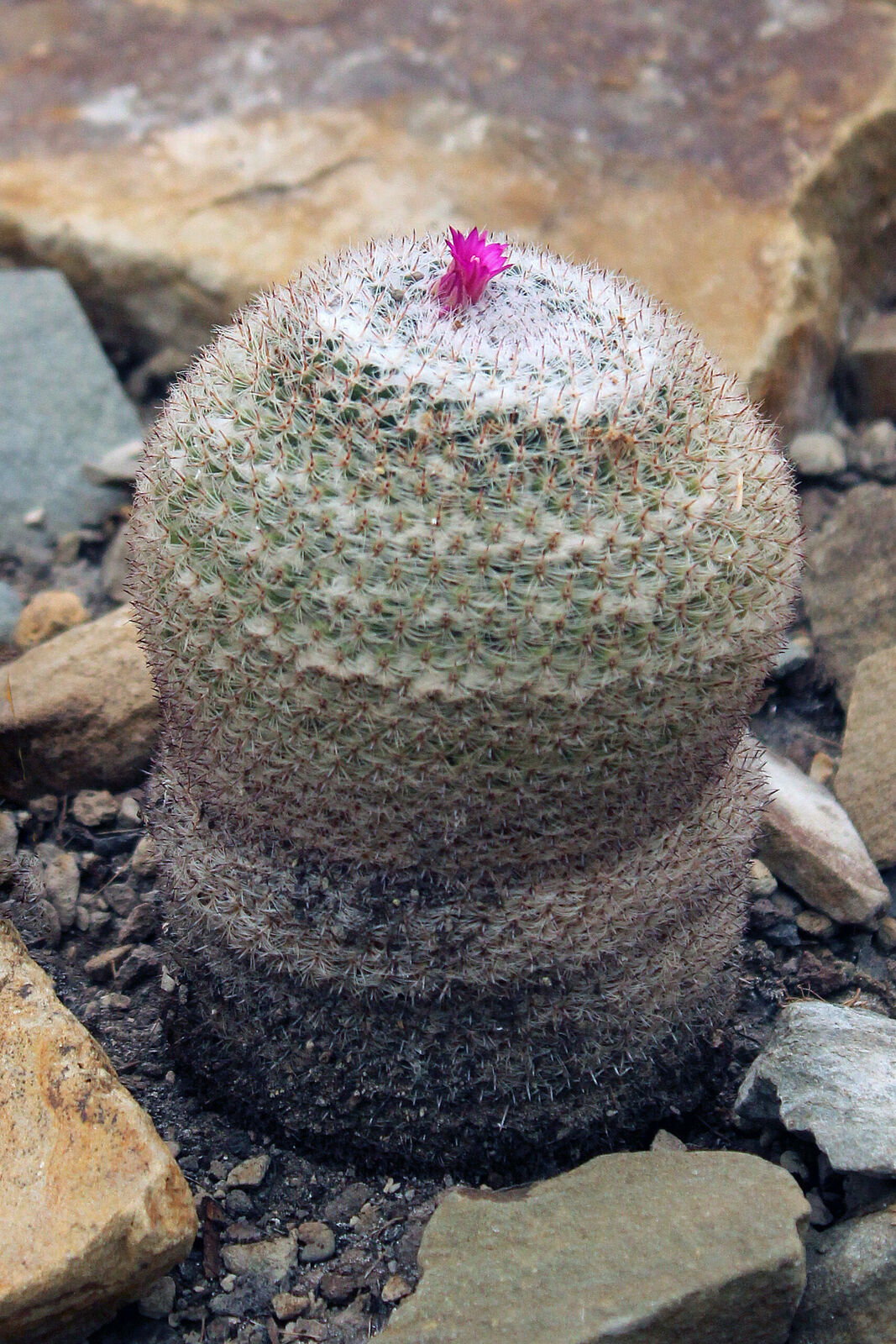 Reference image
Beautiful Nipple Cactus
Mammillaria formosa is an aesthetically striking cactus species belonging to the highly diverse genus Mammillaria within the family Cactaceae. Renowned for its geometric symmetry and resilience, it is a prized specimen among desert plant collectors and succulent enthusiasts 1. It possesses exceptional adaptations to withstand prolonged periods of drought.
The scientific name Mammillaria formosa is derived from Latin. The genus name Mammillaria refers to the nipple-like tubercles that cover the plant body, while the specific epithet formosa translates directly to 'beautiful' or 'well-formed' 2. The species was formally classified by Joseph de Salm-Reifferscheid-Dyck in 1838.
Native to the semi-arid zones and desert scrublands of northeastern and central Mexico, Mammillaria formosa is typically found growing on limestone hills, gravelly slopes, and rocky crevices 1. It thrives in environments characterized by alkaline soils and intense daylight.
The plant starts as a solitary globose stem, which can eventually become short-cylindrical and offset from the base to form small clumps. The epidermis is light grey-green to dull green, adorned with tightly packed tubercles. The axils and areoles are heavily covered with white wool, creating a frosty appearance. In spring, it produces a crown of small, funnel-shaped flowers ranging from pale pink to cream 2.
It requires a highly porous, mineral-based potting substrate with excellent drainage. Water thoroughly during the spring and summer active growth phases, allowing the soil to dry completely in between. Keep dry and cool during winter dormancy. It thrives in bright, indirect sunlight or filtered direct sun.
The most prevalent issue is root rot induced by overwatering or poorly draining soil. Additionally, insufficient light can cause the stem to stretch unnaturally (etiolation), which permanently distorts its compact, globose shape.
Requires bright, filtered sunlight. Protect from intense, scorching afternoon sun to prevent sunburn.
Water only when the substrate is fully dry. Keep virtually dry during the winter resting phase.
Prefers an alkaline, highly draining mineral substrate rich in pumice, gravel, and coarse sand.
Non-toxic to pets, but has sharp spines; handle with care and keep away from high-traffic areas.
Very easy to care for, making it excellent for beginners who can resist the urge to overwater.
Endemic to the high-altitude semi-deserts and limestone slopes of northeastern and central Mexican states, including San Luis Potosí, Coahuila, and Nuevo León.
