
Light
Full Sun
Requires full sun or very bright indirect light; direct sunlight enhances spine coloration.
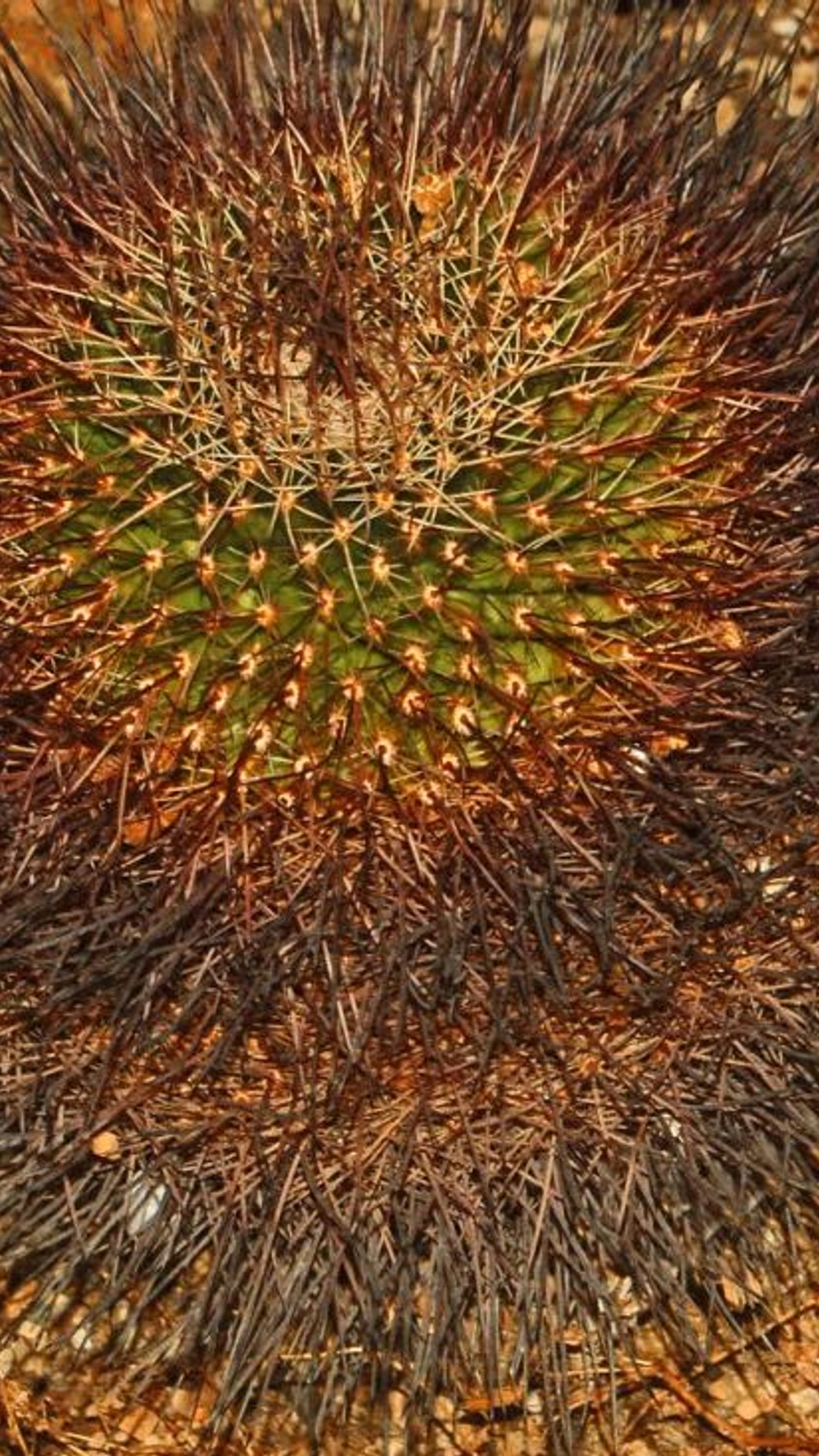 Reference image
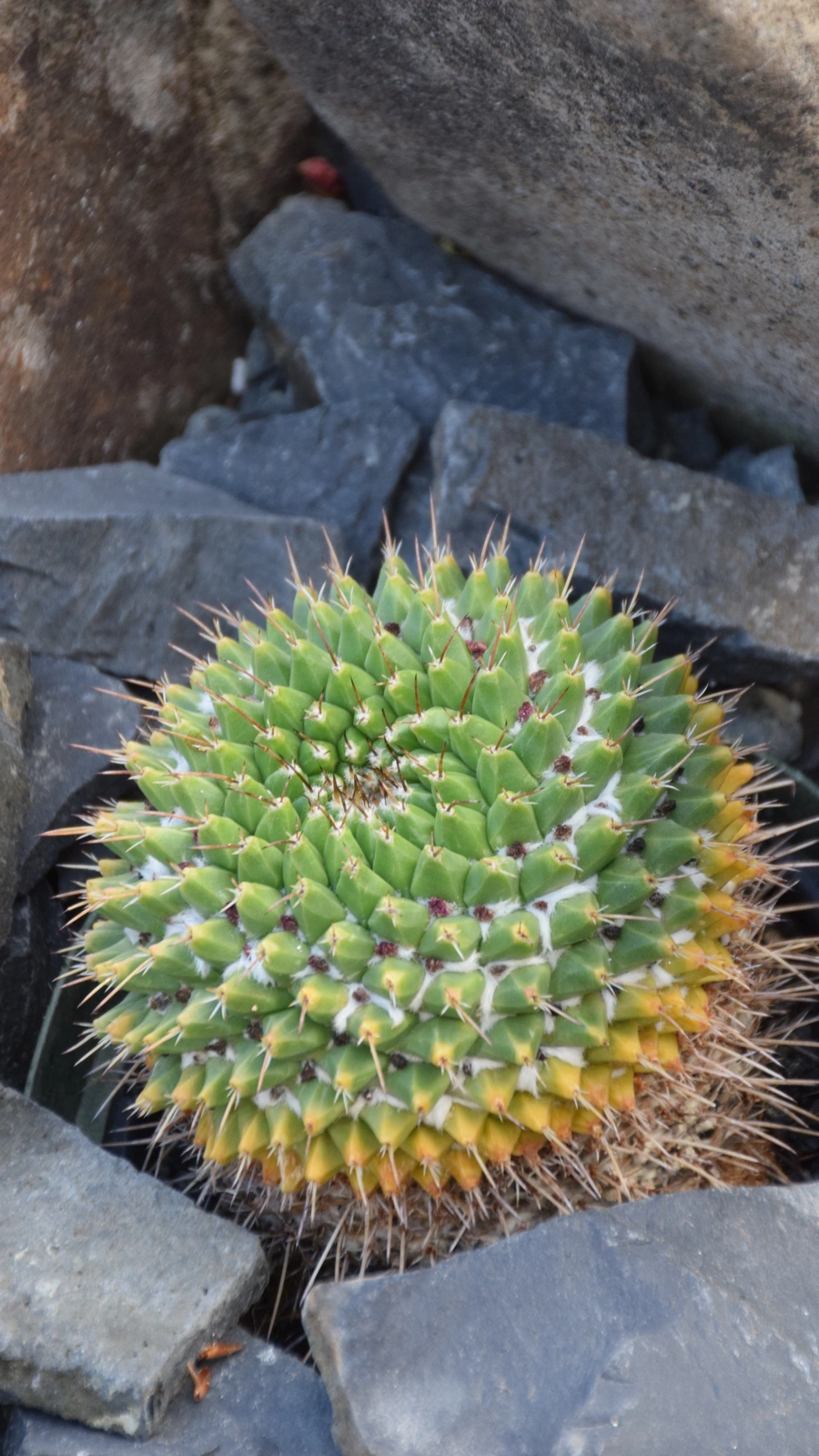 Reference image
Gruson's Mammillaria
Mammillaria grusonii is a prominent, globose to short-cylindrical succulent cactus in the family Cactaceae. Known for its symmetrical growth and stout golden-yellow spines, this solitary-growing species is highly sought after by cactus enthusiasts for its structural beauty and extreme drought tolerance.
This species was first described by the German botanist Heinrich Hildmann and named in honor of Hermann Gruson, a prominent German industrialist and avid cactus collector of the 19th century 1. It belongs to the genus Mammillaria, characterized by its distinctive tuberculate stem morphology.
Mammillaria grusonii is endemic to Mexico, primarily found in the states of Coahuila and Durango 2. It thrives at elevations between 800 and 1,400 meters above sea level, growing on limestone hills, rocky outcrops, and dry shrublands. It is perfectly adapted to poor soils and long periods of intense solar radiation.
The stem is light green to glaucous-green, growing up to 20 cm in diameter and 25 cm in height. Areoles bear 12 to 14 radiating spines and 2 to 3 stout, straight central spines, which are bright reddish-yellow on new growth and fade to chalky grey with age. During spring, it produces a ring of small, funnel-shaped, creamy-yellow flowers near the crown, followed by small reddish fruits 1.
In cultivation, Mammillaria grusonii requires full sun and exceptionally well-drained substrate. Watering must be thorough but infrequent, allowing the potting medium to dry out completely. Keeping the plant dry during winter dormancy allows it to tolerate short drops in temperature down to near freezing.
The most prevalent issue is root rot caused by overwatering or compacted soil. Insufficient light exposure leads to etiolation, causing the stems to stretch weakly and lose their dense spine configuration.
Requires full sun or very bright indirect light; direct sunlight enhances spine coloration.
Soak and dry method: water thoroughly in summer, and keep completely dry in winter.
Use a mineral-heavy mix containing 50-70% inorganic materials like pumice, perlite, and sand.
Non-toxic but possesses sharp, rigid spines that can easily puncture skin. Handle with care.
Very easy, making it excellent for beginners who can resist the urge to overwater.
Native to the arid regions of northern Mexico, specifically within the Chihuahuan Desert ecosystem, where it colonizes steep, rocky limestone hillsides.
