
Light
Direct Sun
Requires bright, direct sunlight; low light leads to weak, elongated growth.
 Reference image
 Reference image
Guerrero Pincushion Cactus
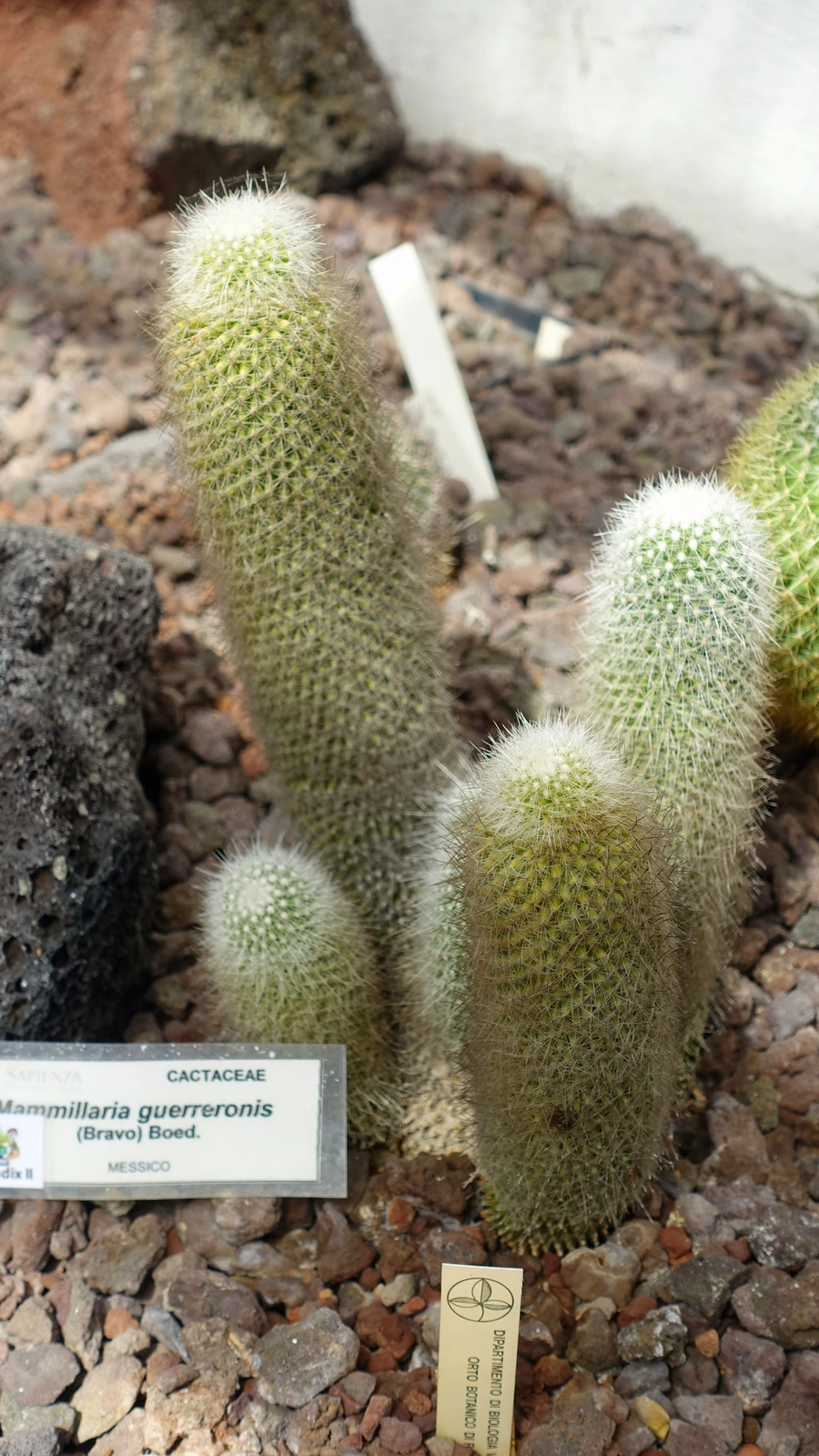
Mammillaria guerreronis is a resilient and attractive cactus species in the family Cactaceae, characterized by its cylindrical stems and tendency to form dense, multi-headed clumps 1. It is highly valued in collections for its geometric spine arrangement and easy-going nature.
Named after the Mexican state of Guerrero where it is found, this species belongs to the large genus Mammillaria 2. The genus name refers to the nipple-like tubercles that cover the plant body, a defining morphological feature of these cacti.
This species is native to the dry shrublands and desert regions of Mexico 1. It typically grows on steep rocky slopes, limestone crevices, and gravelly soils where water drains instantly after rain events.
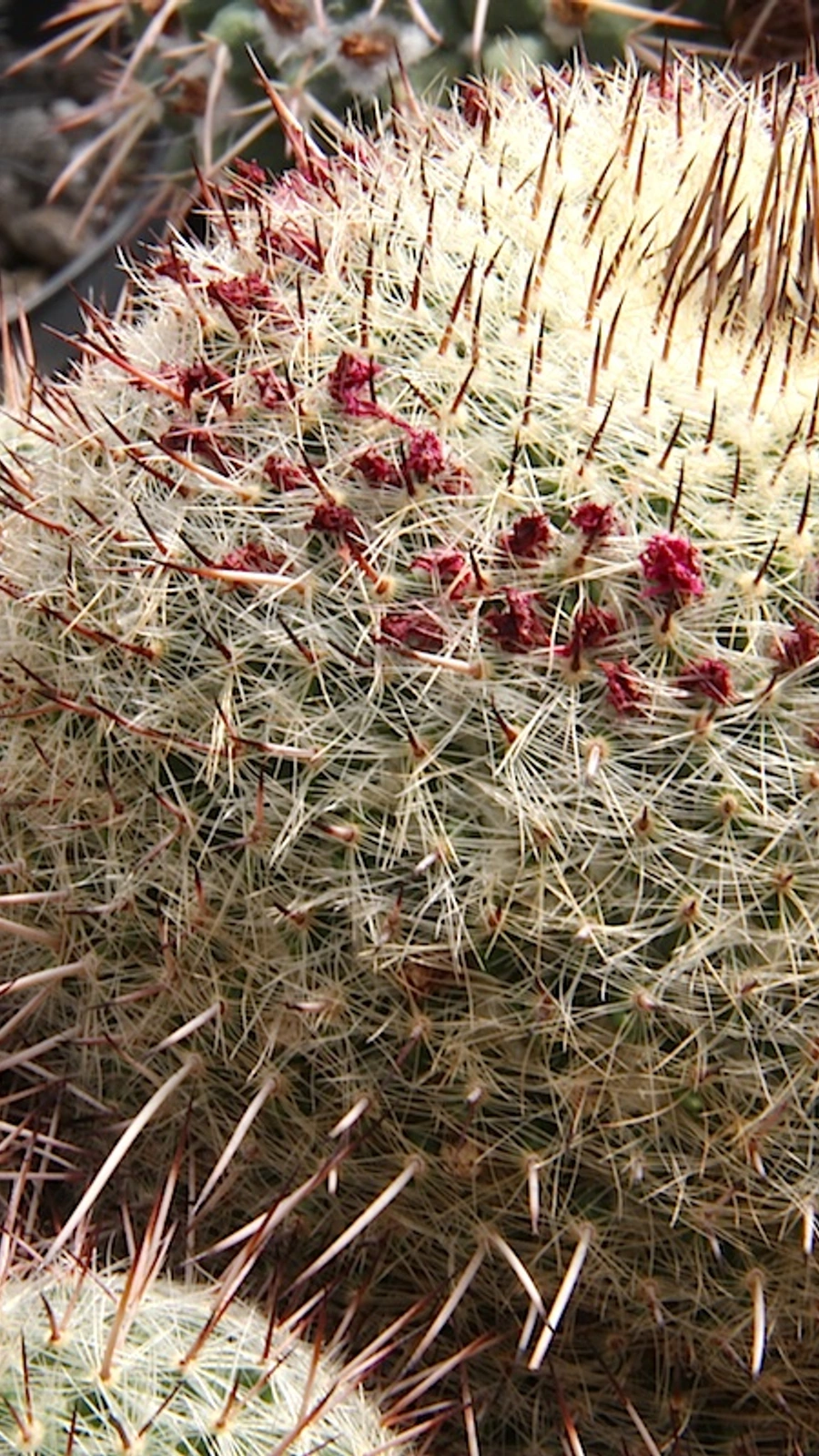
The stems are cylindrical, branching from the base over time to form colonies. The tubercles are arranged in tight spirals, hosting dense clusters of bristly, whitish radial spines and prominent, yellowish-brown central spines 2. During spring and early summer, small, tubular pinkish-red flowers emerge in a ring near the crown of the stem.
In cultivation, Mammillaria guerreronis requires maximum sunlight and exceptionally porous soil. Watering should follow the 'soak and dry' method, allowing the substrate to dry completely between sessions. During winter dormancy, keep the plant almost entirely dry.
Overwatering is the primary cause of root rot and plant loss. Insufficient light leads to etiolation, where the stems become pale, weak, and unnaturally elongated.
Requires bright, direct sunlight; low light leads to weak, elongated growth.
Water thoroughly only when the soil is completely dry. Keep dry in winter.
Requires a gritty, highly porous cactus substrate enriched with pumice.
Non-toxic, but the sharp spines can cause physical injury; handle with care.
Very easy to care for if overwatering is avoided.
Native to the semi-arid mountainous regions and rocky cliffs of Mexico, particularly concentrated within the state of Guerrero.
