
Light
Bright Indirect Light
Prefers bright, indirect light or filtered morning sun. Avoid harsh, direct afternoon sunlight.
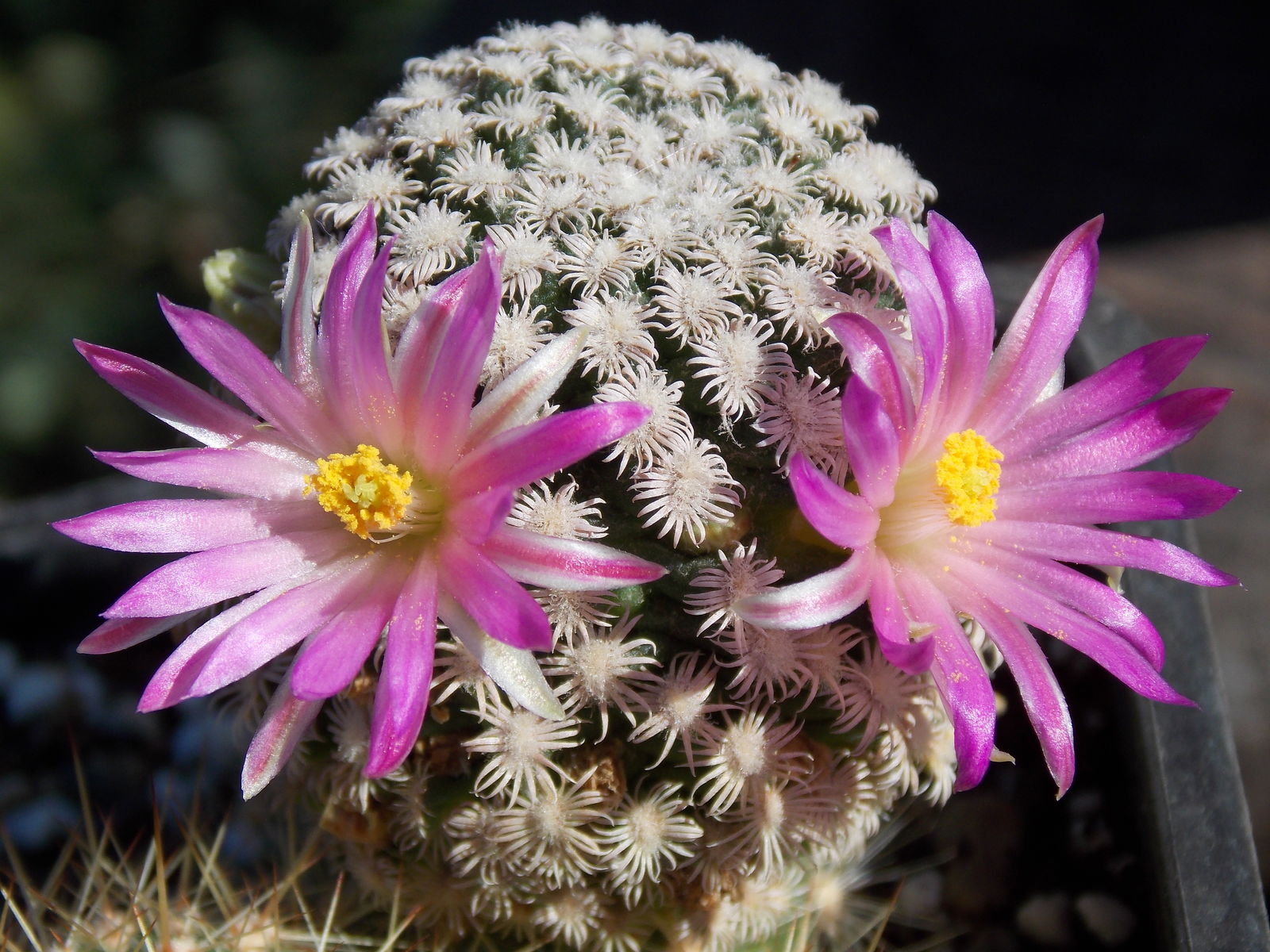 Reference image
Hernandez's Pincushion Cactus
Mammillaria hernandezii is a highly prized and rare miniature cactus species belonging to the Cactaceae family. Highly sought after by succulent collectors, this species is acclaimed for its small, geophytic growth form and remarkably vibrant winter flowers.
This fascinating species was formally described in 1983 and named to honor Francisco Hernandez, a pioneer of Mexican botanical history 1. It is well-distinguished within the genus Mammillaria by its stellar spine configuration and unique seasonal growth habit.
Endemic to the state of Oaxaca in southern Mexico, this cactus thrives at elevations of 1,800 to 2,300 meters 2. It occupies rocky volcanic ledges, cracks, and open spaces within montane tropical dry forests and oak-pine woodlands. Due to severe habitat destruction and illegal collection, it is currently listed as Endangered (EN) by the IUCN.
The plant grows solitary and forms a flattened globose stem that rarely exceeds 3-5 cm in diameter. The small tubercles bear neat clusters of star-shaped, pectinate white radial spines that lie flat against the stem. It lacks central spines. During late autumn and winter, it produces strikingly large, vivid magenta-purple flowers that emerge from the woolly stem apex, creating a magnificent display.
Cultivating this species requires precise environmental control. Its delicate, tuberous root system is highly prone to rot. It demands a fully mineral-based substrate and absolute dryness during the winter months when the plant enters its dormancy.
Watering during the cold winter dormant period is the most frequent mistake, which invariably leads to rot. Insufficient ventilation combined with poorly draining soil can kill the specimen within a few days.
Prefers bright, indirect light or filtered morning sun. Avoid harsh, direct afternoon sunlight.
Allow the substrate to dry out completely between waterings. Keep completely dry in winter.
Requires an extremely gritty, mineral-rich medium containing pumice, lava rock, and coarse sand.
Non-toxic to pets, but gentle handling is recommended to avoid contact with the fine spines.
Moderate to hard, best suited for growers familiar with sensitive, slow-growing desert cacti.
Native to high-altitude volcanic terrains in Oaxaca, Mexico, where it grows tucked among rocks and leaf litter in dry pine-oak mountain forests.
