
Light
Bright Indirect Light
Requires bright filtered sunlight to maintain its dense white spine covering and trigger spring blooms.
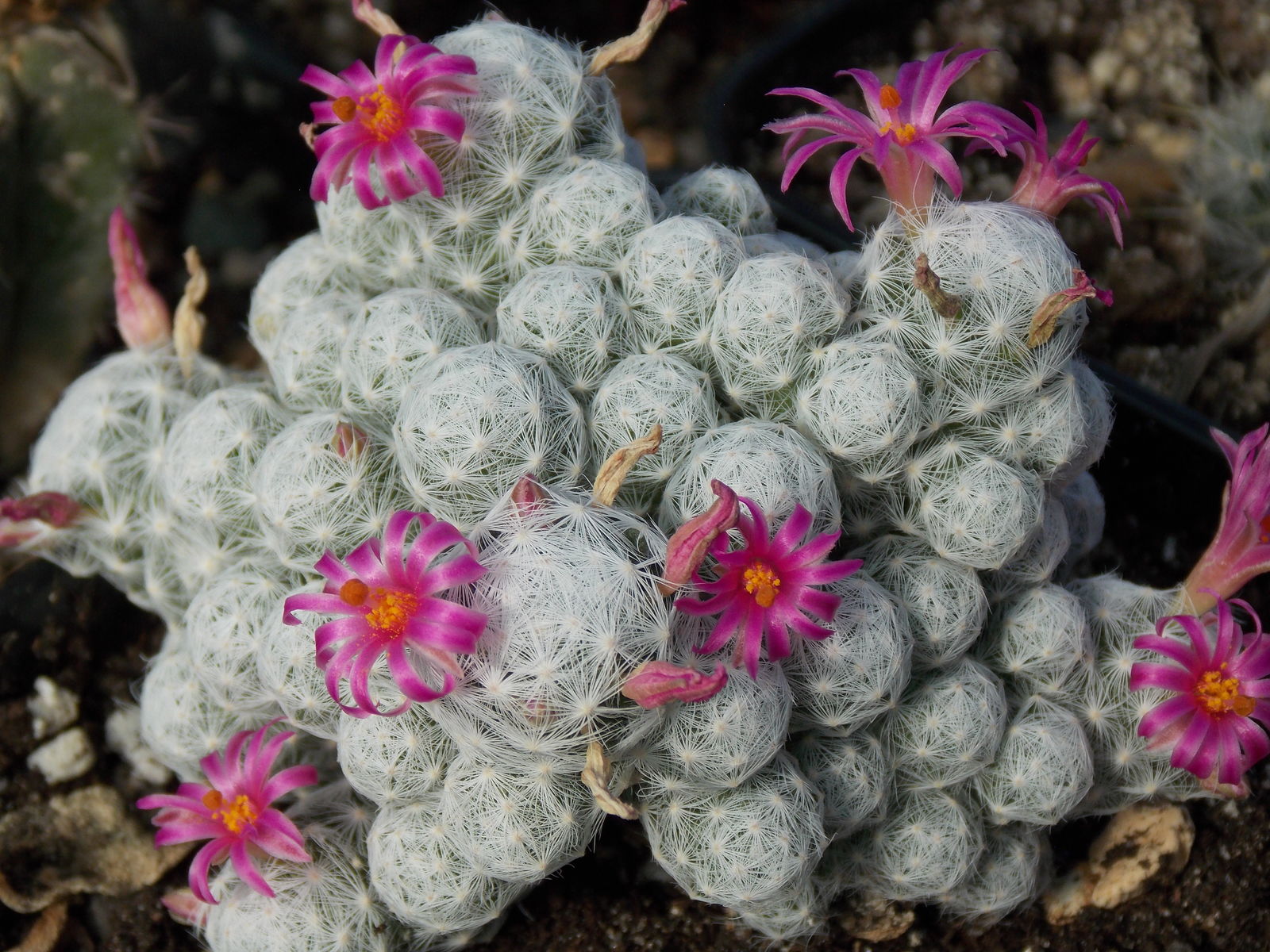 Reference image
Humboldt's Nipple Cactus
Mammillaria humboldtii is an exquisite and rare succulent subshrub belonging to the family Cactaceae. Famously known for its dense, snow-white spine cover that completely envelops the stem, this species is highly coveted by cactus collectors for its snowball-like appearance 1.
The species was named in honor of the renowned German naturalist and explorer Alexander von Humboldt. Within the genus Mammillaria, it is characterized by its exceptionally high count of radials and lack of central spines, which distinguishes it from most of its close relatives 2.
This species is strictly endemic to the state of Hidalgo in Mexico 1. It is found in specialized microhabitats on steep limestone cliffs and dry shrublands at elevations of approximately 1,300 to 1,400 meters above sea level 2. Due to illegal wild collection and habitat degradation, it is classified as Critically Endangered (CR) on the IUCN Red List 1.
Mammillaria humboldtii forms globose to shortly cylindrical stems, growing up to 7 cm in diameter. The stem is obscured by a dense layer of up to 80 or more fine, white radial spines 2. In late spring, it produces striking, bright magenta-pink flowers that contrast beautifully against the pure white background of the body.
In cultivation, M. humboldtii requires meticulous moisture management. It thrives in bright, filtered sunlight or direct morning sun, which preserves its compact habit and dense spination. A mineral-rich, highly porous potting medium containing limestone grit is essential 2.
The most frequent cause of failure is using rich, peat-heavy soil or overwatering during cooler seasons. Lack of adequate ventilation and light will cause the plant to etiolate and lose its characteristic dense white appearance.
Requires bright filtered sunlight to maintain its dense white spine covering and trigger spring blooms.
Strictly sensitive to overwatering; allow the soil to dry completely, and keep dry in winter.
Thrives in a highly porous, mineral-rich substrate with added limestone grit and pumice.
The white spines are dense but relatively soft to the touch; however, handle with care. Non-toxic.
Moderately difficult due to strict watering requirements and high sensitivity to root rot.
Endemic to restricted limestone cliffs and rocky slopes within dry shrublands of Hidalgo, Mexico.
