
Light
Direct Sun
Requires at least 6 hours of direct sun daily; best placed on south-facing windowsills.
 Reference image
Johnston's Nipple Cactus
Mammillaria johnstonii is a notable species within the family Cactaceae, highly regarded by succulent enthusiasts for its globose to shortly cylindrical growth habit and symmetrical spine arrangement. This desert adaptation makes it an excellent subject for xeriscaping and potted cultivation 1.
The species was first collected in 1922 by the American botanist Ivan M. Johnston. It was subsequently described and published by renowned botanists Nathaniel Lord Britton and Joseph Nelson Rose 2. The genus name Mammillaria derives from the Latin word for nipple, referencing the tubercular structure of the stem, while the specific epithet johnstonii honors its original discoverer.
Native to Mexico, Mammillaria johnstonii is primarily found in the states of Sonora, Baja California, and Sinaloa 3. It thrives in desert environments and dry shrublands, often growing on rocky hillsides, canyon cliffs, and gravelly slopes. These habitats feature well-drained volcanic soils and intense sun exposure.
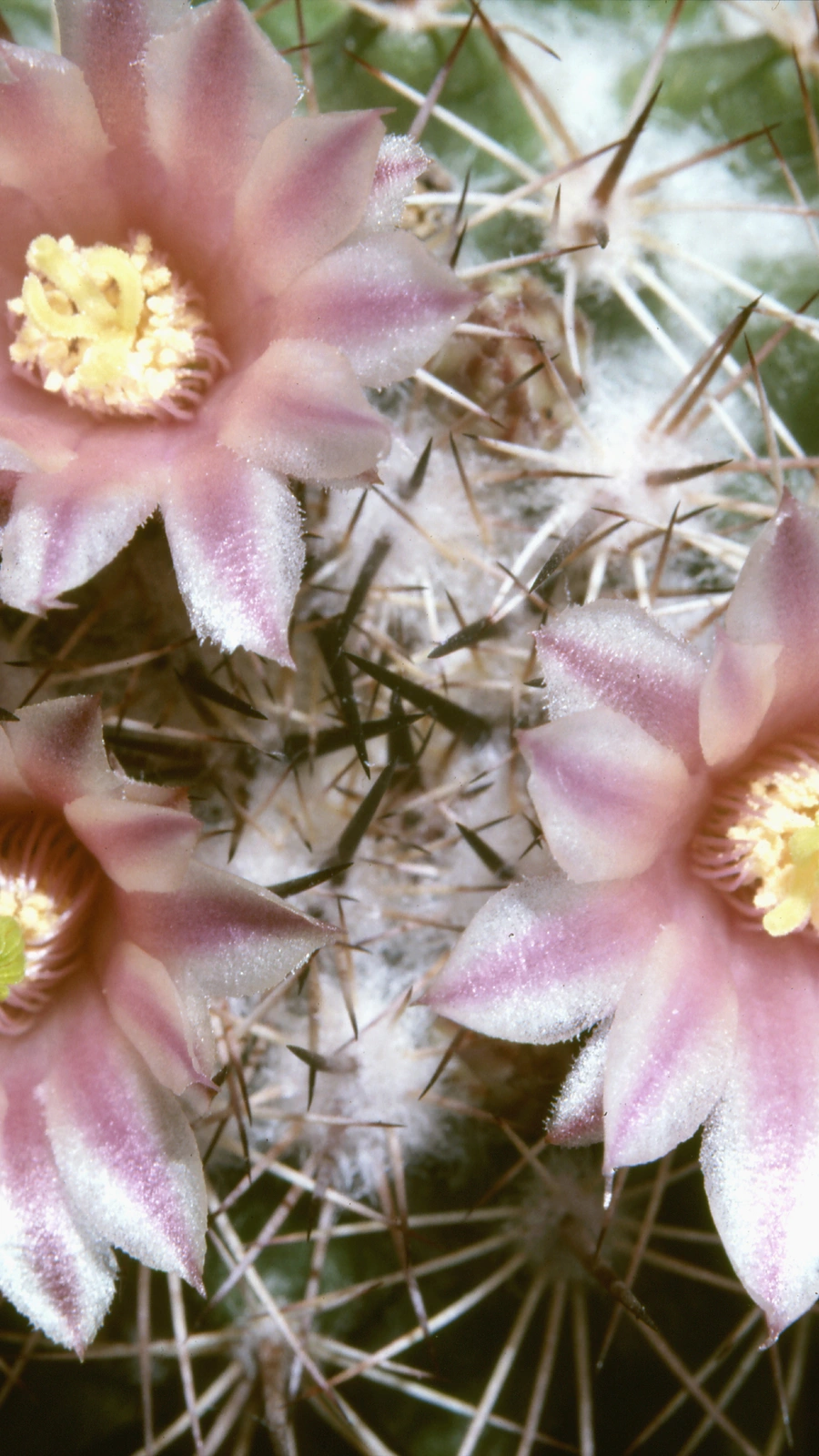
The plant usually grows solitary, though old specimens may cluster from the base. The dark green stem can reach 10 to 15 cm in diameter. The prominent, conical tubercles carry felted areoles that bear strong, needle-like spines. There are typically 1 to 2 central spines and 10 to 14 radial spines, showing a grayish-brown coloration. In late spring, cream, pale pink, or yellowish funnelform flowers bloom in a ring near the growing tip.
This species demands exceptionally well-draining mineral soil and full sun exposure. Watering should follow a 'soak and dry' cycle during the active summer growing season. In winter, the plant enters a dormant phase and should be kept completely dry in a cool environment to prevent root rot 1.
Overwatering is the primary threat to this cactus, leading to rapid root rot. Using heavy clay soils or pots without drainage holes will quickly kill the plant. Inadequate light causes weak, elongated growth known as etiolation.
Requires at least 6 hours of direct sun daily; best placed on south-facing windowsills.
Allow the soil to dry out 100% between waterings. Keep dry throughout winter dormancy.
Coarse mix with high pumice, gravel, and sand content, and very low organic matter.
Non-toxic to pets, but the sharp spines can cause physical injury, so handle with care.
Very easy to maintain, provided you avoid overwatering and heavy, clay-rich soil.
Naturally occurs in the arid desert landscapes of northwestern Mexico, colonizing rocky slopes and dry shrubby areas with perfect natural drainage.
