
Light
Bright Indirect Light
Requires bright, indirect or filtered sunlight; protect from harsh afternoon sun.
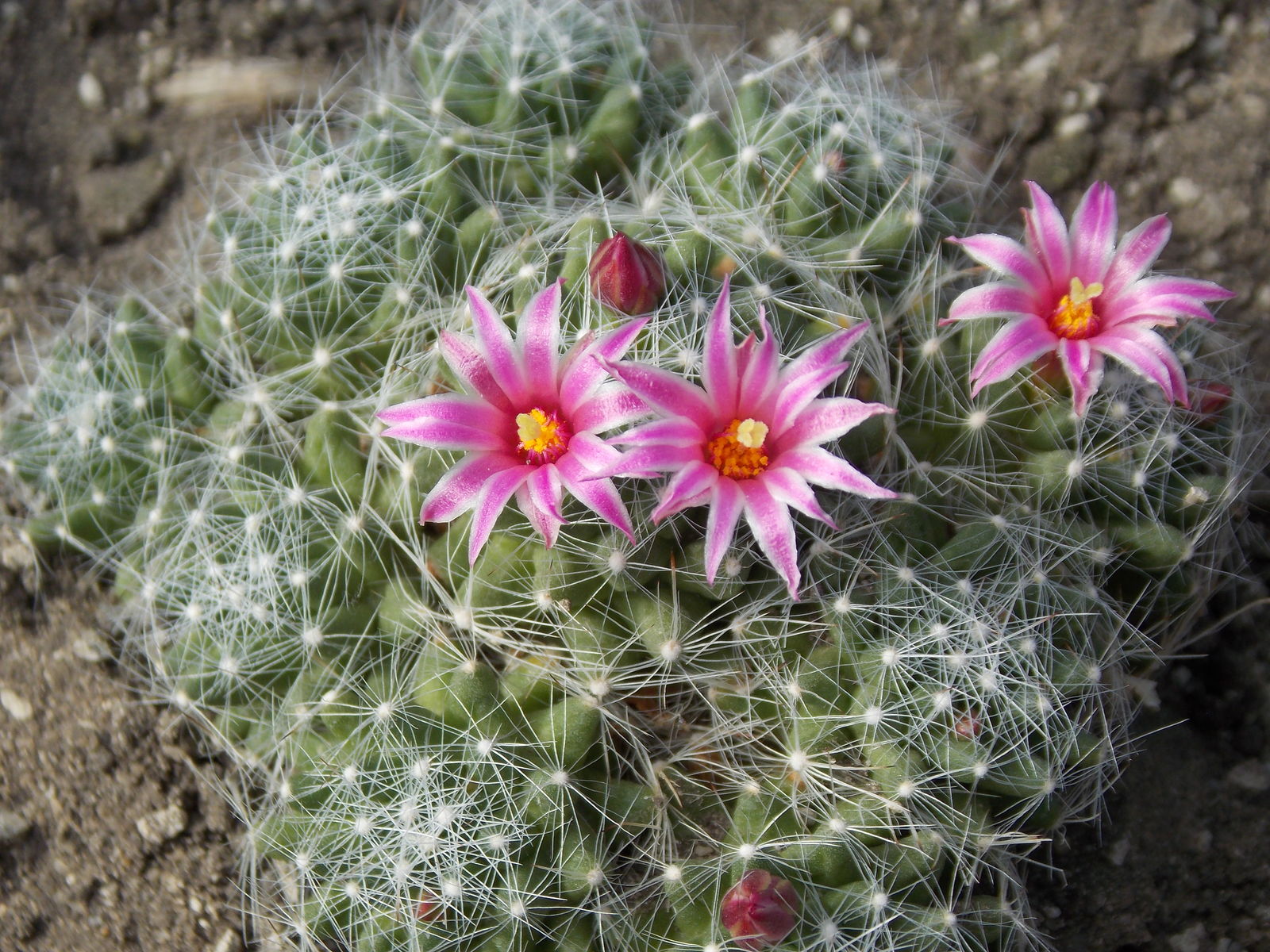 Reference image
Kraehenbuehl's Mammillaria
Mammillaria kraehenbuehlii is a rare and endemic succulent subshrub belonging to the Cactaceae family. Highly prized by collectors, this Mexican native is known for its clustering growth habit and vibrant purplish-pink flowers 1.
The species epithet honors Felix Krähenbühl, a Swiss cactus enthusiast who contributed significantly to the study of Mexican succulent flora. It fits neatly into the genus Mammillaria due to its characteristic mammiform tubercles 2.
Endemic to the southern Mexican state of Oaxaca, this species thrives in dry shrublands and deserts. It is typically found on steep limestone cliffs and rocky slopes at elevations ranging from 850 to 1400 meters above sea level 1.
The stems are globose to shortly cylindrical, clustering freely from the base to form dense cushions. Tubercles are conical with small woolly areoles bearing thin, needle-like, grayish-white spines. The crown-like flowers appear in spring, displaying a stunning magenta hue 2.
This plant prefers bright, indirect sunlight with protection from severe midday sun. It requires a highly mineralized, gritty potting mix with excellent drainage. Watering should be deep but infrequent, allowing the soil to dry out completely between sessions.
Overwatering in poorly draining pots is the most frequent cause of failure, quickly leading to root rot. Keeping the cactus in cold, damp conditions during winter will also invite fungal pathogens and compromise the plant's health.
Requires bright, indirect or filtered sunlight; protect from harsh afternoon sun.
Water only when the substrate is completely dry. Keep nearly dry in winter.
Must be grown in a highly porous, mineral-rich gritty cactus mix.
Spines can cause physical injury; handle with care. Non-toxic to pets.
Moderate difficulty; requires strict adherence to seasonal watering schedules.
Inhabits the arid limestone crevices and steep mountain slopes of Oaxaca, Mexico, adapted to dry climates with minimal annual rainfall.
