
Light
Bright Indirect Light
Requires bright, filtered sunlight; too little light causes etiolation and sparse spine growth.
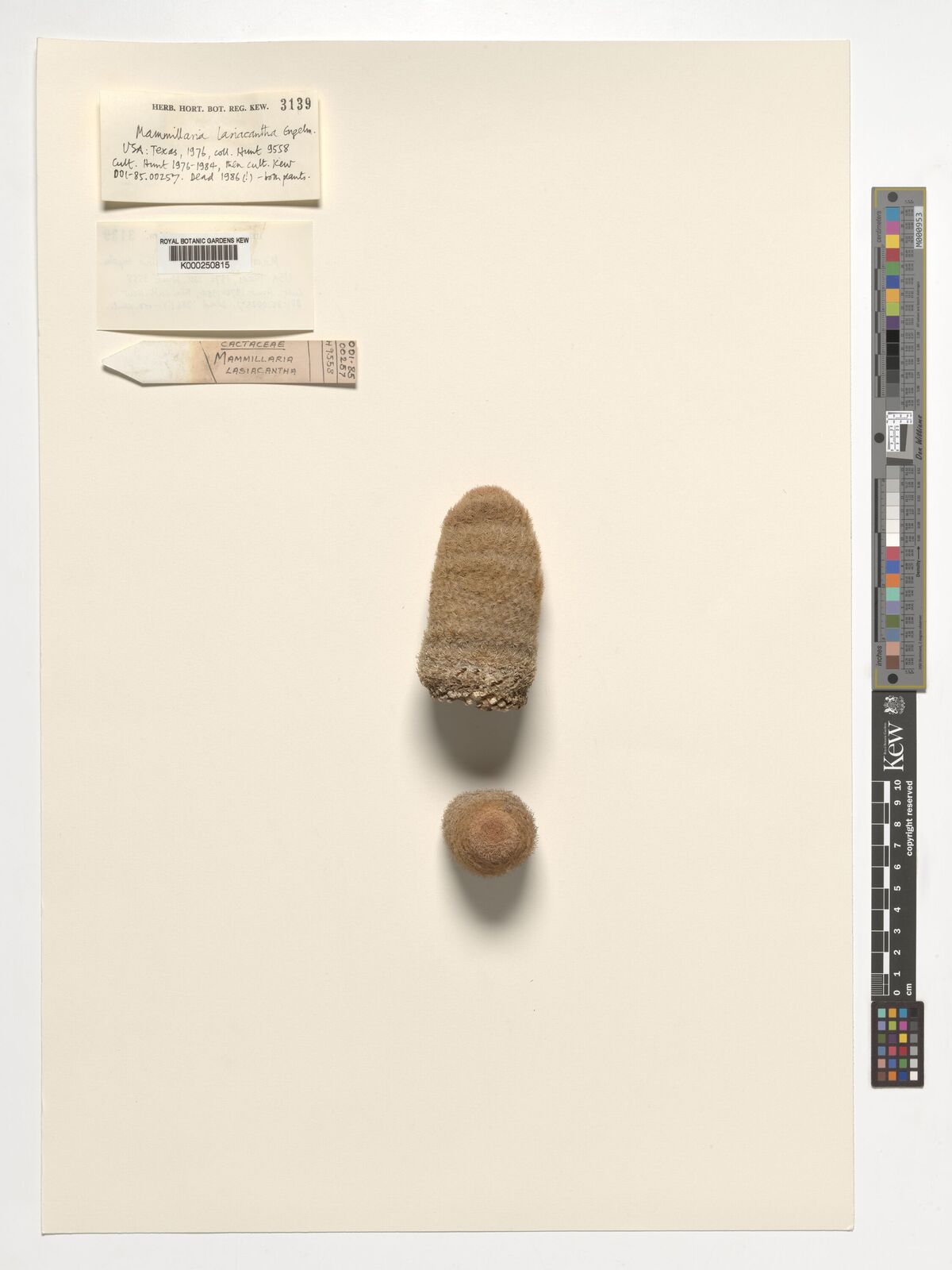 Reference image
Lace Cactus
Mammillaria lasiacantha, commonly known as the Lace Cactus, is a small, highly prized species within the family Cactaceae. Known for its delicate, densely packed white spines that resemble intricate lace, this slow-growing succulent subshrub is a favorite among succulent collectors worldwide 1.
First described in 1856 by the prominent botanist George Engelmann, the specific epithet 'lasiacantha' originates from Greek words meaning 'shaggy' or 'wooly spine' 2. This refers to the numerous plumose (feather-like) radial spines that completely obscure the green stem of the plant.
This species is native to the south-central United States (Texas and New Mexico) and northern to central Mexico (including Chihuahua, Coahuila, Durango, and San Luis Potosí) 1. It thrives on limestone hills, gravelly slopes, and semi-desert scrublands at elevations ranging from 700 to 2,400 meters above sea level.
Mammillaria lasiacantha is typically solitary, with globose to short-cylindrical stems that reach only 3-5 cm in diameter. The stem is covered in small spiraled tubercles, each bearing an areole with 40 to 80 fine, white, pubescent radial spines radiating outward. Central spines are usually absent. In early spring, it produces small, funnel-shaped cream-colored flowers with pinkish midstripes, followed by bright red, club-shaped fruits 3.
In cultivation, this plant requires exceptional drainage. A strictly mineral-based potting substrate with limestone grit and pumice is essential. It demands bright, filtered sunlight and excellent air circulation. During the winter dormancy, the plant must be kept completely dry and in a cool location to encourage spring flowering 2.
The most prevalent issue is overwatering, which quickly leads to root rot. Using heavy, peat-rich soils or watering during the cold winter months is usually fatal. Insufficient light causes the plant to stretch (etiolate), weakening its spine density and health.
Requires bright, filtered sunlight; too little light causes etiolation and sparse spine growth.
Water thoroughly only when the substrate is 100% dry. Keep entirely dry in winter.
Highly porous, mineral-rich substrate containing pumice, grit, and limestone. Avoid peat.
Spines are soft and feather-like but can still irritate sensitive skin. Non-toxic to pets.
Moderate. Needs precise watering control to prevent rot, making it slightly challenging for beginners.
Native to the Chihuahuan Desert, where it grows in cracks of limestone rocks and on gravelly slopes under the light shade of desert shrubs across Texas, New Mexico, and northern Mexican states.
