
Light
Bright Indirect Light
Provide ample bright, indirect light or filtered morning sun to ensure dense spine development and optimal flowering.
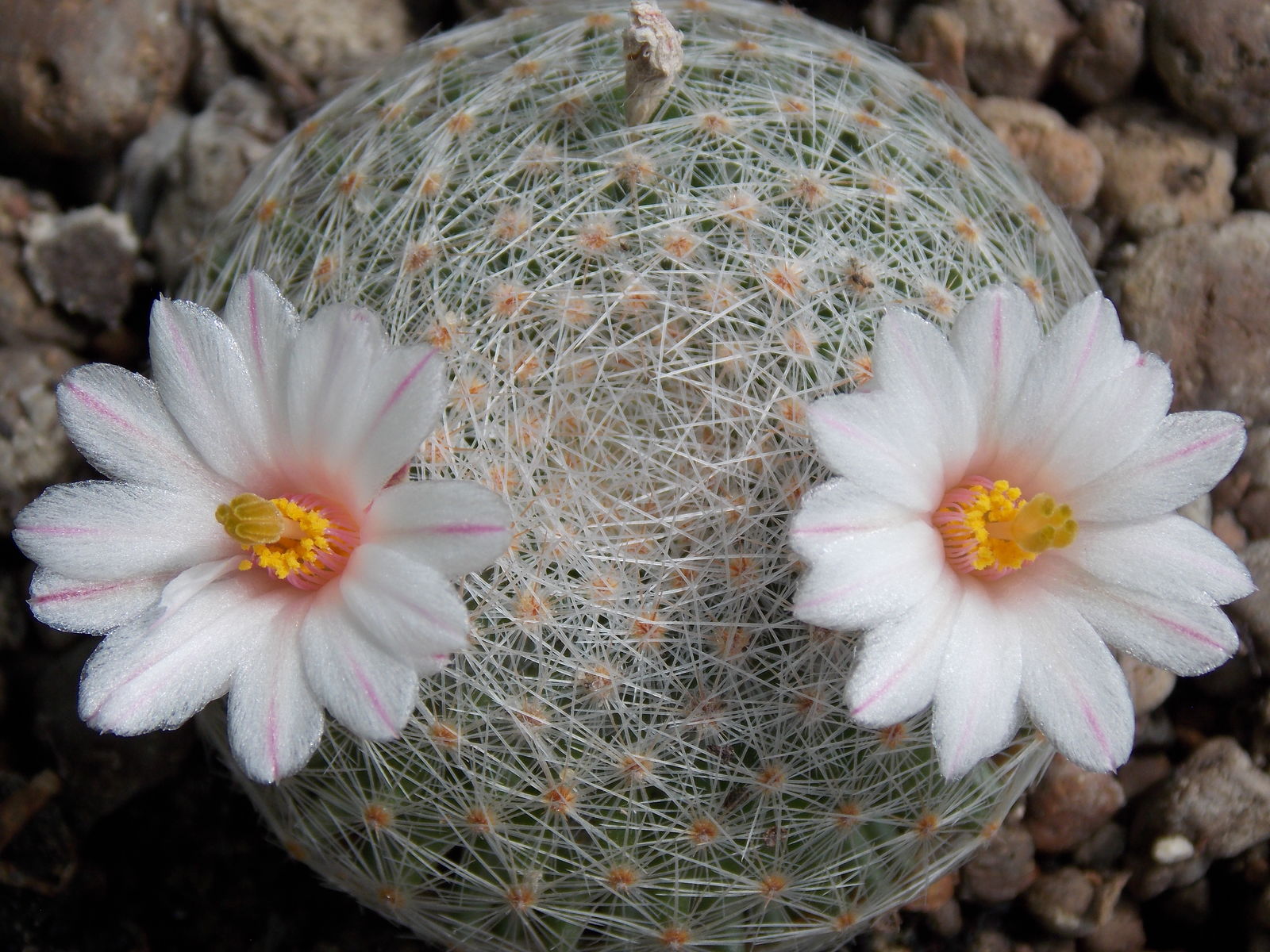 Reference image
Lenta Pincushion Cactus
Mammillaria lenta is a slow-growing, highly sought-after cactus species belonging to the Cactaceae family. Its globose to slightly flattened stems are covered by a dense matrix of fine, whitish spines, giving it a stone-like appearance in its native habitat. It is highly prized by succulent collectors worldwide.
The species was first described in 1905 by the American botanist Mary Katharine Brandegee 1. The specific epithet 'lenta' is derived from Latin, meaning 'slow' or 'pliant', referencing both the plant's exceptionally slow growth rate and its flexible spine structure 2.
Mammillaria lenta is native to Northern America, specifically endemic to the Mexican state of Coahuila 1. It thrives in semi-desert scrublands, growing predominantly in vertical limestone crevices and steep canyon walls at elevations ranging from 900 to 1400 meters 2.
Although it starts as a solitary globose stem, it eventually offsets from the base to form tight, low-growing mounds. Stems reach 3-5 cm in diameter. The areoles carry 30 to 40 fine, needle-like, yellowish-white radial spines that completely obscure the green epidermis. In late spring and summer, it produces delicate, bell-shaped, pale yellow to pinkish-striped flowers.
Mammillaria lenta requires exceptional drainage due to its highly sensitive root system. A mineral-heavy soil mix with added limestone grit mimics its natural habitat perfectly. Bright, filtered sunlight is necessary to maintain its compact growth form and dense spination.
The most frequent error is overwatering, particularly during the winter dormancy period. Using heavy, peat-based soils will retain moisture for too long, rapidly leading to root rot 2.
Provide ample bright, indirect light or filtered morning sun to ensure dense spine development and optimal flowering.
Water thoroughly only after the soil has dried out completely. Keep 100% dry from late autumn to early spring.
Use a mineral-based substrate consisting of pumice, lava grit, and coarse sand with very little peat.
Non-toxic, but the extremely dense and fine spines can irritate the skin; handle with care.
Moderate. Highly susceptible to overwatering, requiring careful moisture monitoring.
Exclusively found on steep limestone cliffs and arid canyon cracks in the desert regions of Coahuila, Mexico.
