
Light
Bright Indirect Light
Prefers bright, indirect sunlight or filtered sun. Avoid intense midday heat.
 Reference image
Nipple Cactus
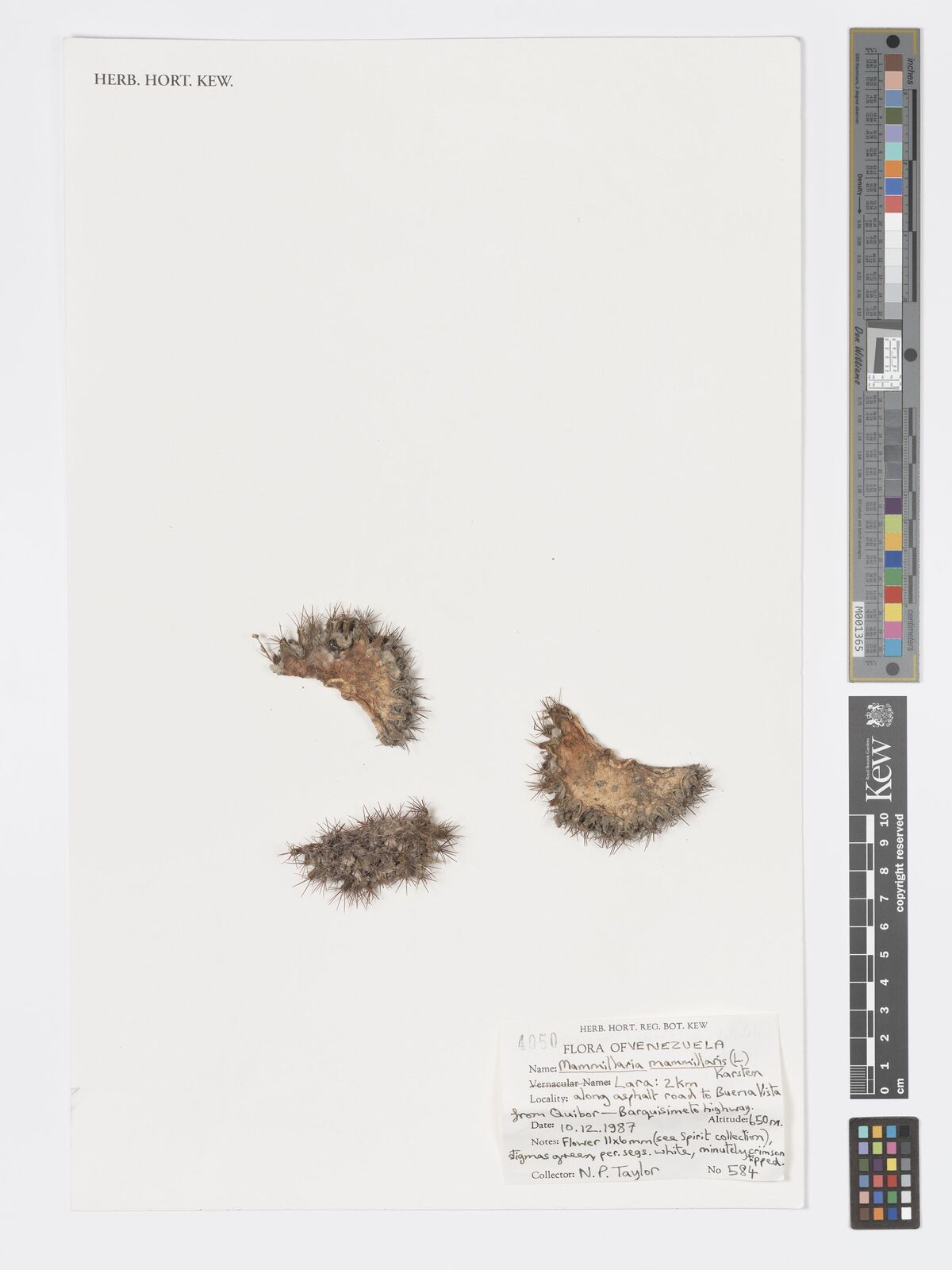
Mammillaria mammillaris is the type species of the genus Mammillaria within the Cactaceae family, characterized by its globose growth form and symmetrical, nipple-like tubercles 1. Highly resilient and aesthetically appealing, it is a favored species among succulent collectors and indoor gardeners.
Originally described by Carl Linnaeus in 1753 as Cactus mammillaris, it later became the type species for the genus Mammillaria 2. The specific epithet 'mammillaris' refers to the breast-like appearance of the tubercles. It is commonly referred to as the 'Nipple Cactus' or 'Woolly Nipple Cactus'.
This species is native to the Caribbean (including the Netherlands Antilles, Trinidad, and Tobago) and northern South America (Venezuela and Colombia) 1. It thrives in seasonally dry tropical climates, establishing itself on limestone cliffs, rocky slopes, and coastal dry deciduous forests.
The stem is globose to shortly cylindrical, deep green, and covered in spirally arranged, conical tubercles. Areoles bear 3 to 5 stout, greyish-brown spines. In summer, small cream-white to pale yellow flowers emerge from between the tubercles, followed by bright red, club-shaped, edible fruits.
Mammillaria mammillaris requires bright, indirect sunlight or filtered morning sun. Direct afternoon sunlight in hot climates may scorch the epidermis. Watering must be thorough but infrequent, allowing the substrate to dry out entirely between waterings. In winter, maintain a dry resting period.
The most frequent error is overwatering, which triggers fungal infections and root rot 2. Inadequate light causes etiolation, wherein the cactus stretches unnaturally, losing its compact shape.
Prefers bright, indirect sunlight or filtered sun. Avoid intense midday heat.
Allow soil to dry out completely. Reduce watering drastically in winter.
Extremely porous mineral mix with pumice, sand, and minimal organic matter.
Non-toxic to pets and humans, but sharp spines require cautious handling.
Very easy to maintain, making it ideal for novice cactus enthusiasts.
Naturally distributed across the Caribbean islands and coastal regions of northern South America, where it thrives in dry tropical forests, rocky outcrops, and limestone formations.
