
Light
Bright Indirect Light
Requires bright, indirect sunlight or filtered morning sun for optimal growth.
 Reference image
 Reference image
Mathilda's Nipple Cactus
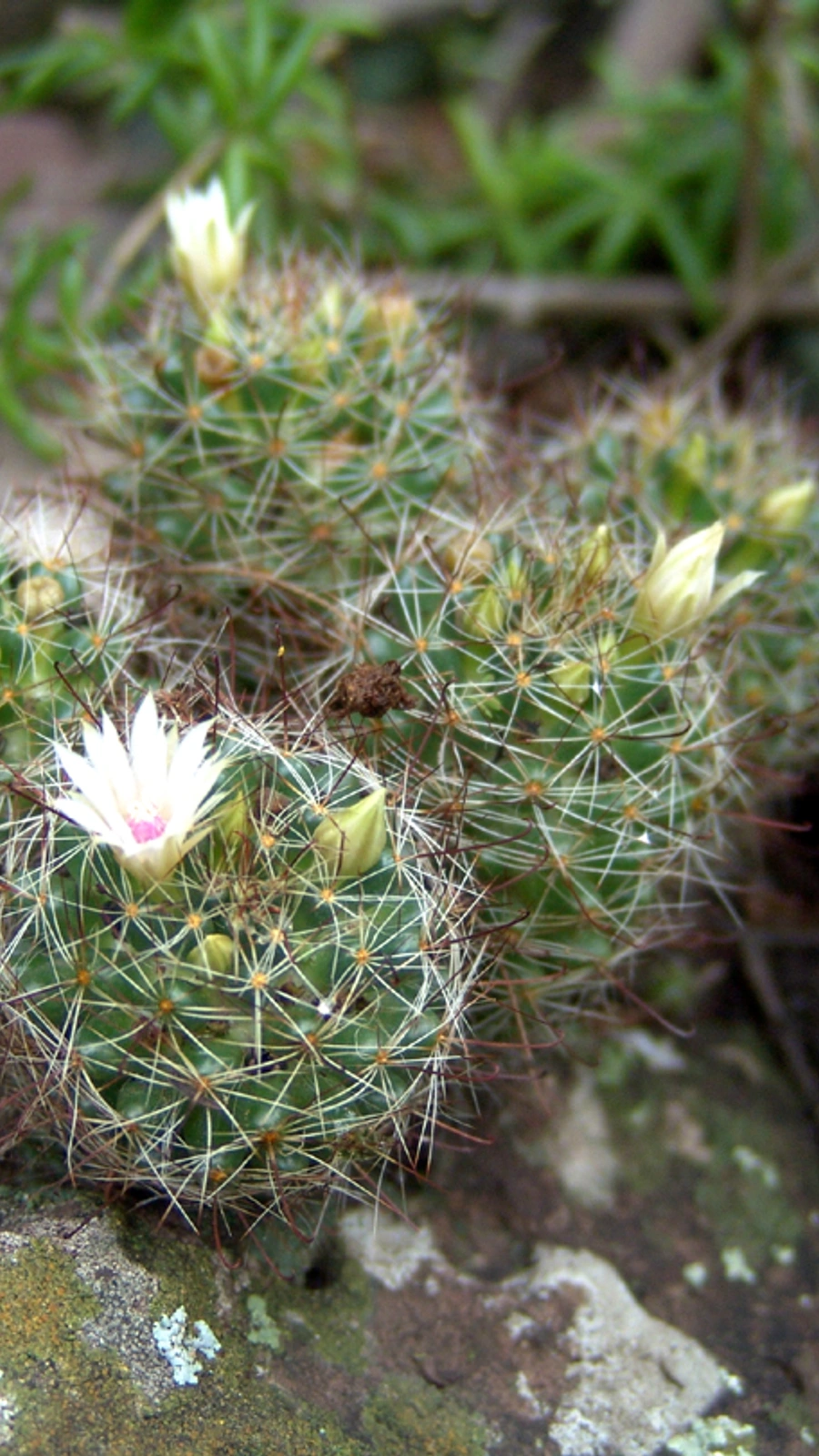
Mammillaria mathildae is a small, clustering, and highly delicate succulent shrubby cactus belonging to the Cactaceae family. Highly appreciated among collectors for its beautiful pinkish-white flowers and bright red fruits, this species is perfect for small windowsills due to its slow growth and compact nature.
This species was first formally described in 1973 by Kraehenbuehl and Krainz 1. The specific epithet 'mathildae' honors Mathilde Wagner, a figure associated with the botanical discovery. It is classified under the genus Mammillaria, which is renowned for its spiral tuberculate structures.
Mammillaria mathildae is endemic to Mexico, specifically found in the state of Querétaro and surrounding dry regions at elevations of 1,900 to 2,000 meters above sea level 2. It grows in volcanic rock crevices and semi-arid shrublands. Due to severe habitat destruction, it is currently listed as Vulnerable (VU) on the IUCN Red List.
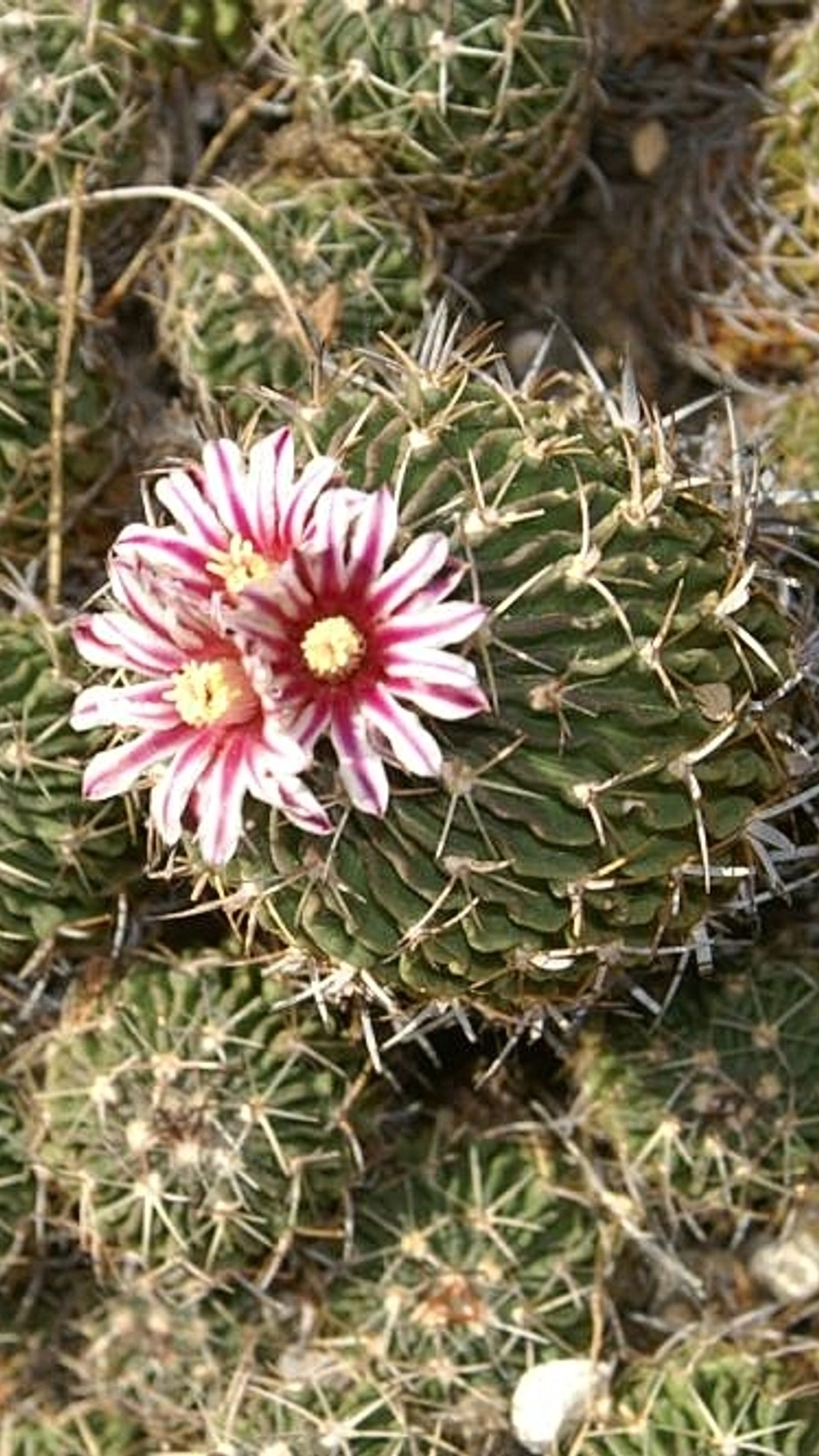
The plant has globose to cylindrical stems that reach up to 5-6 cm in height and 5 cm in diameter. The tubercles are cylindrical, bearing white radial spines and typically one hooked, brown-to-black central spine. Its attractive funnel-shaped flowers are white with pinkish midstripes, appearing mainly in late spring.
It thrives in highly porous, mineral-rich soils with excellent drainage, such as pumice and coarse grit mixes. Watering should follow the 'soak and dry' method during the active growing season, and must be suspended during the cold winter dormancy. It requires bright, indirect light or filtered morning sun to maintain compact growth.
The most prevalent mistake is overwatering, especially in soil with poor drainage, which rapidly leads to root rot. Keeping the cactus in dark rooms will cause etiolation, stretching the stems and weakening the overall spine structure.
Requires bright, indirect sunlight or filtered morning sun for optimal growth.
Water only when the soil is dry. Suspend watering entirely during winter.
Highly porous substrate with coarse sand, gravel, and pumice is essential.
Features sharp, hooked central spines that can easily catch on skin or pet fur.
Very easy to grow indoors if overwatering is strictly avoided.
Native to the state of Querétaro in Mexico, where it populates rocky volcanic slopes and semi-arid scrublands at elevated altitudes.
