
Light
Filtered Sun
Abundant bright, filtered sunlight; shield from intense afternoon summer sun.
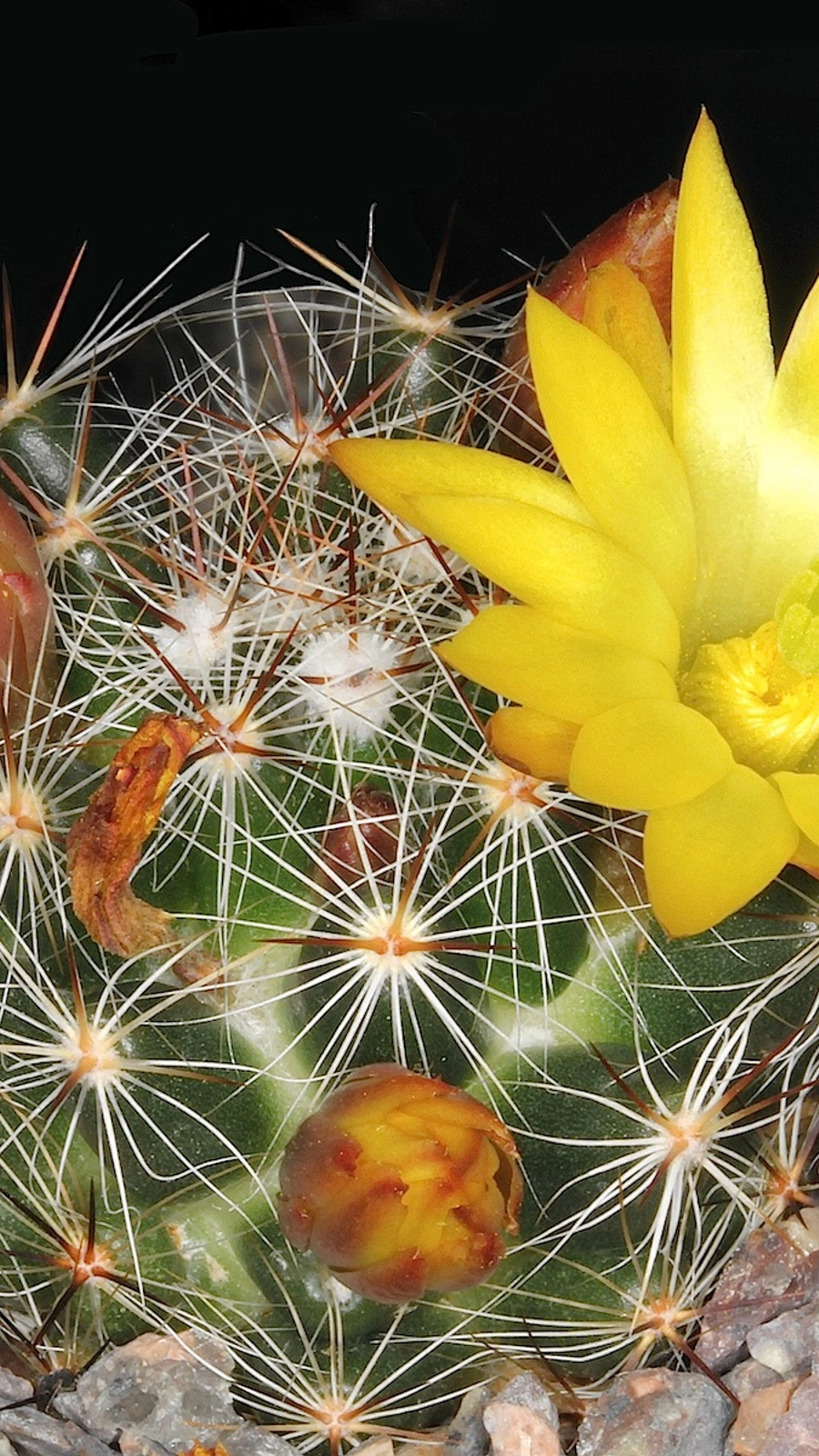 Reference image
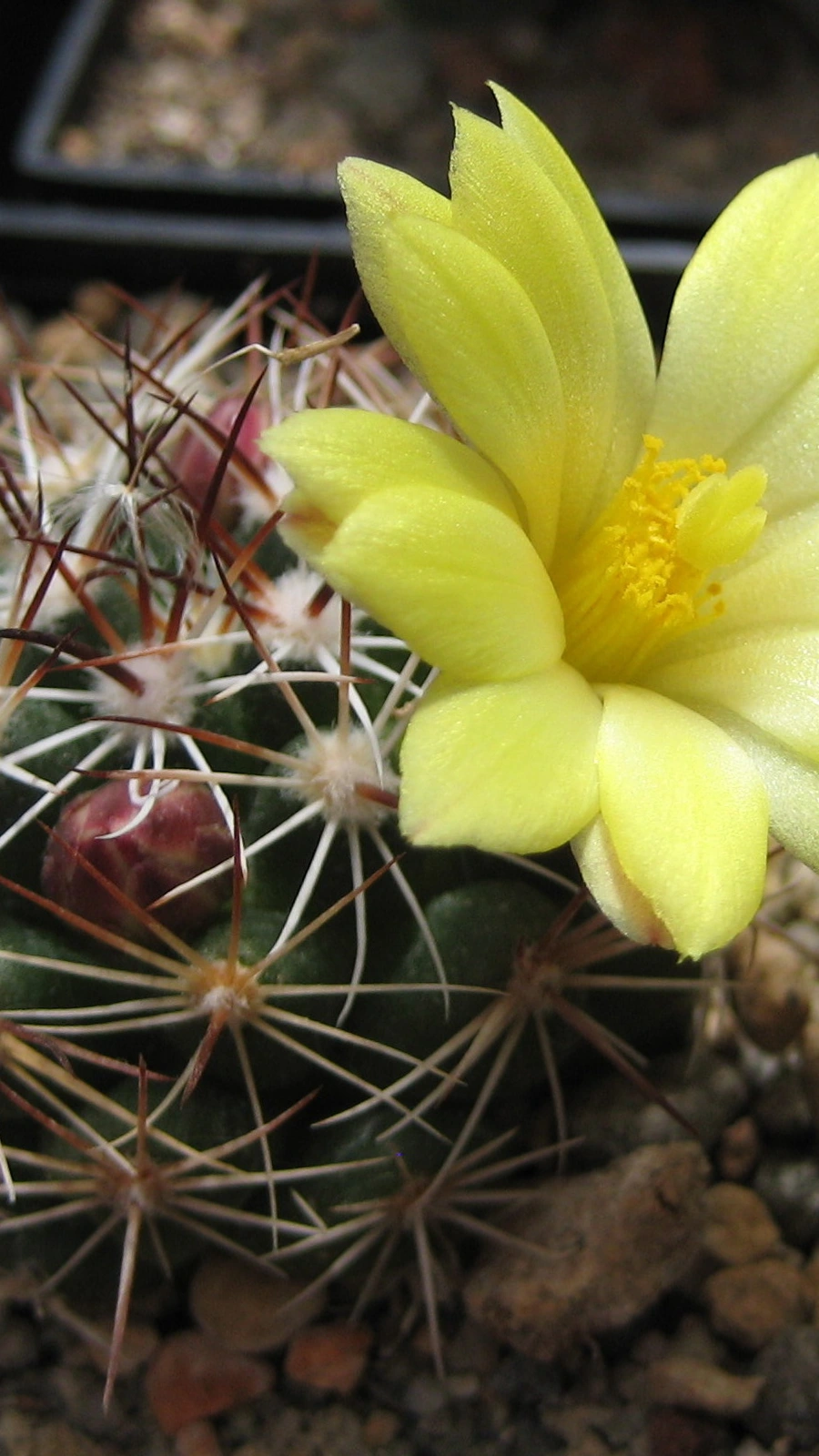 Reference image
Yellow-flowered Nipple Cactus
Mammillaria melaleuca is a highly prized cactus species belonging to the family Cactaceae, characterized by its neat spherical solitary stem and prominent tubercles. It is highly valued among collectors for its striking contrasting spines and vivid yellow blossoms.
The species was collected by Wilhelm Karwinski von Karwin and formally described by Joseph de Salm-Reifferscheidt-Dyck in 1837 1. The specific epithet 'melaleuca' derives from Greek, meaning 'black and white', referencing the distinct color contrast between the dark central spines and lighter radial spines 1.
Mammillaria melaleuca is endemic to the Mexican state of Tamaulipas 2. It grows natively at elevations of 800 to 1400 meters above sea level, typically nestled in limestone crevices and gravelly slopes under the shade of dry deciduous shrubs 2.
The plant features a dark green, globose to somewhat depressed stem reaching approximately 6-8 cm in diameter. The prominent tubercles are firm and conical. Central spines are dark brown or blackish, while the shorter radial spines range from yellowish to white. In late spring, large, funnelform, bright yellow flowers emerge from the crown.
It requires a mineral-rich, porous, and exceptionally free-draining soil mix. Water thoroughly during the active growing season only when the substrate is completely dry. In winter, maintain the plant in absolute dryness to prevent rot.
Overwatering and utilizing dense, moisture-retaining soils are the most common pitfalls. Waterlogged roots lead quickly to terminal basal rot. Lack of sufficient light also causes the stem to stretch unnaturally.
Abundant bright, filtered sunlight; shield from intense afternoon summer sun.
Water only after the substrate is completely dry. Keep completely dry in winter.
Gritty, mineral-heavy cactus soil enriched with pumice and coarse sand.
Non-toxic, but features sharp spines that require cautious handling around pets.
Very easy to cultivate as long as root moisture is kept to a strict minimum.
Endemic to the limestone hills and dry shrublands of Tamaulipas, Mexico, where it grows protected under sparse desert vegetation.
