
Light
Direct Sun
Requires full, direct sun to maintain robust spines.
 Reference image
 Reference image
Black-spined Mammillaria
Mammillaria melanocentra is a prominent and highly ornamental member of the Cactaceae family 1. Characterized by its solitary growth habit, sharp dark central spines, and bright magenta flowers, it is favored by collectors for its geometric beauty and resilience.
Described in 1849 by the German botanist Prince Salm-Dyck 2. The specific epithet 'melanocentra' derives from the Greek roots for 'black' and 'center', highlighting the stout, dark central spines that project from each areole. It is classified under the genus Mammillaria 1.
This species is native to northeastern Mexico—including Coahuila, Nuevo León, San Luis Potosí, and Tamaulipas—and extends into southern Texas 1. It typically grows on low limestone hills, rocky slopes, and dry shrublands at elevations ranging from near sea level up to 1,500 meters 2.
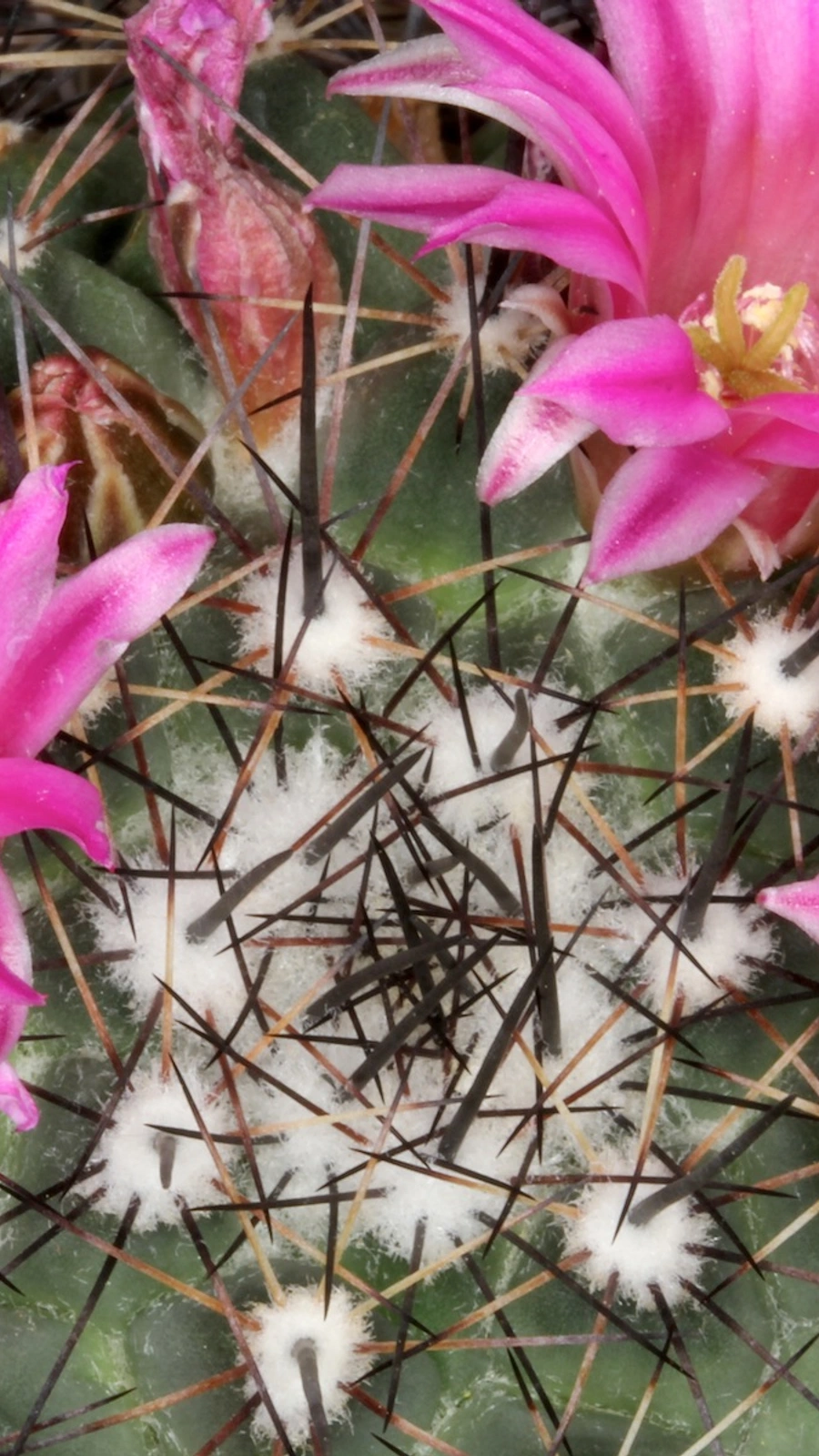
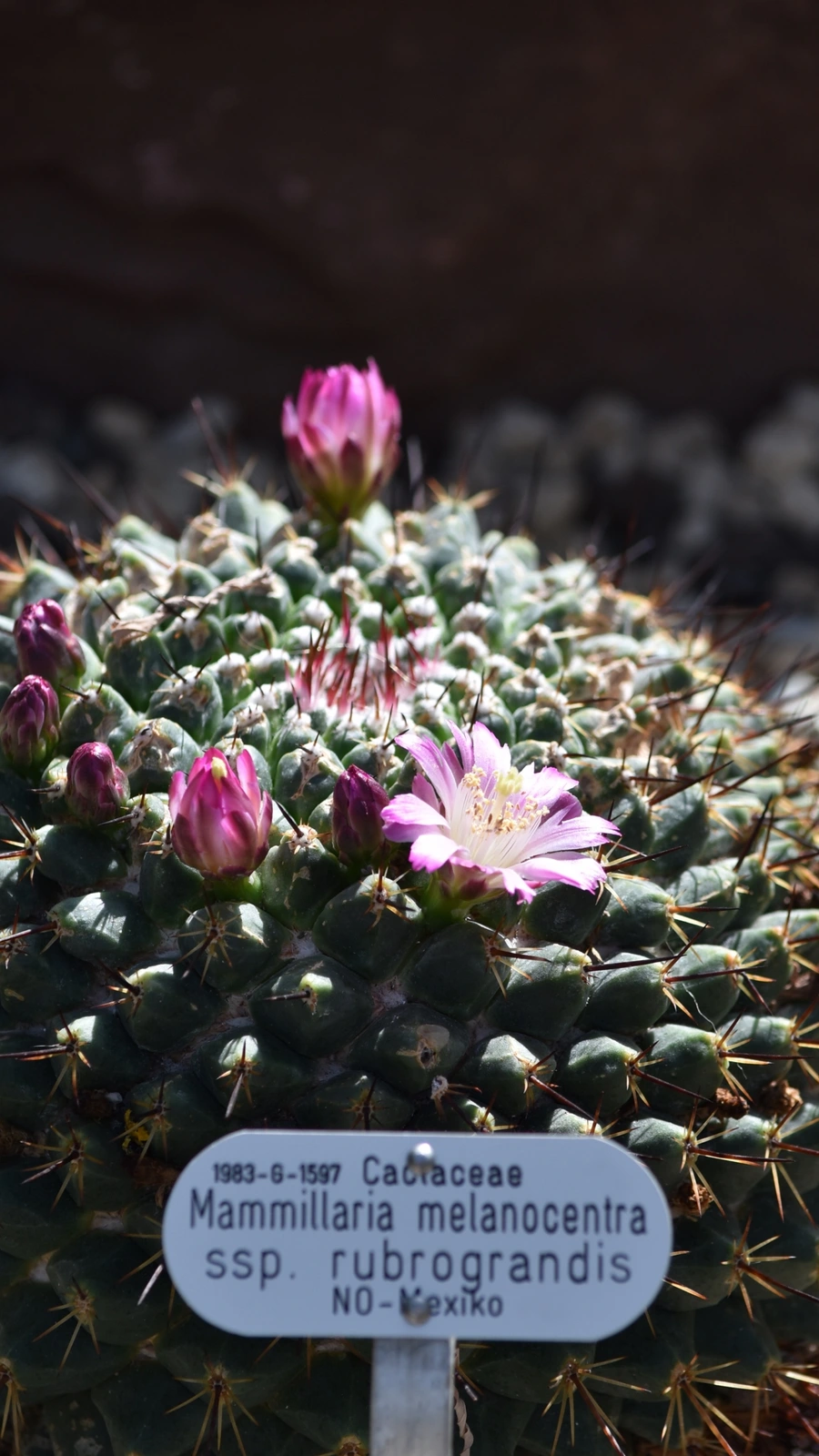
The stem is solitary, globose to slightly depressed-globose, reaching up to 15-20 cm in diameter. It features pronounced, angled, pyramidal tubercles. Each areole bears a single, thick, straight black central spine (up to 5 cm long) and 6-9 paler radial spines. In late spring, it produces beautiful, funnel-shaped, deep pink to magenta flowers 2.
Mammillaria melanocentra requires exceptional drainage, mineral-based soil, and bright, direct sunlight. Water thoroughly during the warm growing season only when the substrate is completely dry. In winter, keep the plant dry and cool to stimulate flower bud formation.
The most frequent issue is root rot driven by overwatering and organic-heavy soils. Lack of sufficient sunlight leads to etiolation, wherein the stem becomes weak, pale, and elongated, losing its beautiful round shape.
Requires full, direct sun to maintain robust spines.
Let soil dry completely; water very sparingly in winter.
Very gritty, porous mineral mix with little organic matter.
Non-toxic, but features sharp, heavy central spines that can cause puncture wounds.
Very easy to care for if overwatering is strictly avoided.
Occurs throughout northeastern Mexico, specifically in Coahuila, Nuevo León, San Luis Potosí, and Tamaulipas, and reaches its northernmost limit in southern Texas, inhabiting dry limestone slopes and rocky deserts.
