
Light
Bright Indirect Light
Requires full sun to bright indirect light; benefits from southern exposure.
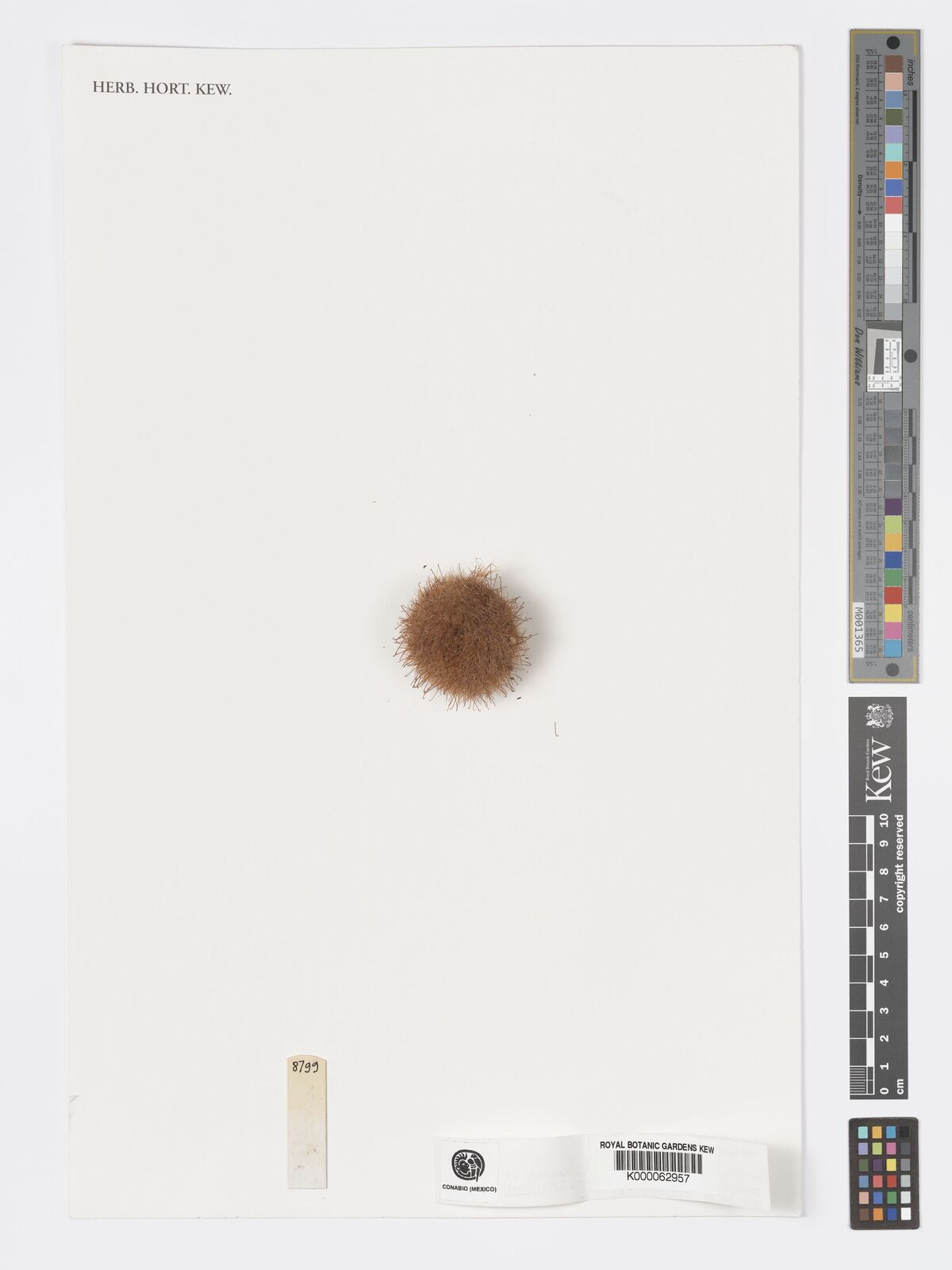 Reference image
Hook-Spined Pincushion Cactus
Mammillaria mercadensis is a small-growing, highly ornamental cactus species in the family Cactaceae. Known for its distinct hook-shaped central spines and crown of vibrant pinkish-purple flowers, this species is highly valued by succulent collectors worldwide 1.
The species epithet 'mercadensis' honors Cerro Mercado in Durango, Mexico, near where the specimen was initially documented. Within the genus Mammillaria, it resides in a complex of hook-spined species and is sometimes taxonomically associated with synonyms such as Mammillaria ouelmiana 2.
Native strictly to Mexico, its range spans the states of Durango, Zacatecas, Guanajuato, and San Luis Potosí. It thrives at high altitudes between 1,800 and 2,400 meters above sea level, primarily growing in rocky volcanic crevices and dry shrublands 1.
The plant usually grows solitary or forms small clusters from the base. The stem is globose to short cylindrical, olive-green to grey-green. It features dense white radial spines and reddish-brown to dark central spines, with at least one strongly hooked. The bell-shaped flowers emerge in a ring near the crown during spring.
Mammillaria mercadensis requires exceptional drainage. It thrives in mineral-heavy soil mixes containing pumice and coarse grit. Position the plant in a spot that receives full sun or bright, filtered sunlight. Water thoroughly only when the soil is completely dry, and keep dry in winter.
Overwatering and lack of soil porosity are the primary causes of failure, quickly leading to root and stem rot. Placing the plant in low light conditions will cause etiolation, resulting in a weak, stretched, and pale growth habit 2.
Requires full sun to bright indirect light; benefits from southern exposure.
Allow soil to dry out completely. Suspend watering in winter.
Extremely porous mineral mix with high pumice or grit content.
Sharp, hooked spines can catch on skin or clothing. Non-toxic to pets.
Very easy to care for if overwatering is strictly avoided.
Endemic to the high plains and volcanic slopes of north-central Mexico, particularly in the state of Durango.
