
Light
Direct Sun
Needs at least 6 hours of direct sun daily. Low light results in weak, stretched growth (etiolation).
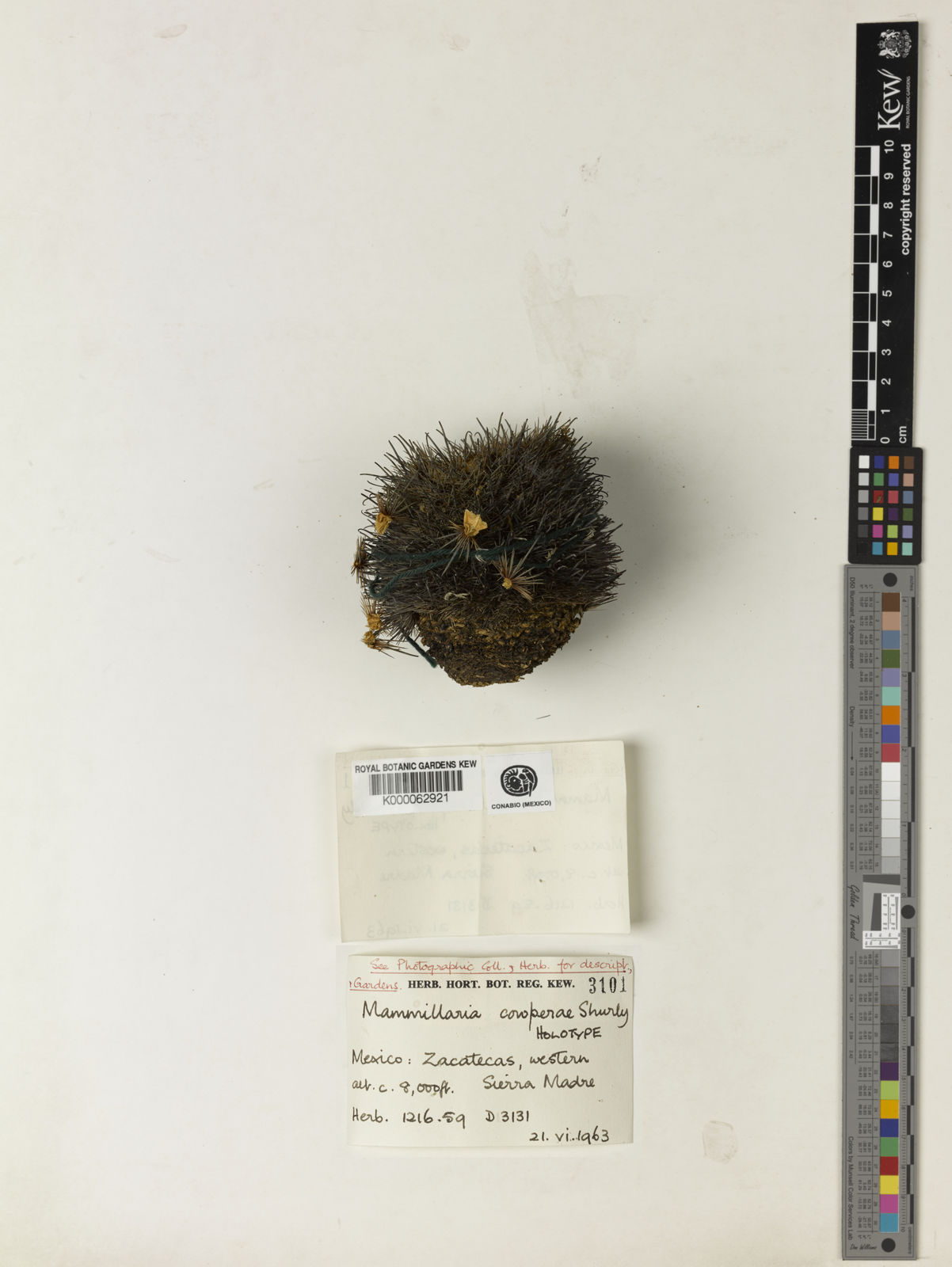 Reference image
Moeller's Nipple Cactus
Mammillaria moelleriana is a highly prized, slow-growing succulent subshrub belonging to the Cactaceae family. Known for its distinct, dense spination and cylindrical growth habit, this cactus is a favorite among enthusiasts. In its natural environment, it grows solitary or occasionally offsets from the base, producing a beautiful crown of pale pink flowers in late spring 1.
The species was first described by the German botanist Alwin Berger. The specific epithet "moelleriana" honors Dr. Möller, a notable figure in botanical exploration 2. While some variation in spine coloration has led to historical subspecies classifications, it is currently accepted as a single polymorphic species by taxonomic databases.
Mammillaria moelleriana is native to Mexico, particularly within the states of Durango, Zacatecas, and Coahuila 1. It thrives in dry, desert, or dry shrubland biomes, typically nesting in rocky limestone crevices and steep gravelly slopes at elevations ranging from 1200 to 2400 meters above sea level 3. These high-altitude desert settings ensure high light exposure and quick-draining soils.
The stem of this cactus is cylindrical, reaching up to 20 cm in height and about 8-10 cm in diameter. The surface is heavily obscured by numerous white radial spines. Its central spines (usually numbering 8 to 10) are stouter, sharply hooked, and range from yellow to reddish-brown 2. Flowers appear in a ring around the apex, measuring about 2 cm across with delicate pale pink or cream petals.
In cultivation, Moeller's Nipple Cactus requires maximum sunlight to preserve its tight, vibrant spine configuration and encourage blooming. Watering should follow a strict 'soak and dry' method, allowing the substrate to completely dry out between waterings. During winter dormancy, keeping the plant totally dry allows it to tolerate near-freezing temperatures 3.
Overwatering and using dense organic soils are the primary causes of root rot. Insufficient sunlight leads to etiolation, wherein the plant loses its dense shape and stretches weakly toward light.
Needs at least 6 hours of direct sun daily. Low light results in weak, stretched growth (etiolation).
Soak thoroughly when soil is dry in summer; suspend watering during winter rest.
Requires an extremely free-draining mineral substrate, such as a high-pumice cactus mix.
Non-toxic, but the hooked central spines can easily hook into skin, clothing, and pet fur.
Very easy if you avoid overwatering and provide a sunny, dry environment.
Inhabits high-elevation desert slopes and limestone cliffs in central-northern Mexico, adapted to intense sunlight, dry air, and rocky, mineral-rich environments.
