
Light
Bright Indirect Light
Prefers bright, indirect sunlight or light partial shade to prevent sunburn.
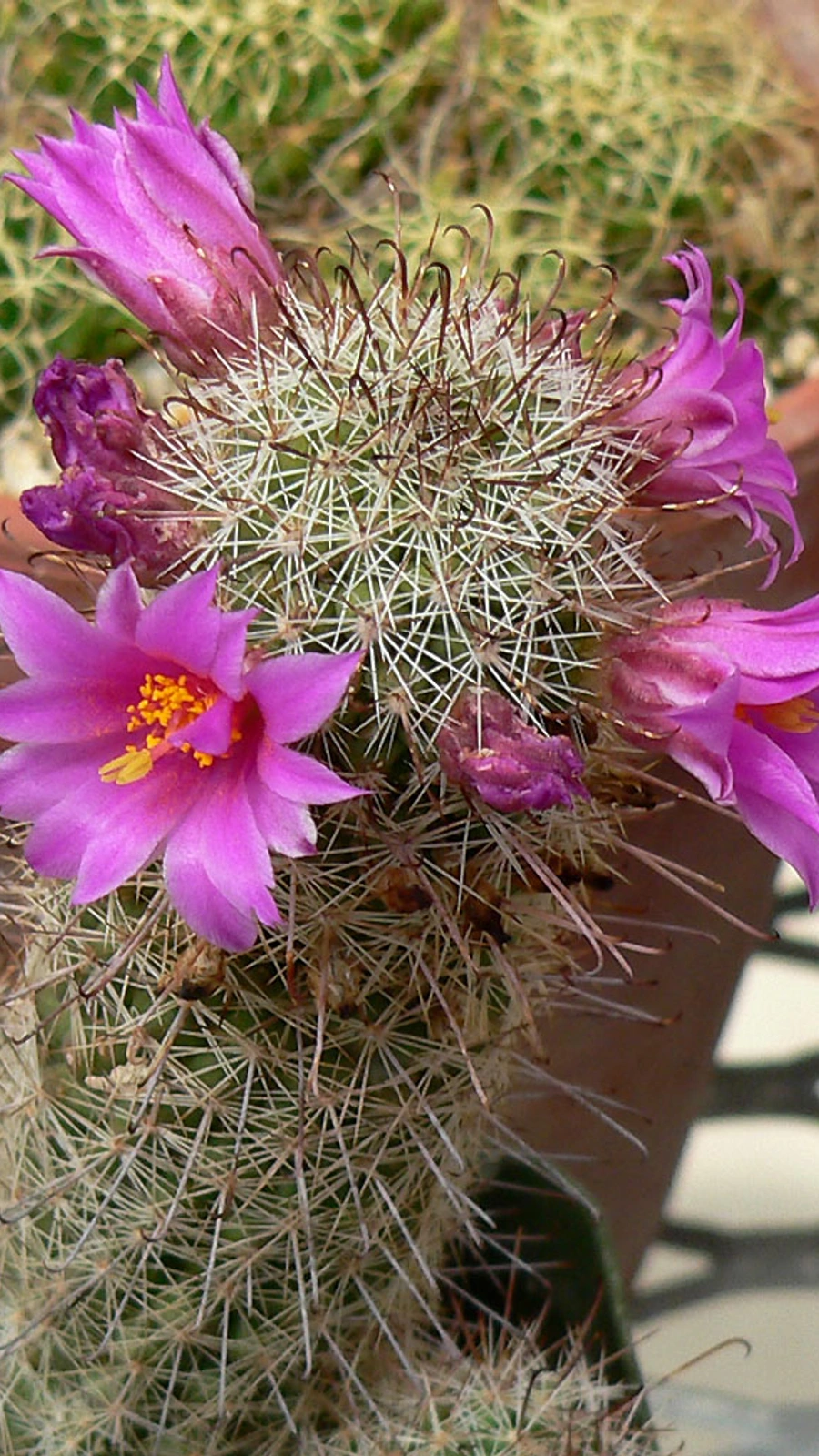 Reference image
Single-Spined Pincushion Cactus
Mammillaria monocentra is a captivating member of the Cactaceae family, highly appreciated by succulent enthusiasts for its orderly tubercular structure and its prominent, single central spine per areole. Its compact, globose habit makes it an excellent choice for windowsill culture 1.
Belonging to the species-rich genus Mammillaria, the specific epithet "monocentra" refers to the single central spine that defines its appearance. In taxonomics, it has historically been linked to the Mammillaria heyderi complex but remains recognized under Kew's POWO as a distinct and valid species 2.
This cactus is native to northeastern Mexico and parts of southern Texas, USA. It typically grows in limestone soils, rocky slopes, and semi-arid scrublands, often sheltering under nurse plants to escape the intense midday sun 1.
The stem is flattened-globose to short cylindrical, presenting a dark green color. Each tubercle bears a woolly areole from which radial spines spread out, dominated by a single, stronger, erect central spine. Small, creamy-pink to yellowish bell-shaped flowers emerge in a ring around the crown during spring 2.
It requires excellent light conditions, preferring bright indirect sunlight. Watering should follow the 'soak and dry' method, allowing the potting medium to dry out completely. Winter care requires cold, dry conditions to encourage spring blooms.
Overwatering is the primary cause of failure, quickly leading to root and stem rot. Lack of light causes etiolation, where the plant loses its attractive compact form and stretches toward light sources.
Prefers bright, indirect sunlight or light partial shade to prevent sunburn.
Allow the soil to dry out completely before watering. Reduce drastically in winter.
Use a mineral-heavy, well-draining cactus soil mix with high pumice content.
Non-toxic, but features sharp spines that can cause physical injury.
Very easy to maintain, provided overwatering is strictly avoided.
Native to the arid regions of northeastern Mexico and the southern borders of Texas, where it thrives in well-drained, alkaline limestone soils under the light shade of desert shrubs.
