
Light
Full Sun
Requires at least 6 hours of direct sunlight daily; ideal for south or west-facing windows.
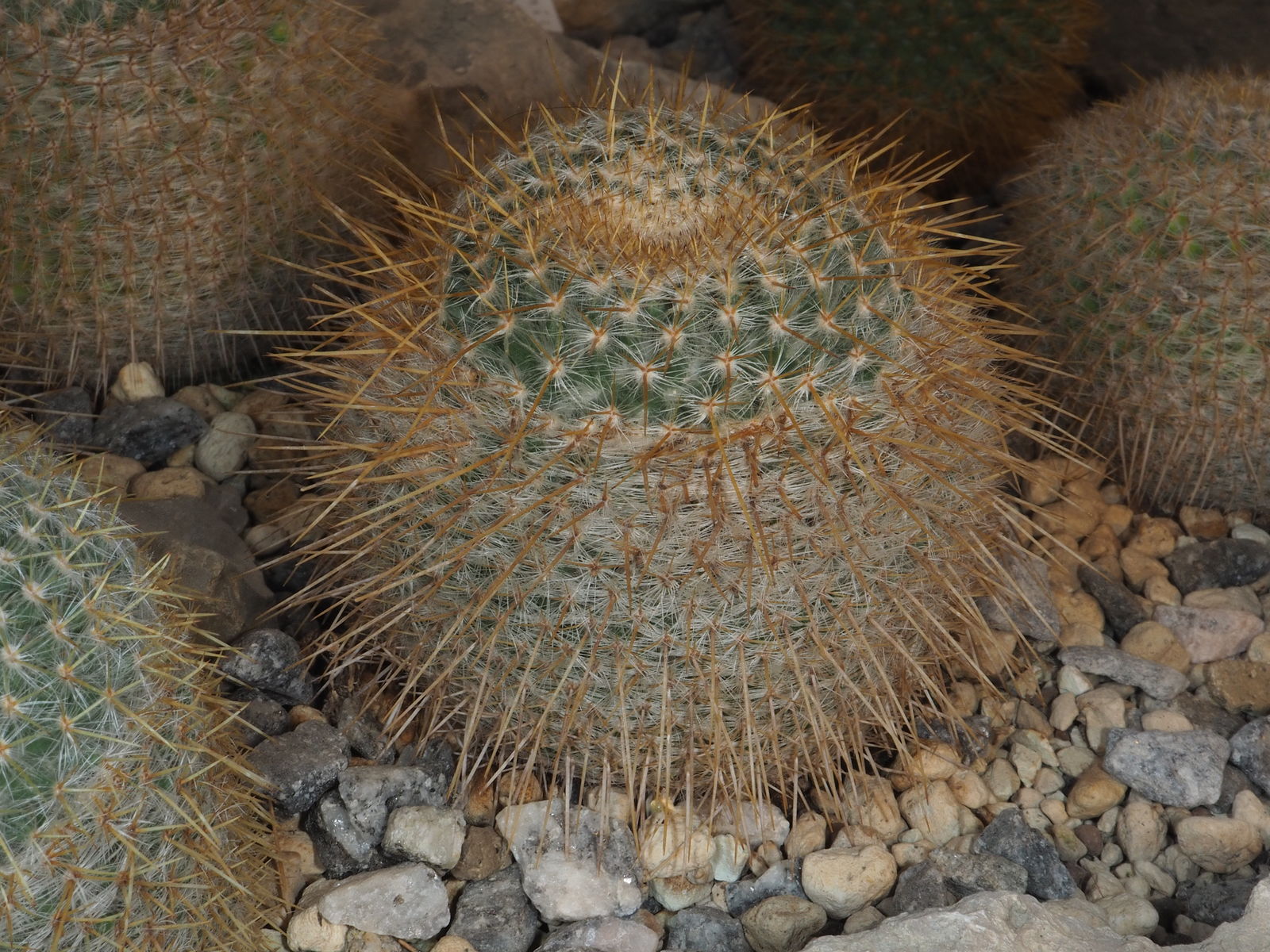 Reference image
Muehlenpfordt's Pincushion Cactus
Mammillaria muehlenpfordtii, widely recognized for its robust spination and beautiful crown of pink flowers, is a highly appreciated cactus species native to the arid highlands of Mexico 1. Its resilience and spectacular form make it a staple in xerophytic gardens and indoor succulent collections alike.
This species belongs to the genus Mammillaria within the Cactaceae family. It was named in honor of the German botanist Philipp August Friedrich Mühlenpfordt 2. Common synonyms include Mammillaria celsiana. It is colloquially known as Muehlenpfordt's Pincushion Cactus or Golden-spined Mammillaria.
Native to central and northern Mexico, its range spans across the states of Querétaro, Guanajuato, San Luis Potosí, Zacatecas, and Jalisco 1. It thrives in dry shrublands and semi-desert planes at elevations of 1500 to 2400 meters above sea level, typically growing in rocky, limestone-rich soils 2.
The stem is initially globose, gradually becoming cylindrical with age, reaching up to 20 cm in height and 15 cm in diameter. It features prominent conical tubercles. Areoles bear strong, rigid spines that vary from golden yellow to grayish-brown. In late spring, it produces a lovely ring of small, deep pink to carmine flowers near the crown 3.
This species demands full sun exposure to maintain its dense spine density and compact shape. Water thoroughly only when the substrate is completely dry. During winter dormancy, watering should be suspended. A highly porous, mineral-based cactus mix is critical for preventing root pathogens 3.
Overwatering is the primary cause of failure, quickly leading to root rot. Insufficient sunlight results in etiolation, where the cactus stretches unnaturally towards the light source, losing its ornamental form and weakening its immune system.
Requires at least 6 hours of direct sunlight daily; ideal for south or west-facing windows.
Let the soil dry completely between waterings. Keep dry in winter.
Highly porous, mineral-rich substrate with plenty of coarse sand and pumice.
Features very sharp and rigid spines. Place away from children and pets.
Very easy to care for, making it ideal for beginners who tend to forget watering.
Grows natively in high-altitude arid valleys and rocky limestone hillsides across central and northern Mexican states including Guanajuato, Querétaro, and San Luis Potosí.
