
Light
Bright Indirect Light
Thrives in bright, filtered sunlight or strong indirect light; protect from intense midday summer sun.
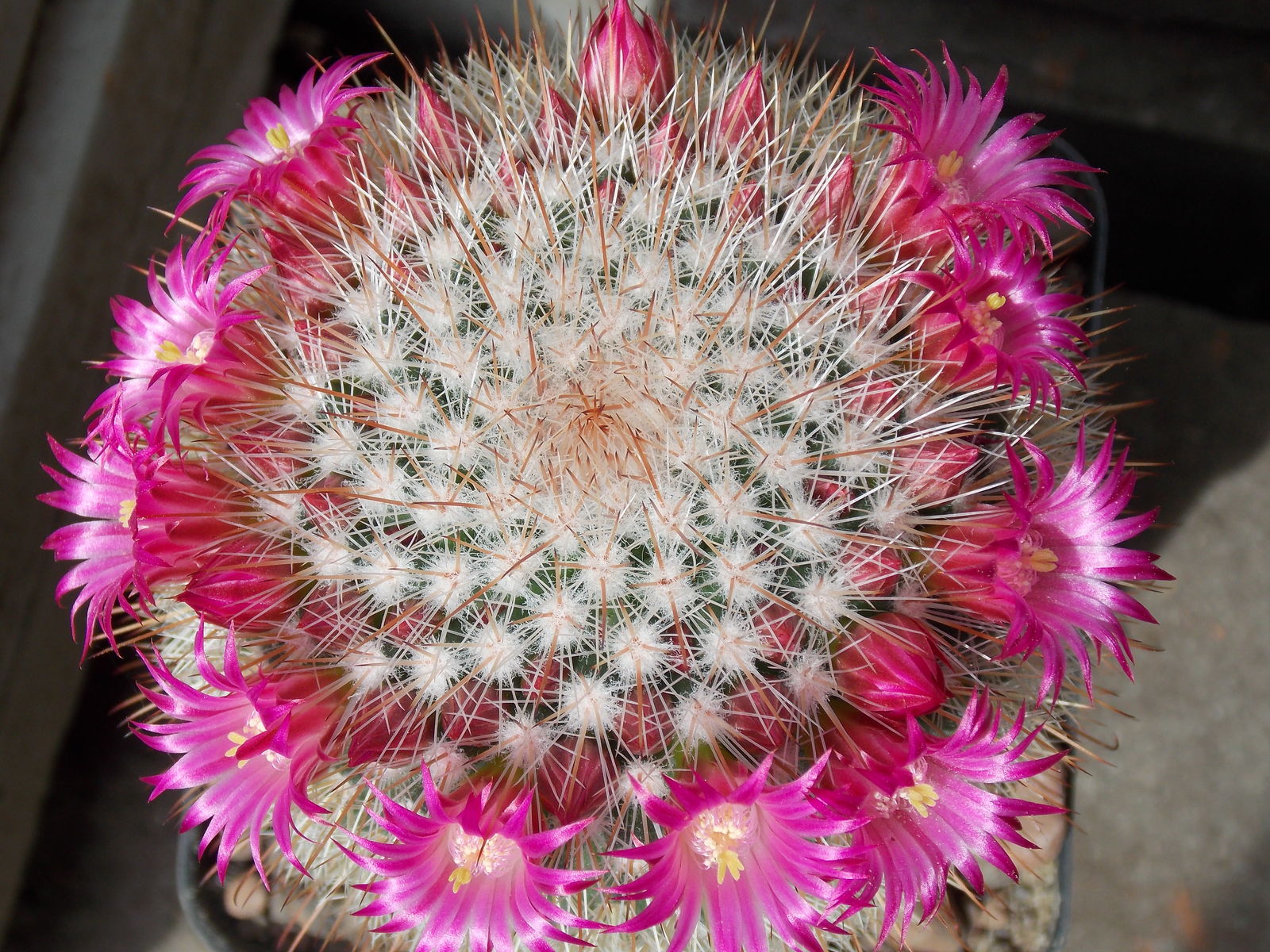 Reference image
Nuñez's Nipple Cactus
Mammillaria nunezii is a perennial, succulent subshrub in the family Cactaceae, native to the diverse arid landscapes of Mexico. Known for its symmetrical spine arrangement and beautiful crown of magenta flowers, it is highly valued by cacti enthusiasts and indoor plant growers alike 1.
First described by Nathaniel Lord Britton and Joseph Nelson Rose in 1923, the species was named to honor the Mexican botanist and collector Prof. José Nuñez 2. It belongs to the large genus Mammillaria, which derives its name from the Latin word for 'nipple' or 'teat', referring to the prominent tubercles that cover the plant body.
This species is native to central and southern Mexico, occurring across states such as Guerrero, Jalisco, Michoacán, and Morelos 1. It thrives in seasonally dry tropical biomes, often growing on rocky volcanic slopes, cliff faces, and gravelly soils at elevations between 1,000 and 2,000 meters above sea level 2.
The stem is initially globose, becoming cylindrical with age, reaching up to 30 cm in height. The dark green body is covered with neatly arranged tubercles. Each areole bears 10 to 30 whitish radial spines and 1 to 5 stouter, brownish-tipped central spines. In late spring, it produces a ring of funnel-shaped, vibrant pinkish-red flowers near the crown, followed by small club-shaped green or reddish fruits.
In cultivation, Mammillaria nunezii requires plenty of bright, indirect sunlight to maintain its dense spine growth and produce flowers. Watering must be infrequent, following the 'soak and dry' method, where the soil is allowed to dry out completely before watering again. During the winter dormancy, watering should be suspended almost entirely to prevent rot.
Overwatering is the primary cause of failure, quickly leading to root and stem rot. Placing the cactus in a low-light corner results in etiolation, where the plant grows weak, thin, and pale as it stretches toward light. Adequate air circulation and dry winter conditions are crucial to prevent fungal infections 1.
Thrives in bright, filtered sunlight or strong indirect light; protect from intense midday summer sun.
Water thoroughly only when the soil is 100% dry. Reduce watering to a minimum during winter dormancy.
A highly porous, mineral-rich substrate containing pumice, perlite, and coarse grit.
Non-toxic to pets, but has sharp spines that can cause physical injury; handle with care.
Very easy to care for, making it ideal for beginners who can resist the urge to overwater.
Found naturally in the seasonally dry tropical zones of central and southern Mexico, typically clinging to steep volcanic rocks and gravel slopes at moderate to high altitudes.
